By Socrates Smythe Saywon
MONROVIA — Liberia is expected to cross the US$1 billion mark in domestic revenue collection by September, Finance and Development Planning Minister Augustine Kpehe Ngafuan has announced, describing the projected milestone as a major achievement for the country and its citizens.
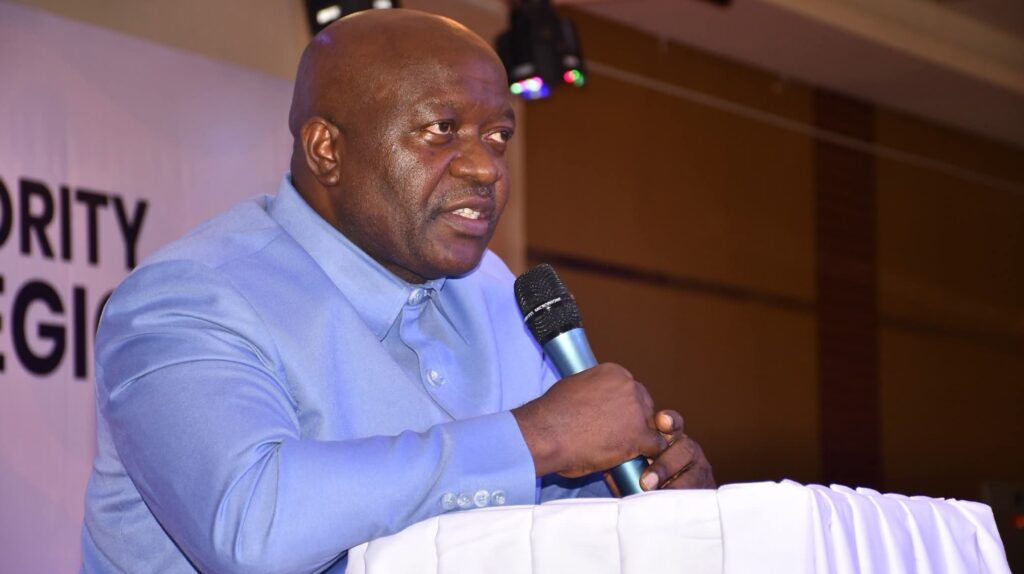
Ngafuan made the disclosure Wednesday, August 19, at the Ellen Johnson Sirleaf Ministerial Complex in Congo Town, Monrovia, while delivering the official launch address for the Liberia Revenue Authority’s (LRA) Corporate Strategic Plan 2025–2029.
The ceremony was held under the theme “Freedom Declared, Freedom Financed,” as the government seeks to strengthen domestic resource mobilization and reduce the country’s dependence on external financing.
Ngafuan said Liberia’s progress toward the billion-dollar revenue threshold follows the government’s decision to pursue a US$1.2 billion national budget, a projection that initially faced criticism from sections of the public and economic commentators.
He recalled that when the budget was submitted to the Legislature, some critics questioned whether the government could realistically generate enough revenue to support such a spending framework.
According to the minister, the country’s current revenue performance is now demonstrating that the target was achievable.
“By September, sometime in September, we will hit the billion dollar mark,” Ngafuan said, describing the development as a historic achievement for Liberia.
He emphasized that the anticipated milestone should not be credited solely to the President, Ministry of Finance, LRA or other government institutions, but to Liberians whose contributions through taxes and other forms of domestic revenue make government operations possible.
Ngafuan said crossing the threshold would mark an important point in Liberia’s fiscal history, but cautioned that reaching US$1 billion should not be mistaken for an abundance of resources.
He said higher domestic revenue would naturally lead to greater expectations from citizens, placing additional responsibility on government to ensure that increased resources are effectively managed and directed toward national priorities.
The minister challenged the LRA to sustain its momentum beyond the expected billion-dollar milestone, urging the revenue authority to develop the capacity to remain in the billions and continue expanding domestic resource mobilization.
He said the five-year corporate strategy provides the framework for achieving that objective and stressed that the document must now move from planning to implementation.
Ngafuan compared strategic planning to constructing a major building, noting that successful projects require careful preparation before visible structures begin to emerge.
He said the progress Liberia is recording in domestic revenue collection did not happen by chance, but was supported by deliberate planning, policy decisions and coordinated implementation.
The Finance Minister pledged continued support from his ministry to the LRA, saying government would provide the policy direction, strategic decisions and institutional backing needed to strengthen revenue collection.
He also credited the Legislature for passing laws that have contributed to improvements in revenue mobilization and praised the judiciary for helping protect government revenue through the enforcement of the law.
Ngafuan said continued progress would require cooperation among all branches of government, revenue-generating institutions, state-owned enterprises, ministries and agencies, taxpayers and other stakeholders.
He disclosed that the government is also considering performance-based incentives for public institutions that meet or exceed their revenue targets.
The minister said such incentives should apply broadly across government so that institutions responsible for generating public resources are encouraged to perform at their highest level.
He said recommendations presented by the LRA on incentives had received favorable consideration and would be incorporated into discussions aimed at developing a broader performance-based system.
At the same time, Ngafuan acknowledged that improved revenue collection is occurring alongside increasing demands for government spending.
He disclosed that preliminary expenditure requests for the 2027 national budget had reached approximately US$1.919 billion as of August 15, with additional requests still being submitted.
The figure, he said, highlights the difficult task facing government as it seeks to balance competing demands against available resources.
Ngafuan said the administration would continue prioritizing national development needs, including the President’s ARREST Agenda for Inclusive Development, with emphasis on roads, electricity and other key sectors.
He stressed that future budgets would have to remain realistic and achievable rather than being built around overly optimistic projections.
The minister commended LRA Commissioner General James Dorbor Jallah and his team for their leadership and contribution to the improvement in domestic revenue mobilization.
He urged the LRA leadership to continue motivating its workforce, strengthening institutional performance and pursuing the strategic objectives outlined in the new corporate plan.
Ngafuan said the government’s expectation is that implementation of the 2025–2029 strategy will make a substantial contribution to national development and strengthen Liberia’s fiscal sustainability.
He formally launched the LRA Corporate Strategic Plan on behalf of President Joseph Nyuma Boakai and the Government of Liberia, calling on stakeholders to move beyond the strategy document and focus on measurable results.
“Let us move from strategy to implementation and from implementation to results,” Ngafuan said.
The launch brought together senior government officials, members of the Legislature, LRA Board members, Central Bank officials, development partners, civil society representatives and members of the business community.
With Liberia approaching the US$1 billion revenue mark, the government is counting on the new five-year LRA strategy to sustain the momentum and build a stronger domestic financing base for national development.
See more Liberia News Network stories in Google Search by adding LNN as one of your Preferred Sources.
★ Add LNN as a Preferred Source