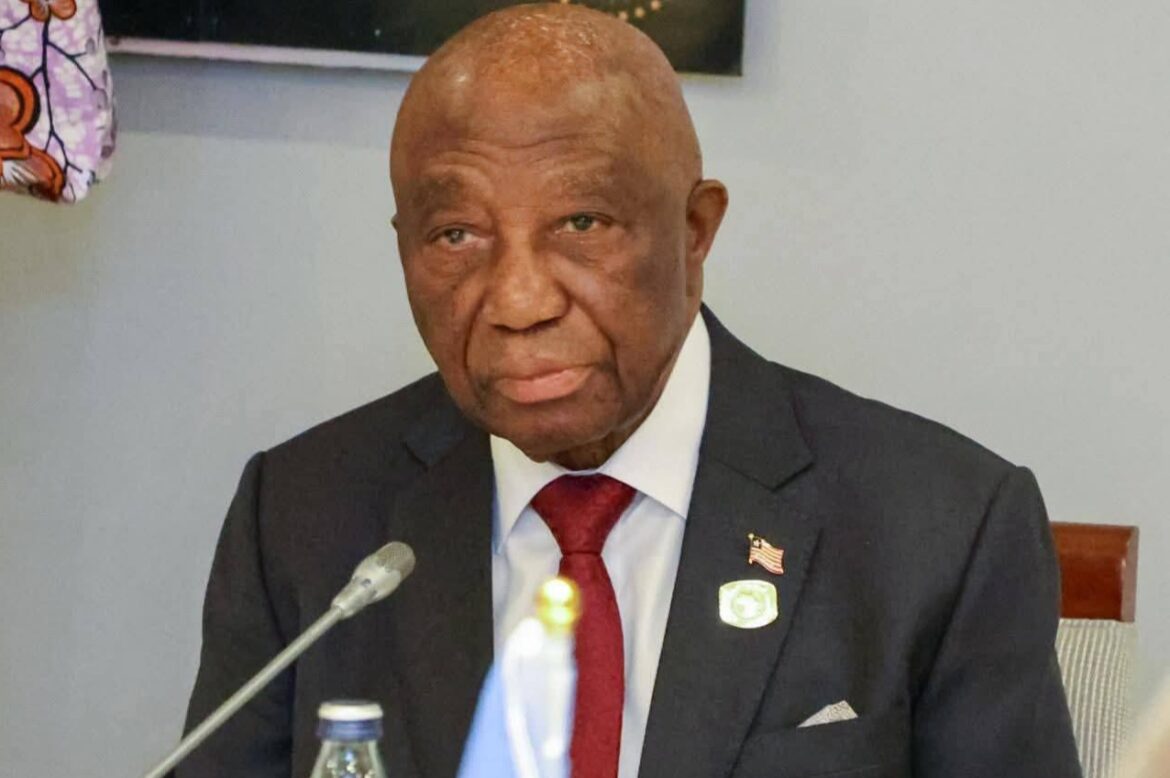
Economic expansion, falling inflation and improved fiscal indicators offer encouragement, but mining dependence, limited reserves, governance concerns and the distribution of national wealth remain major tests for the Boakai administration.
MONROVIA, LIBERIA — Liberia’s economy is projected to grow by 5.5 percent in 2026, according to the International Monetary Fund (IMF), presenting the administration of President Joseph Nyuma Boakai with encouraging economic indicators while raising a fundamental question: will the country’s projected growth translate into better living conditions for ordinary Liberians?
In its September 28, 2026 announcement, the IMF Executive Board completed the fourth review of Liberia’s 40-month Extended Credit Facility arrangement and the first review of its Resilience and Sustainability Facility arrangement. The decision allows Liberia to access additional financing while continuing an economic reform programme intended to strengthen fiscal stability, governance and resilience to external shocks.
The IMF’s assessment presents a mixed picture. Economic activity is expanding, inflation is projected to ease from its 2025 level, and the government has improved some fiscal indicators. However, the country remains exposed to international price shocks, declining donor support, commodity-market volatility and weaknesses in public-sector governance.
For the Boakai administration, the figures provide evidence of progress in macroeconomic management. But they do not, by themselves, establish that the government has substantially improved employment opportunities, household incomes or access to essential services.
Growth Is Encouraging, but Who Is Benefiting?
The IMF estimates that Liberia’s real gross domestic product grew by 5.1 percent in 2025 and projects growth of 5.5 percent in 2026. Mining, construction and manufacturing are among the principal drivers of the expansion.
The projected growth rate is significant for a country that continues to face deep development challenges. Increased mining production can generate export earnings, while construction and manufacturing activity can stimulate demand for labour, transportation and supporting services.
Nevertheless, the composition of that growth matters.
When economic expansion depends heavily on mining and large investment projects, the benefits reaching ordinary households depend on how much employment is created, how much revenue the government collects, whether local businesses participate and how effectively public funds are invested.
A rise in national output does not automatically mean that a market woman in Monrovia is selling more goods, that a young graduate has found employment, or that a rural family can afford better healthcare and education.
The central economic question is therefore not simply whether Liberia is growing, but whether that growth is sufficiently broad-based to improve the lives of citizens across the country.
The government must demonstrate this through employment statistics, household-income data, poverty measurements and evidence of improved public services—not solely through GDP growth.
Inflation: A Slower Rise in Prices Is Not the Same as Lower Living Costs
The IMF projects that consumer-price inflation at the end of 2026 will be approximately 5.8 percent, compared with 8.3 percent at the end of 2025. The figures indicate that the pace of price increases is expected to moderate.
That is potentially positive news for consumers.
However, the distinction between falling inflation and falling prices is crucial. Lower inflation generally means prices are increasing more slowly; it does not mean that food, transportation, rent and other necessities have returned to their former prices.
For households whose incomes have not kept pace with previous price increases, even a decline in inflation may provide limited immediate relief.
The government must therefore explain how its economic policies are expected to improve purchasing power, particularly for low-income families, public-sector workers, small traders and unemployed young people.
The Central Bank’s management of inflation and exchange-rate stability will remain important, but the public will ultimately judge economic performance by whether incomes can cover essential expenses.
Fiscal Discipline Offers Progress, but Spending Quality Matters
The IMF’s latest projections indicate that Liberia’s overall fiscal deficit, including grants, is expected to narrow to 1.7 percent of GDP in 2026, compared with 2.1 percent in 2025. Public debt is projected to decline from 55.1 percent of GDP in 2025 to 54.4 percent in 2026.
These indicators suggest that the government is maintaining fiscal discipline and working to contain its borrowing requirements.
A narrower deficit can help reduce pressure on public finances, while a declining debt-to-GDP ratio may provide greater room to manage future economic shocks.
But fiscal discipline should not be measured by expenditure restraint alone.
Liberians also need to know whether government spending is producing visible results in roads, schools, hospitals, electricity, agriculture and sanitation. A government can improve its fiscal indicators while citizens continue to experience serious deficiencies in public services.
The quality of expenditure is therefore as important as the size of the deficit.
The IMF has specifically called for improvements in the selection, implementation and monitoring of public investment projects. It has also urged Liberia to rationalize unproductive expenditure to create room for priority infrastructure investments while preserving fiscal discipline.
That recommendation presents a practical test for the Boakai administration: can it convert improved fiscal management into productive investments that create jobs and improve public services?
The Mining Windfall: An Opportunity That Requires Transparency
Liberia’s mining sector is playing a central role in the projected economic expansion. The government also faces the challenge of managing a one-off mining concession payment and phasing the use of the resulting windfall over 2026 and 2027.
The IMF has emphasized the need to manage these resources prudently and transparently, taking account of the government’s capacity to implement projects effectively.
This is a particularly important issue for a country whose natural resources have long raised public expectations about national development.
Revenue from mining concessions can help finance infrastructure, education, healthcare and other priorities. But one-off receipts should not be treated as a permanent source of government income.
The government should publicly disclose the amount received, the terms governing the payment, the projects selected for financing and the mechanisms used to monitor expenditure.
Citizens should also be able to determine how much of the money has been committed, how much has actually been spent and what measurable benefits have resulted.
Without transparent reporting, even a substantial resource payment may fail to generate lasting improvements in living standards.
The question is not merely whether Liberia receives money from its natural resources, but whether the country manages those resources in a way that produces durable public benefits.
The IMF’s Governance Warning
Although the IMF acknowledges progress in Liberia’s economic programme, its latest review also emphasizes the need for stronger governance and fiscal transparency.
Among its recommendations are publication of the governance diagnostic report, implementation of a focused action plan and removal of legal barriers preventing the publication of all public officials’ asset declarations.
These recommendations matter because economic performance depends not only on revenue collection and expenditure controls but also on the institutions responsible for protecting public resources.
When citizens cannot adequately examine officials’ asset declarations or scrutinize government expenditure, it becomes more difficult to evaluate whether public authority is being exercised in the public interest.
For the Boakai administration, the challenge is to turn governance commitments into verifiable action.
Publishing relevant reports, improving access to public information and strengthening oversight of public spending would allow citizens to assess progress rather than depend on official assurances.
The IMF’s recommendations should not be interpreted as proof that any particular official has engaged in corruption. They do, however, identify transparency and institutional accountability as areas requiring further attention.
Additional Financing Brings Both Support and Responsibility
Completion of the two IMF reviews allows Liberia to receive approximately US$50 million in additional financing: about US$26.1 million under the Extended Credit Facility and US$23.9 million under the Resilience and Sustainability Facility.
The financing provides support for the government’s economic programme and its efforts to strengthen financial and climate resilience.
However, access to IMF financing is not the same as an independent certification that every aspect of government policy is succeeding. The reviews assess performance against programme objectives and the policies required to maintain economic stability.
The public interest lies in how the financing is used, how it affects the country’s obligations and whether the wider programme produces sustainable improvements.
Liberians should be able to obtain clear information about the purposes of the financing, the conditions attached to it and the results expected from the supported reforms.
The administration must also manage the risk that declining donor support or adverse external developments could undermine the progress recorded so far.
What the Figures Mean for Ordinary Liberians
For citizens, the IMF’s projections will be meaningful only if they eventually translate into tangible improvements.
Workers need employment opportunities and incomes that can cover essential expenses. Small businesses need reliable electricity, access to credit and a stable operating environment. Farmers need roads, markets and support to increase production. Families need schools and health facilities that deliver dependable services.
These outcomes cannot be established through GDP growth or fiscal indicators alone.
The IMF’s own projections show that Liberia remains vulnerable to external pressures. Its September review identifies higher fuel prices, declining donor support, commodity-price volatility and climate-related shocks among the risks to the economic outlook.
The government therefore faces the dual responsibility of preserving macroeconomic stability and ensuring that development policies address the practical needs of the population.
That requires stronger implementation, transparent public expenditure and reliable data showing whether employment, household incomes and access to essential services are improving.
It also requires public communication that distinguishes between economic targets, actual results and benefits that citizens have yet to experience.
Conclusion: Economic Progress Must Be Measured Beyond the Statistics
The IMF’s September 2026 review provides the Boakai administration with encouraging indicators: projected economic growth of 5.5 percent, a narrower fiscal deficit and a modest decline in the public-debt ratio.
At the same time, the IMF’s emphasis on governance, public-investment quality, revenue mobilization and the transparent management of mining resources highlights challenges that remain unresolved.
The figures do not prove that Liberia’s economic problems have been solved, nor do they establish that the government’s economic programme has failed. They provide a basis for measuring what the administration has achieved and what it still needs to deliver.
The decisive test is whether macroeconomic progress produces measurable improvements in the lives of ordinary Liberians.
For President Boakai’s government, the challenge is to demonstrate that projected growth can support productive employment, more effective public services, responsible management of natural-resource revenue and greater confidence in public institutions.
Liberia’s economic performance should ultimately be judged not only by the numbers reported to international financial institutions, but also by transparent evidence of how national growth affects the people whose labour and resources sustain the economy.
See more Liberia News Network stories in Google Search by adding LNN as one of your Preferred Sources.
★ Add LNN as a Preferred Source