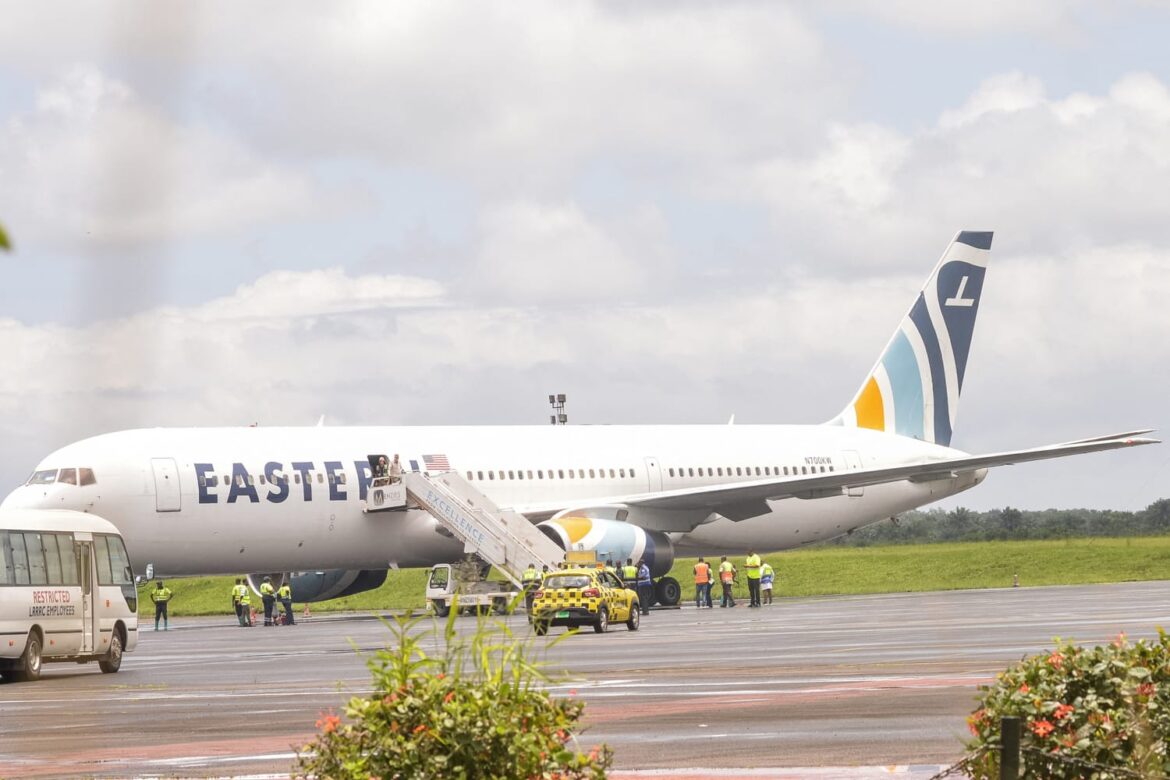
MONROVIA, LIBERIA – Liberia’s decision to accept up to 1,200 third-country deportees from the United States is facing growing public scrutiny after international reports confirmed that Washington awarded Liberia US$5 million for migration-management activities this year.
The funding and the deportation arrangement have fueled questions over whether the two developments are financially connected, although available evidence does not establish that the United States paid Liberia US$5 million specifically in exchange for accepting the 1,200 deportees.
Reuters reported that Liberia agreed to receive as many as 1,200 people deported from the United States over the next 12 months, while separately reporting that Washington awarded Liberia US$5 million for “migration management activities.”
Liberia’s government, however, has rejected the characterization of the arrangement as a financial transaction.
The Ministry of Information said the transfer of deportees was “not a transaction with a quid pro quo,” maintaining that Liberia had neither demanded nor received compensation or a promised reward in exchange for agreeing to participate in the program.
That distinction is central to the emerging controversy.
First deportees arrive in Liberia
The debate moved from diplomatic discussions to implementation on Thursday, August 20, when the United States sent the first 20 deportees to Liberia.
The group arrived at Roberts International Airport outside Monrovia, beginning an arrangement that could eventually bring as many as 1,200 people to the country during the next year.
Liberian Information Minister Jerolinmek Piah told Reuters that most of the deportees expected under the arrangement would come from Latin American countries, including Venezuela, Cuba and Colombia. The broader group is expected to include people from Africa, North America, South America and the Caribbean.
The agreement makes Liberia one of the most significant African destinations in the Trump administration’s expanding third-country deportation program.
Liberia says deportees will be treated as guests
The Liberian government has sought to emphasize the humanitarian character of the arrangement.
Officials say the deportees will be received as guests of the Republic of Liberia, rather than being treated as prisoners, and will be allowed to leave the country or seek asylum if they wish.
Justice Minister Natu Oswald Tweh has said deportees will have the option of applying for asylum in Liberia.
The government has also said international organizations, including the International Organization for Migration and the United Nations refugee agency, will assist with services for those transferred to Liberia.
Liberian officials have defended the decision by pointing to the country’s history of receiving people fleeing conflict, persecution and political instability.
The US$5 million question
The most sensitive aspect of the arrangement is the US$5 million in U.S. migration-management funding.
Reuters reported that the United States awarded Liberia the money this year for “migration management activities.” Al Jazeera similarly reported the US$5 million award while covering the arrival of the first group of deportees.
But neither report establishes that the money was negotiated as a direct payment for Liberia to accept the 1,200 deportees.
Liberia has specifically denied such a quid pro quo.
The government’s position is that the country is participating in the program for humanitarian and migration-management reasons and that the financial assistance is intended to support broader migration-management needs rather than constitute a payment for taking deportees.
That leaves an important distinction for the public debate: the US$5 million award is confirmed, the 1,200-person deportation agreement is confirmed, but a direct financial exchange between the two has not been established by the available evidence.
Important questions remain
Despite the government’s position, the arrangement leaves several issues requiring greater transparency.
Among the most important are what exactly the US$5 million migration-management funding covers, whether any portion of the money is directly connected to the deportation program, what legal and humanitarian protections will apply to deportees once they arrive, and what happens when the 12-month arrangement expires.
Providing clear answers would help determine whether the funding is simply broader migration assistance or whether any portion of it is specifically tied to the reception and management of people deported from the United States.
For Liberia, the distinction matters because the country is not merely receiving financial assistance; it is also assuming responsibility for people who have been removed from the United States despite having no established connection to Liberia.
A wider U.S. deportation strategy
Liberia’s agreement is part of a broader strategy by the Trump administration to deport migrants to countries other than their countries of origin.
The United States has reached arrangements with numerous countries to receive what are commonly described as third-country deportees. AP reported that the Trump administration has struck agreements with at least 35 countries, while more than 23,000 people have reportedly been deported to 26 countries under such arrangements.
The policy has attracted criticism because some migrants may have never lived in, visited or established ties to the countries where they are sent.
Human-rights organizations have raised concerns about the safety and legal status of deportees, particularly where individuals face risks if eventually returned to their countries of origin.
The Liberia agreement is therefore unfolding against an international debate over whether wealthy countries are increasingly transferring migration responsibilities to poorer nations.
Liberia agreement contains unanswered details
The U.S. State Department previously made public a six-page agreement reached with Liberia in September 2025. AP reported that the document confirms Liberia agreed to accept people who are not Liberian nationals, but does not specify the number of deportees or the countries from which they would come.
That makes the government’s subsequent announcement that Liberia would accept up to 1,200 people particularly significant.
It also underscores the need for greater public disclosure about the operational arrangements governing the program.
The public interest is not limited to the number of people arriving. It also extends to their legal status, accommodation, access to legal assistance, freedom of movement, asylum procedures and the responsibilities of Liberia and the United States.
Humanitarian and legal concerns
The agreement is already facing scrutiny from human-rights advocates who argue that third-country deportation arrangements can expose migrants to new risks.
Reuters reported Friday that five migrants who resisted deportation to Liberia were instead flown to Equatorial Guinea. The group reportedly included three Cubans, one Brazilian and one Cameroonian.
The development highlights the difficult legal and humanitarian questions surrounding third-country deportations, particularly when individuals object to being transferred to countries where they have no established connection.
The circumstances surrounding the five migrants also demonstrate why the treatment of deportees and their ability to challenge removal decisions remain critical issues as Liberia’s arrangement proceeds.
Liberia’s growing responsibility
For President Joseph Nyuma Boakai’s administration, the agreement represents both a diplomatic opportunity and a significant responsibility.
The government can point to Liberia’s long history of receiving refugees and its close historical relationship with the United States.
But accepting up to 1,200 people deported from another country also places obligations on Liberia to ensure that those individuals are treated lawfully and humanely.
The first 20 arrivals mean those responsibilities have already begun.
The government will now have to demonstrate how the program operates in practice, how deportees access asylum procedures, where they are housed, what services are available to them and how the promised migration-management assistance is being used.
The critical distinction
The evidence currently available supports two separate but closely related facts.
First, Liberia has agreed to accept up to 1,200 third-country deportees from the United States over a 12-month period. Second, the United States has awarded Liberia US$5 million for migration-management activities.
What the evidence does not yet establish is that Washington paid Liberia US$5 million specifically as the price for accepting those 1,200 people.
That distinction should remain at the heart of responsible reporting on the agreement.
Rather than presenting the arrangement as a proven “US$5 million payment for 1,200 deportees,” the more accurate question is whether the U.S. migration-management funding has any direct contractual or financial connection to Liberia’s agreement to receive deportees.
As the first 20 deportees settle in Liberia and potentially hundreds more arrive over the next year, transparency over that relationship and the legal, humanitarian and financial terms of the arrangement is likely to remain a major issue for the Liberian public.
See more Liberia News Network stories in Google Search by adding LNN as one of your Preferred Sources.
★ Add LNN as a Preferred Source