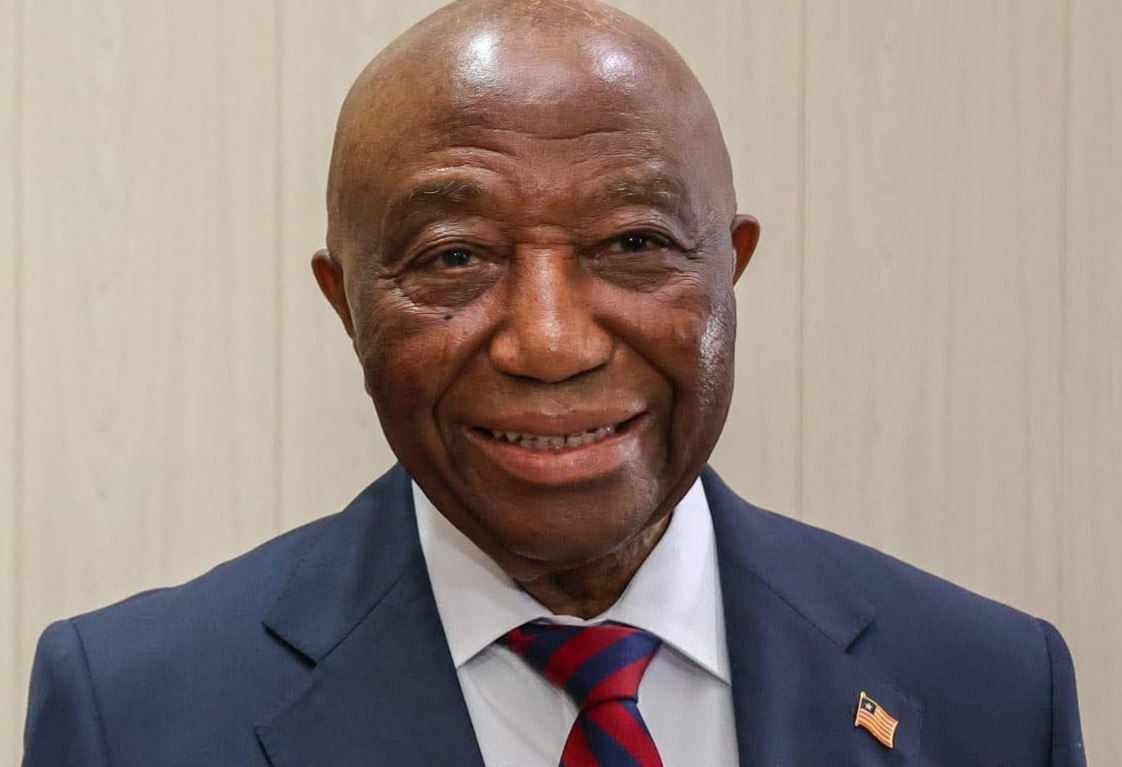
MONROVIA – The University of Liberia’s growing labor dispute has moved from an internal confrontation between faculty and administrators to the highest level of government, with faculty leaders telling President Joseph Nyuma Boakai that longstanding problems over salaries, retirement contributions, staff status and deteriorating infrastructure can no longer be ignored.
The disclosure came Friday, August 21, from University of Liberia Faculty and Staff Association (ULFASA) President Assist. Prof. Alhaji S. M. Dukuly, who reported to an emergency General Assembly that President Boakai had agreed to pursue government action on several of the association’s grievances.
But while the meeting represents a significant intervention, it also leaves a more difficult question: will presidential directives finally translate into measurable changes at Liberia’s national university?
For weeks, ULFASA has been locked in a dispute with the University administration, culminating in the association’s decision to disengage from academic and administrative activities.
Dukuly said the General Assembly had given the Executive Committee a clear mandate to present faculty and staff demands to the University administration and government.
The leadership subsequently held several meetings with University officials, but Dukuly said the discussions produced only limited progress.
The dispute intensified after the administration instructed faculty and staff to return to work while several demands remained unresolved.
Dukuly told faculty members that the association’s leadership also faced threats, including warnings that members of the Executive Committee could be dismissed if they failed to call for a return to work.
Rather than retreat, he said, the leadership reaffirmed its position.
The standoff eventually prompted the Office of President Boakai to intervene.
According to Dukuly, the President invited ULFASA leaders to a meeting on August 15 after receiving information about the dispute from the University administration.
What followed, Dukuly said, exposed a significant difference between the administration’s account of the crisis and the faculty association’s version.
He said University officials had conveyed to the President that reasonable efforts had been made to resolve the grievances and that ULFASA had remained unwilling to compromise.
ULFASA presented a different account.
Dukuly said the association outlined its previous attempts to engage the administration, the conditions under which faculty and staff were working and the reasons the General Assembly had authorized the disengagement.
He said President Boakai appeared concerned after hearing the association’s side.
The competing accounts expose one of the central problems in the dispute: whether the University’s leadership and faculty have been operating from the same understanding of the problems facing the institution.
The physical condition of the University was among the most serious concerns presented to the President.
Dukuly described leaking roofs, deteriorating classrooms, damaged ceilings, unusable restrooms and inadequate lighting across University facilities.
For a national university responsible for educating Liberia’s future workforce, the condition described by ULFASA raises fundamental questions about the government’s investment in higher education and the University’s ability to provide an appropriate learning and working environment.
President Boakai reportedly directed that rehabilitation work begin and called for a multi-sector committee to oversee the process.
The proposed committee is expected to include the Ministry of State, Ministry of Public Works, University administration and ULFASA.
The Ministry of Public Works is expected to lead implementation, while ULFASA would participate in monitoring and oversight.
The government has reportedly allocated US$6.3 million for the rehabilitation of existing University facilities.
But the critical issue is no longer simply whether money has been allocated.
It is whether the funds will be properly managed, whether the projects will be completed and whether the University community will see measurable improvements in classrooms, laboratories, restrooms, roofs, electricity and other essential facilities.
The retirement issue is equally serious.
Dukuly said University employees nearing retirement have faced uncertainty because contributions owed on their behalf to NASSCORP have not been fully settled.
He said President Boakai directed the Ministry of Finance and Development Planning to ensure payment of L$2.4 billion to address the outstanding obligations for employees expected to retire during the relevant period.
If implemented, the measure could provide relief to employees who have spent decades working for the national university.
But it also highlights a troubling institutional problem: employees approaching retirement should not have to fight for confirmation that statutory contributions made on their behalf have been properly accounted for.
The salary dispute presents another challenge.
ULFASA raised the issue of an outstanding 40 percent faculty salary increment, saying some faculty members have not received the full adjustment.
According to Dukuly, University officials told the President that almost all faculty had already received the promised increment.
ULFASA disputed that assertion and presented information it said demonstrated that some faculty members were still owed portions of the adjustment.
President Boakai reportedly directed that the matter be investigated and that a formal recommendation be prepared for consideration in the 2027 budget.
That response, however, means some affected faculty members may have to wait until the next budget cycle before receiving a definitive resolution.
The dispute over employee status adds another layer.
Dukuly said faculty and staff who returned from study leave with additional qualifications or who were promoted have remained in some cases without corresponding changes to their titles and salaries.
The association wants those cases reviewed and incorporated into the 2027 budget process.
The problem is not merely administrative.
When employees acquire higher qualifications, assume greater responsibilities and remain compensated under outdated classifications, it can undermine morale and create questions about whether the University has an effective system for recognizing professional advancement.
ULFASA also challenged the University’s handling of its Human Resources Manual.
Dukuly said the association invested significant time reviewing the draft and submitted recommendations intended to protect faculty and staff interests and ensure consistency with the University’s Charter.
He said the Board of Trustees nevertheless approved the manual without adequately incorporating the association’s recommendations.
That dispute raises a fundamental governance question: how much influence should faculty and staff have over institutional rules that directly affect their employment?
ULFASA’s position is that consultation must be meaningful rather than procedural.
The association’s wider dispute with the University therefore touches several interconnected problems: infrastructure, employee compensation, retirement obligations, professional status, governance and institutional decision-making.
President Boakai’s intervention has created an opportunity to address those issues.
But it also creates a test for the administration.
Presidential directives and committee appointments can signal political commitment, but they do not repair leaking roofs, settle unpaid retirement contributions or correct salary discrepancies on their own.
Implementation will determine whether the intervention represents a genuine turning point or another temporary response to a recurring crisis.
The University’s leadership will also have to restore confidence among faculty and staff after weeks of confrontation.
Dukuly has emphasized that ULFASA remains committed to dialogue, but the association has also made clear that it does not intend to abandon the resolutions adopted by its General Assembly.
For President Boakai, the challenge is now to ensure that the commitments made during the August 15 meeting are translated into clear timelines, responsible institutions and measurable results.
For ULFASA, the challenge is equally significant: maintaining pressure for implementation while keeping the dispute within a framework of constructive negotiation.
The crisis has exposed weaknesses that go beyond the immediate labor dispute.
A national university cannot function effectively when faculty are disputing salaries, employees approaching retirement are uncertain about statutory benefits, qualified staff remain without corresponding status adjustments and university buildings are reportedly deteriorating.
The intervention by the President may have prevented the dispute from escalating further.
But the real measure of success will come later, when faculty and students can determine whether the promised changes have actually reached the University of Liberia’s campuses.
Until then, the grievances that brought ULFASA to the negotiating table remain issues requiring action, not simply assurances.
See more Liberia News Network stories in Google Search by adding LNN as one of your Preferred Sources.
★ Add LNN as a Preferred Source