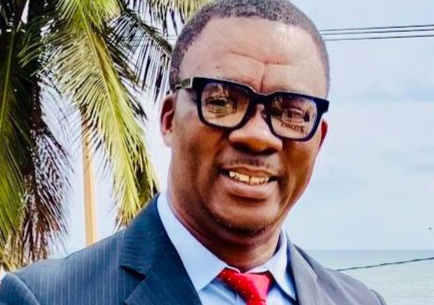
MONROVIA, LIBERIA – Prominent Liberian human rights activist Adama Kiatamba Dempster has called on the government to intensify its investigation into drug trafficking networks operating in Liberia, insisting that financiers, facilitators and alleged political protectors must face scrutiny regardless of their status or connections.
Dempster, National Secretary General of the Civil Society Human Rights Advocacy Platform of Liberia, made the call Monday, August 24, 2026, as the country remains gripped by a major narcotics investigation following the seizure of more than four metric tons of suspected cocaine in July and June.
In a press statement, Dempster urged the government to demonstrate stronger political will and ensure that the ongoing investigation is conducted impartially, transparently and without political interference.
He said Liberia’s response must go beyond the arrest or prosecution of individuals at the operational level and instead target the networks, financiers and other actors who allegedly facilitate the movement and distribution of illegal drugs.
The human rights activist warned that “halfmeasures” would not be sufficient to dismantle drug networks that he said have operated in Liberia for years with what he described as “absolute impunity.”
His statement comes amid heightened public and political attention surrounding Liberia’s expanding drug investigation.
The investigation intensified after security authorities intercepted a major cocaine shipment in Duazon, Margibi County, where nearly four metric tons of suspected cocaine were seized in July. Authorities had earlier intercepted another large cocaine shipment at Roberts International Airport.
The two seizures were subsequently linked to a broader national investigation, with authorities estimating the combined value of the seized narcotics at hundreds of millions of United States dollars.
The investigation has since generated significant political controversy, particularly after former Vice President Jewel Howard-Taylor was stopped at Roberts International Airport, declared a person of interest and subsequently charged in connection with an alleged transnational narcotics trafficking network.
Her political allies and the opposition Coalition for Democratic Change have rejected the allegations and described the case as politically motivated, while government authorities have defended the investigation and maintained that the matter should be allowed to proceed through the justice system.
The controversy has also raised questions about whether Liberia’s institutions can investigate allegations involving politically connected individuals without interference.
Against that backdrop, Dempster is demanding that the government apply the law equally and ensure that no person is shielded because of political influence, wealth, social standing or institutional connections.
The CSO Human Rights Advocacy Platform, he said, wants the investigation to reach beyond street-level dealers and couriers to those who finance, facilitate and allegedly provide protection for major drug operations.
“We want tougher measures and impartial investigations,” Dempster said.
He argued that dismantling Liberia’s drug networks will require a comprehensive national strategy rather than relying solely on arrests and prosecutions.
According to Dempster, the government’s response should combine security operations with economic, social, political, health, legal and preventive interventions.
He also stressed that the fight against narcotics must be conducted in accordance with human rights principles.
“This fight must be waged with determination, but also with respect for the rights and dignity of every Liberian citizen, especially the youth and those living within the country,” the CSO Platform said.
Dempster’s statement reflects the difficult balance confronting the government as it seeks to pursue an aggressive response to drug trafficking while ensuring that suspects and other individuals connected to investigations receive due process.
He said the credibility of Liberia’s anti-drug campaign will ultimately depend on whether authorities can demonstrate that investigations are based on evidence rather than political considerations.
The CSO Platform welcomed the government’s National Anti-Drug Action Plan for 2025–2030, describing it as a step in the right direction.
However, Dempster cautioned that the plan would have little impact without sustained enforcement, effective rehabilitation programs, stronger intelligence gathering and deeper regional and international cooperation.
He called for authorities to strengthen intelligence capabilities to identify the movement of narcotics, financial transactions and networks behind major trafficking operations.
He also emphasized rehabilitation and prevention, particularly for young people who may be vulnerable to drug use, addiction and recruitment into trafficking networks.
For Dempster, the fight against drugs must therefore address both supply and demand.
He said law-enforcement agencies must dismantle trafficking networks while the government and its partners provide rehabilitation, health services, education and economic opportunities capable of reducing vulnerability to drug abuse.
The activist also called for greater transparency and accountability throughout the investigation.
He urged the government to ensure that the public is provided with credible information while protecting the integrity of ongoing investigations and the rights of individuals accused of wrongdoing.
Dempster further called for regional and international cooperation, noting that major drug trafficking networks frequently operate across national borders.
Liberia’s geographic position along West Africa’s Atlantic coast has made the country vulnerable to international narcotics trafficking, making cooperation with neighboring countries and international law-enforcement partners important to the investigation.
The human rights activist said the government’s response should ultimately strengthen communities rather than create fear, discrimination or violations of citizens’ rights.
He urged authorities to remain impartial and inclusive while ensuring that justice reaches every level of society, including individuals occupying senior positions of power.
“The war on drugs” must not become a selective campaign, Dempster warned.
Instead, he said it should become a national effort in which the same standard of justice applies to ordinary citizens and powerful individuals alike.
As the investigation continues to attract political debate, Dempster’s intervention places renewed emphasis on the need for credible evidence, institutional independence and equal application of the law.
His call comes at a critical moment for Liberia’s drug-control efforts, with the government under pressure to explain the full scope of the narcotics networks behind the massive cocaine seizures while simultaneously assuring citizens that the investigation is not being used as a tool for political persecution.
Dempster said the government must act boldly but responsibly.
For the CSO Platform, success will not simply be measured by the quantity of drugs seized or the number of arrests made, but by whether authorities succeed in dismantling the financial, logistical and political structures that allow major drug networks to survive.
He called on the government to make the fight against narcotics a sustained national priority and to ensure that Liberia’s anti-drug campaign is anchored in justice, accountability, human rights and equal treatment under the law.
See more Liberia News Network stories in Google Search by adding LNN as one of your Preferred Sources.
★ Add LNN as a Preferred Source