
By Edwin N. Khakie
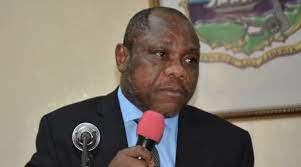
MONROVIA, September 23, 2026: Former Finance and Development Planning Minister Samuel D. Tweah Jr. has defended the economic record of the George Weah administration, arguing that reforms undertaken during its six years in office laid foundations in public finance, infrastructure and development financing that continue to benefit Liberia.
Speaking during an interaction with journalists, Tweah said the former administration worked closely with international development partners to mobilize resources for roads, electricity, agriculture and other critical sectors.
He pointed to investments in renewable energy and electricity as examples of initiatives developed through discussions with international partners, including the World Bank and its private-sector arm, the International Finance Corporation.
During Tweah’s tenure, the government and World Bank worked on projects covering energy, agriculture, roads, commerce, health and social protection. In a 2021 World Bank interview, Tweah identified roads, electricity and agricultural productivity among priorities for Liberia’s economic recovery.
The former minister said the Weah administration also sought to address Liberia’s heavy dependence on imported rice while pushing for increased investment in domestic agriculture.
According to him, improving road connectivity and electricity supply was critical to increasing agricultural productivity, connecting farmers to markets and stimulating broader economic activity.
Tweah also defended the controversial wage harmonization program introduced under the Weah administration, arguing that the policy was necessary to address disparities in public-sector salaries.
He said employees with similar qualifications and responsibilities were receiving significantly different salaries before the reform.
Tweah maintained that the exercise increased salaries for tens of thousands of public employees while reducing the earnings of thousands of others who were above the harmonized pay structure.
The 2019 harmonization exercise was designed to place government employees within standardized pay grades and address disparities in compensation. The government at the time also projected a reduction in the overall public-sector wage bill.
Tweah said lawmakers were also affected by efforts to reduce disparities and contain government personnel costs.
The former minister recalled that the government faced significant fiscal pressures during its tenure, including uncertainty surrounding external budget support, which he said complicated the government’s ability to meet some financial obligations.
He maintained that difficult fiscal decisions were required while the administration negotiated with institutions including the World Bank, African Development Bank and European Union for development and budgetary support.
Development partners provided significant financing during the period. In 2020, for example, Liberia and the World Bank signed an agreement for US$40 million in direct budget support for FY2019/2020.
Asked about his personal accomplishments as Finance Minister, Tweah declined to single out any major initiative as his individual achievement, saying government programs resulted from collective efforts involving then-President Weah, Cabinet officials, government agencies and international partners.
He said, however, that he remains particularly proud of policy reforms undertaken to strengthen public financial management and create conditions for economic growth.
Tweah also challenged the current administration to ensure that rising government revenues translate into tangible improvements in the lives of ordinary Liberians, particularly through private-sector expansion and job creation.
He argued that higher revenue collection should not be viewed as an achievement in isolation, saying the more important test is how public resources are used to improve infrastructure, expand economic opportunities and stimulate growth.
For Tweah, Liberia must pursue an economic strategy that combines stronger domestic revenue mobilization with increased private investment and job creation if higher government revenues are to produce meaningful improvements in citizens’ lives.
See more Liberia News Network stories in Google Search by adding LNN as one of your Preferred Sources.
★ Add LNN as a Preferred Source