Published: September 25, 2026
University of Liberia researchers and Kenyan partners are studying HPV vaccination coverage among adolescent girls across Liberia.
MONROVIA – About 8% of Liberian girls ages 10 to 12 have been vaccinated against HPV, the virus linked to cervical cancer, according to a household survey. Scientists at the University of Liberia are now testing blood from more than 1,000 girls to see whether that low figure is accurate.
By David Menjor
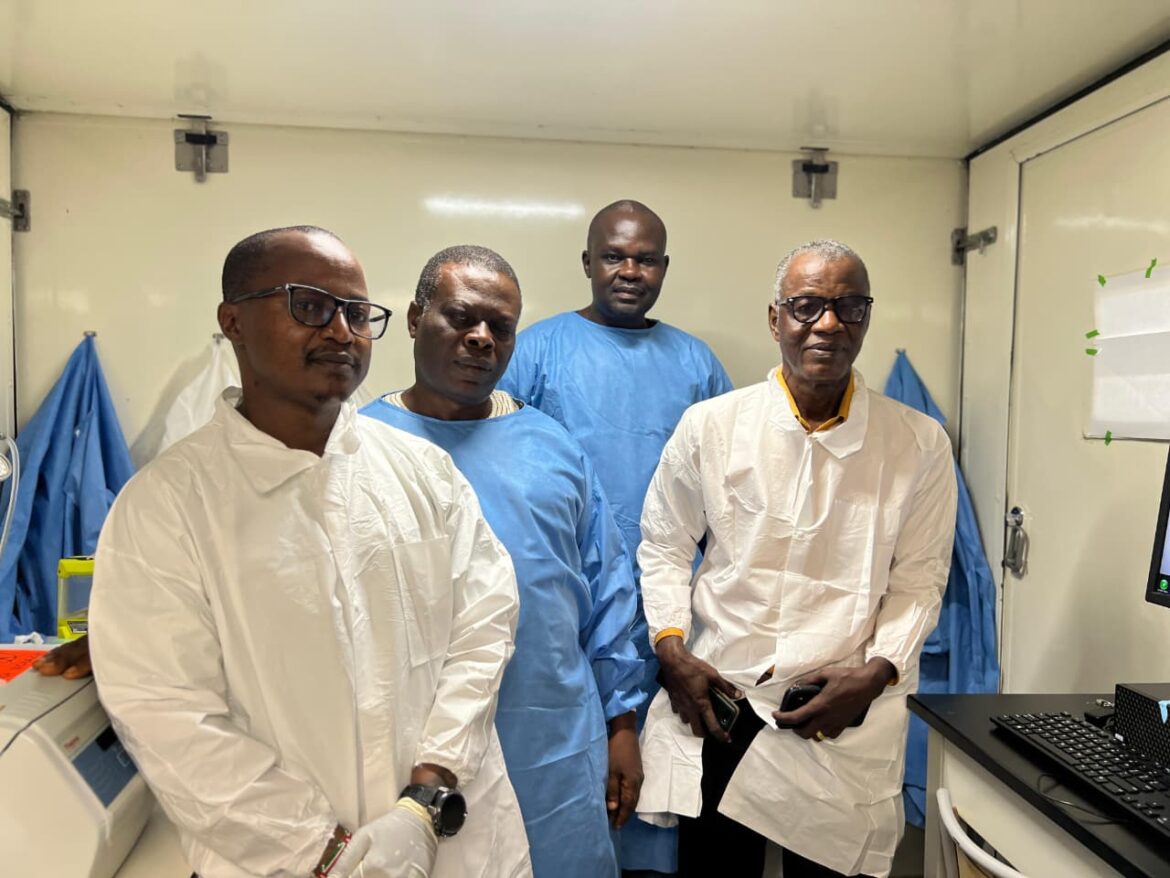
The testing is the final stage of a study the university is running with the National Public Health Institute of Liberia and researchers from the African Population and Health Research Center in Nairobi, Kenya. Using the university’s mobile laboratory, the team is analyzing samples from adolescent girls in all 15 counties. The aim is to check whether girls who reported being vaccinated developed an immune response.
“Can we validate that they were truly vaccinated or they were truly not vaccinated?” said Eubert Espira, an associate research scientist at the Kenyan center. The answer will show whether Liberia’s vaccination records are trustworthy.
The survey figures already put Liberia far behind its peers. In the household survey of 2,454 girls and 2,280 caregivers, reported coverage was 7.7% among the girls and 8.1% among the caregivers. A separate school-based survey of 3,086 adolescents in Montserrado, Margibi, Bomi and Grand Cape Mount counties found 5.3%. Alfred K. Tarway-Twalla, chairman of the university’s Department of Demography and principal investigator for the Liberian component, said Rwanda’s reported coverage is about 84% and Senegal’s is in the 40% range.
Researchers collected blood samples from 1,099 adolescents aged 10 to 12 for the laboratory phase. Peter Humphrey, head of the university’s mobile laboratory, said the samples are being tested for antibodies, which the immune system produces after infection or vaccination.
“We want to know the scale of the problem in Liberia,” Humphrey said.
He said the study is the first university-led research project of its kind to use the mobile laboratory, which had previously supported work by other organizations. The university has serological analysis equipment at its Science College, and the public health institute operates a second machine of the same kind. Tarway-Twalla said the university is considering lending its machine to Rwanda temporarily.
The study grew out of an African research consortium led by the Nairobi center, which the university’s Institute for Population Studies joined in late 2024. The consortium drew researchers from nine African countries. Liberia, Rwanda and Senegal were selected for the study, titled “Improving Methods for Measuring the Coverage and Equity of Human Papillomavirus (HPV) Vaccination in Liberia, Rwanda and Senegal.” It combines school-based, household and serological surveys. The first two have been analyzed.
The Kenyan center lists the project as running from November 2024 through September 2026, funded by the Gates Foundation and Gavi. The University of Rwanda, Johns Hopkins University, the University of California, San Francisco, and ICF Macro are also partners.
Tarway-Twalla said the partnership shows that Liberia does not have to remain only a consumer of research produced elsewhere, and that Liberian and foreign scientists can generate evidence together on problems that affect Liberians. Humphrey said the work is a partnership rather than an outside study conducted in Liberia.
The Kenyan team includes Patrice Akusa Mawa, a research scientist and laboratory director at the center. According to the center, he holds a master’s degree and a doctorate in immunology from the London School of Hygiene and Tropical Medicine. He previously led immuno-epidemiological studies of helminths, HIV and tuberculosis at the Uganda Virus Research Institute in Entebbe. He now leads the center’s work on biobanking leftover samples from health facilities in Kenya and Uganda.
The center describes Espira as a monitoring, evaluation and data systems specialist who has worked across sub-Saharan Africa, including in Namibia, South Africa, Uganda, Ghana, the Democratic Republic of Congo, Malawi, South Sudan and Ethiopia. In a 2025 publication, Espira and colleagues called for more public dialogue on HPV vaccination. They said trusted community voices, including male caregivers and religious leaders, have a role in countering misinformation.
Both Tarway-Twalla and Mawa said foreign-funded research cannot substitute for domestic investment.
“One of the reasons projects are sustained is because of the government’s contribution,” Tarway-Twalla said. He called for dedicated government funding for research and adequate operational support for the university. He said heavy reliance on donors puts research at risk when their priorities or funding arrangements change.
“We appreciate our foreign partners for their support,” Mawa said. He added that African governments need to invest more of their own resources in research and health so that countries can pursue their own priorities.
University of Liberia President Layli Maparyan welcomed the collaboration.
“It is exciting that biomedical research collaborators are visiting us from Kenya. It is a sign of the growing vitality of research science at UL,” she said.
“UL is poised to increase its research capacity and productivity in 2027 with the formation of UL-REDI, a new unit dedicated to supporting Research, Entrepreneurship, Development, and Innovation at UL,” she said.
Researchers said the findings could inform decisions on vaccination strategy, screening, public education, and where health resources go.
See more Liberia News Network stories in Google Search by adding LNN as one of your Preferred Sources.
★ Add LNN as a Preferred Source