Published: September 30, 2026
Liberian health officials, U.S. representatives and faith-based partners launch planning for a community health initiative in Monrovia.
MONROVIA – More than 750 churches and mosques would work alongside government clinics to deliver HIV, malaria, tuberculosis, maternal and child health and nutrition services under a U.S.-backed Faith and Community Initiative that Liberia’s Ministry of Health launched Tuesday.
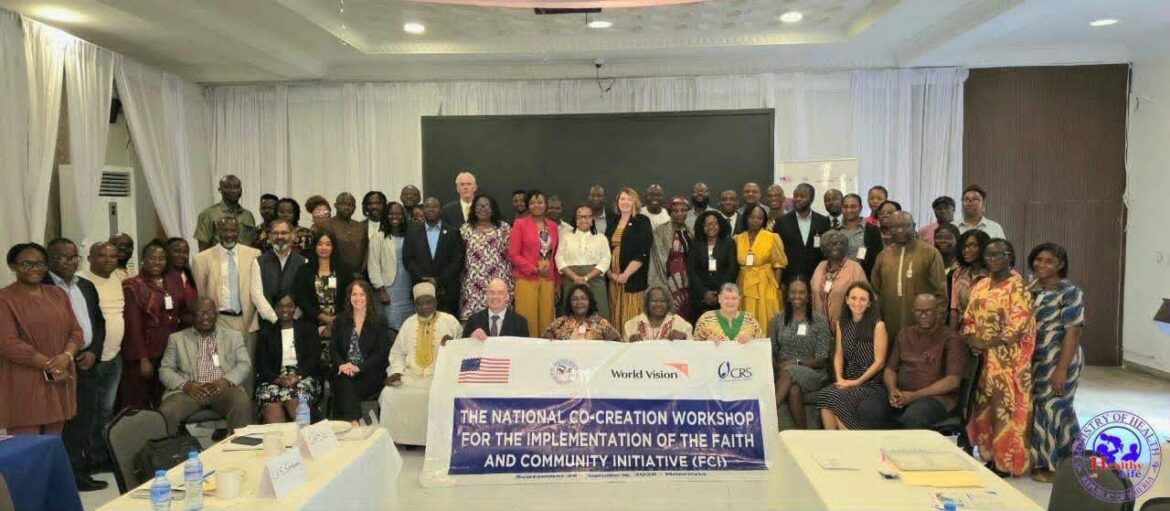
Under the proposed model, the network would be anchored by three hubs, expected to include faith-based hospitals, and 30 community health service points, working within existing government health structures. The Ministry of Health is launching the initiative with the U.S. government, Catholic Relief Services, faith-based organizations and other partners, opening with a three-day national workshop in Monrovia to design how it will run.
“The objective is not to present a finished program. The objective is to build the program together,” said Glynnis Commings-John, the Catholic Relief Services country representative in Liberia.
The U.S. government announced the Faith and Community Initiative globally in August as part of its America First Global Health Strategy, and it is being carried out in 17 countries. In Liberia, it is meant to build on existing faith-based and community health work, address gaps identified under a memorandum of understanding between the government and its partners, and support the government’s ARREST Agenda.
Dr. Catherine T. Cooper, chief medical officer and deputy minister for health services, said Liberia still faces serious problems with maternal and child health, immunization, malaria, HIV, tuberculosis, sanitation and noncommunicable diseases. She urged religious and community leaders to use their networks to get accurate health information and essential services to households.
“Health systems are stronger when communities are not only recipients of services, but active partners in designing, implementing, and evaluating these services,” Cooper said.
Commings-John said the initiative is not meant to create a health system separate from the government’s.
“These challenges cannot be addressed by government alone, by donors alone, or by faith organizations alone. They require all of us working together,” she said. “Lasting impact is achieved when investments strengthen national leadership and national ownership.”
Jan Scislowicz, the environment, science, technology and health officer and foreign assistance lead at the U.S. Embassy in Monrovia, formally launched the initiative.
“I am eager to learn from you all as we work together and come together with the interest of the Liberian people,” Scislowicz said.
Sheikh Idrissa Swaray, executive director of Muslim Aid Liberia, welcomed the approach. “I want to say that initiatives like this should always have faith-based organizations involved,” he said.
The launch drew representatives of the ministries of Health and Finance and Development Planning, the U.S. Embassy, Catholic Relief Services, World Vision, the Office of the Archbishop of Monrovia, and faith-based, civil society and community organizations.
By the end of the workshop, participants are expected to produce a Liberia-specific framework setting priorities and arrangements for community engagement, coordination, governance and sustainability.
See more Liberia News Network stories in Google Search by adding LNN as one of your Preferred Sources.
★ Add LNN as a Preferred Source