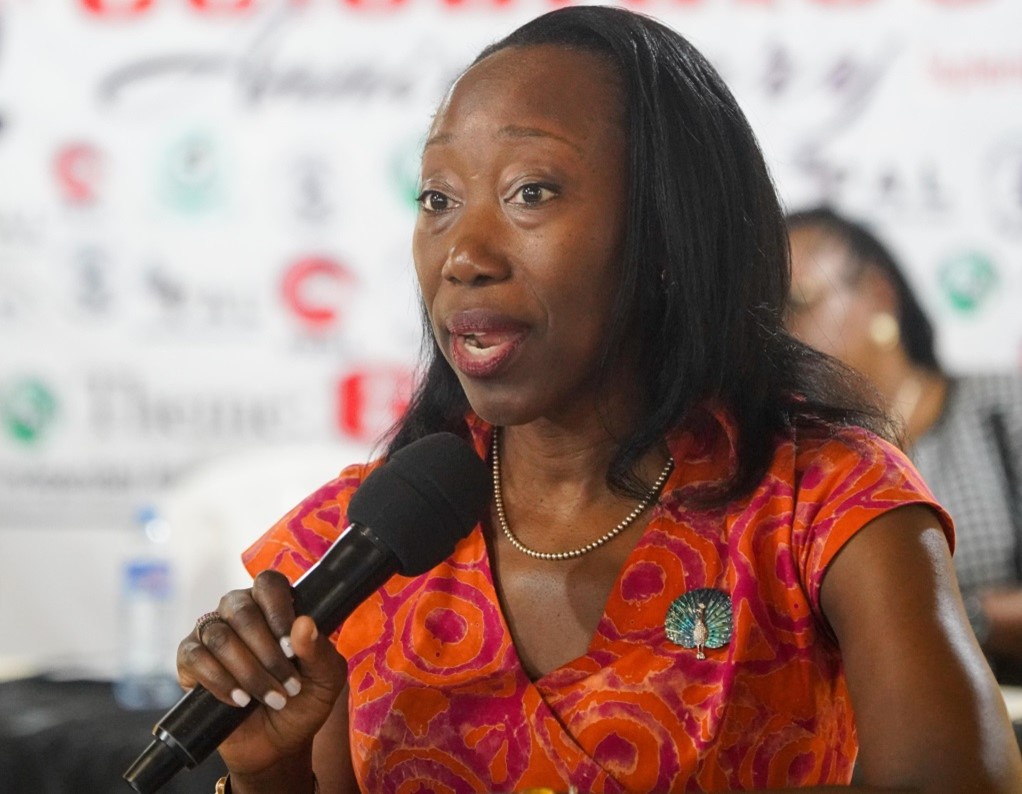
MONROVIA – The World Bank has told Liberian journalists their work is part of national infrastructure. Country Manager Georgia Wallen made the case at the Press Union of Liberia’s (PUL) 62nd anniversary. She placed credible journalism beside roads, electricity and private investment. Investors need reliable information, she argued. Citizens need to understand the policies that shape their lives. Her message came the same day the union cataloged arrests, threats and court summonses against reporters. Wallen also handed the media an assignment. Liberia’s population is projected to exceed eight million by 2042. She said that story is not yet widely told. Her speech ties the health of the press to Liberia’s economic future, as THE ANALYST reports.
The World Bank Group (WBG) Country Manager for Liberia, Georgia Wallen, has described independent and credible media as “part of the infrastructure of development,” urging Liberian journalists not to underestimate the value of their profession.
Wallen delivered the keynote address on Wednesday, September 30, 2026, at the 62nd anniversary celebration of the Press Union of Liberia (PUL) in Monrovia, held under the theme “Empowering Independent Media for Democracy, Accountability and Sustainable Development in Liberia.”
“History and research make clear that independent and credible media is not an obstacle to development,” Wallen declared. She congratulated the union on 62 years of service, describing the anniversary as “more than an opportunity to celebrate the past” and also a chance to reflect on the opportunities of the present and the possibilities of the future.
Six Decades of Witness
Reflecting on the past, Wallen noted that in the wide backdrop of Liberia’s 179-year history, the PUL has endured for over six decades.
Liberian journalists, she said, have borne witness to the country’s experience, “giving voice to the voiceless and providing a lifeline of information in good times and in hard times.”
She described the anniversary as a chance to recognize and honor the resilience, courage and commitment of Liberian journalists and to appreciate the importance of journalism in the life of Liberia.
Across the years, Liberia’s media has been the eyes and ears of society and has also influenced the national conscience, Wallen observed. What journalists investigated, pursued, reported and published, she argued, helped to shape public understanding and, in many cases, influenced the direction of the national conversation.
She recalled that the World Bank focused its 2002 World Development Report (WDR) on “Building Institutions for Markets” when Liberia was in the throes of its most difficult moments and on the threshold of achieving enduring peace.
The report dedicated an entire chapter to the role of the media, Wallen explained, highlighting its instrumental role in national and global development, from informing and giving voice to people on the margins and improving public health to being “an impetus for commerce.”
According to Wallen, the report proposed that media can help to improve governance and support markets, and that realizing these outcomes requires media that is independent, accountable and able to provide relevant information and reflect diverse social views.
That, she noted, underlines one of history’s key lessons, namely “that the foundation of journalism is credibility.” Credibility, Wallen stated, “is the product of an enduring commitment to truth, transparency and accountability.” This commitment, she said, includes journalists’ efforts to verify facts, provide context and uphold the highest standards of accuracy and fairness, and it has guided the PUL’s service to the public, near and far, over the past 62 years.
Informed Public, Stronger Development
Turning to the present, Wallen said members of the media are uniquely positioned to strengthen Liberia’s development by asking important questions, shedding light where it is needed and amplifying the voices of Liberian citizens and residents. In doing so, she said, journalists help to promote understanding across the public and private sectors.
“Development depends on an informed public, and an informed public depends on a free and responsible press,” Wallen asserted. Development requires more than roads, electricity, digital infrastructure and private investment, she maintained, adding that it also requires trusted information, transparency and public confidence.
“Investors need reliable information. Citizens need to understand policies that affect their lives. Communities need a platform to voice their concerns and aspirations,” she said.
By reporting responsibly on both challenges and progress, Wallen argued, the media helps create an environment where businesses can grow, reforms can succeed and development can be inclusive and sustainable.
Social Media, AI Raise Stakes
Wallen cautioned that the rapid growth of social and new media imposes an even greater responsibility on professional journalists. Information travels faster than ever before, she observed, with new technologies that pose unprecedented opportunities, risks and demands.
She cited the World Bank’s 2026 WDR, “The Promise of Artificial Intelligence,” which notes that social media and artificial intelligence (AI) tools are spreading rapidly while acknowledging that information accuracy requires robust local institutions and foundational data systems. That, Wallen said, is integral to building foundations for more and better jobs, which is the focus of the WBG’s partnership with Liberia.
“As it becomes harder to distinguish truth from fiction, journalism will be increasingly challenged to become more reliable, more rigorous and more indispensable,” Wallen warned. Journalists play a key role, she added, when their stories reflect the public interest and what they hold to be true at heart.
A Story Not Yet Told
Looking to the future, Wallen offered the media a story she described as crucial to Liberia’s future but not yet widely told. Liberia’s 2022 National Population and Housing Census, she noted, projected that the country’s population will grow to over eight million people by 2042, and each life has limitless potential.
“What will it take for Liberia to be ready for that future? What investments are needed now to prepare Liberia for realizing its national vision and laying the foundation for a prosperous, equitable and bright future for its growing population?” she asked. Journalists, Wallen said, have a vital role in posing and helping to answer such questions.
She pointed to the Liberia Institute of Statistics and Geo-Information Services (LISGIS), which is overseeing important national statistical surveys, from the recent Agriculture Census to forthcoming surveys on household expenditure and firms. The media, she said, plays an incomparable role in going beyond the numbers to uncover the stories of Liberians countrywide.
Voices of the Unheard
“Every microphone you hold, every camera you operate, every interview you conduct, and every story you publish has influence and value,” Wallen told the journalists. While journalists around the world may write about Liberia, she noted, the PUL has a distinct advantage because its members are on the ground in counties, districts and communities across the country.
Liberian journalists have unique access, opportunity and responsibility to honor and amplify the voices of those who are often unheard, she stressed. “The voices of Liberia’s farmers, workers, entrepreneurs, young people, women, children and communities matter; you can help us to hear them,” Wallen said. The media, she added, is positioned to inform citizens about decisions that affect their lives, to promote and help shape national dialogue and to tell the stories that need to be told, and she wished the PUL an even stronger contribution to Liberia’s story, past, present and future.
See more Liberia News Network stories in Google Search by adding LNN as one of your Preferred Sources.
★ Add LNN as a Preferred Source