MONROVIA, LIBERIA – The Center for Transparency and Accountability in Liberia has called for stronger legal, institutional and anti-corruption measures in the country’s mining sector, warning that weak enforcement of mining laws, bribery, underreporting and limited transparency in beneficial ownership continue to create governance challenges within an industry central to Liberia’s economic development.
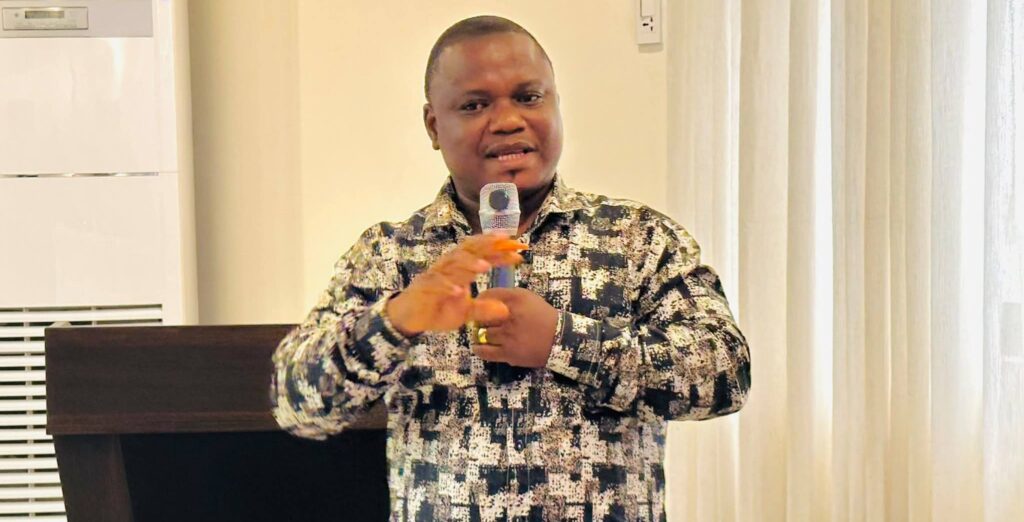
CENTAL Executive Director Anderson Miamen made the call Thursday, October 1, 2026, while delivering a presentation on mining, corruption and mitigation measures at a Civil Society and Communities Roundtable on Mining Sector Reform in Monrovia.
The roundtable was organized in partnership with the Sustainable Development Institute, Integrity Watch Liberia, Integrated Development and Learning, Civil Society Independent Forest Monitors, Medica Liberia, Sustain Earth and Equity Defenders. The gathering brought together local stakeholders and other actors to discuss challenges affecting Liberia’s mining sector and develop recommendations aimed at promoting more inclusive and sustainable development.
Miamen identified weak enforcement of mining-related laws as one of the central problems requiring attention. While Liberia has established legal and regulatory frameworks governing the mining industry, the effectiveness of those frameworks depends heavily on enforcement, institutional capacity and the ability of public agencies to ensure that companies and other actors comply with established requirements.
The CENTAL Executive Director also identified corruption, including bribery, as a concern affecting the sector. He further pointed to underreporting and inadequate transparency around beneficial ownership as areas requiring stronger safeguards.
Beneficial ownership transparency is particularly important in an extractive industry where substantial financial interests can be involved in concessions, contracts and commercial relationships. Knowing who ultimately owns or controls companies participating in the sector can help strengthen accountability and allow the public and regulatory institutions to better understand the interests behind mining operations.
Miamen consequently proposed amendments to Liberia’s mining laws to bring the legal framework in line with present-day realities. His recommendation comes as the country seeks to expand mining activity while also improving governance, investment conditions and the contribution of natural resources to national development.
Liberia’s mining sector remains an important part of the economy, with iron ore and other minerals providing opportunities for investment, government revenue, employment and infrastructure development. The government has also been emphasizing greater value addition and local participation in the minerals sector.
But increased mining activity also raises the importance of strong oversight. The question is not only how much mineral wealth Liberia can extract, but how effectively the country can manage the revenues, environmental consequences, community relationships and economic opportunities associated with extraction.
Miamen’s proposals therefore place institutional accountability at the center of mining-sector reform.
Among the measures he recommended was the development and implementation of anti-corruption mechanisms designed to establish stronger checks and balances. Such mechanisms could help reduce opportunities for abuse by strengthening controls around decision-making, financial transactions and regulatory processes.
He also called for the establishment of a dedicated anti-corruption court to accelerate the handling of corruption cases. The proposal reflects a wider concern about the pace at which corruption-related cases move through Liberia’s justice system and the need for mechanisms capable of addressing complex economic and financial offenses more efficiently.
Another recommendation was the establishment of an inclusive community monitoring body for the mining sector. The proposed mechanism would provide communities with a more structured avenue for participating in monitoring mining activities and raising concerns about developments affecting their land, livelihoods and environment.
The proposals come at a time when Liberia is pursuing greater transparency in extractive-sector governance. The Liberia Extractive Industries Transparency Initiative’s 2026 work plan, for example, includes activities related to contract transparency, beneficial ownership, anti-corruption, extractive-sector reporting and public disclosure of extractive revenues.
The government has also been working to ensure that mining revenues produce tangible benefits for communities. In August 2026, the Ministry of Mines and Energy convened stakeholders to discuss implementation of a US$5 million annual Community Development Fund under ArcelorMittal Liberia’s Third Mineral Development Agreement.
For civil society organizations, however, the effectiveness of such initiatives depends on transparency, monitoring and meaningful participation by affected communities.
The Sustainable Development Institute has previously documented concerns from mining communities regarding access to information, community benefits, employment, infrastructure and environmental impacts. Its work has emphasized the importance of ensuring that communities participate meaningfully in natural-resource decision-making.
Miamen’s presentation consequently adds another voice to the continuing national conversation about how Liberia can transform its mineral wealth into broad-based development while strengthening safeguards against corruption.
For Liberia, the challenge is increasingly about moving from extraction to accountable resource governance. Strong laws must be enforced. Ownership information must be transparent. Revenue flows must be traceable. Corruption allegations must receive credible investigation and prosecution, while communities affected by mining must have meaningful channels to monitor operations and seek redress.
As Liberia continues to attract investment into its mining sector, the recommendations from CENTAL place responsibility on both government institutions and other stakeholders to ensure that economic opportunity is matched by accountability.
The country’s mineral wealth can generate substantial economic value, but the strength of the institutions managing that wealth will determine how much of that value translates into lasting national development.
See more Liberia News Network stories in Google Search by adding LNN as one of your Preferred Sources.
★ Add LNN as a Preferred Source