
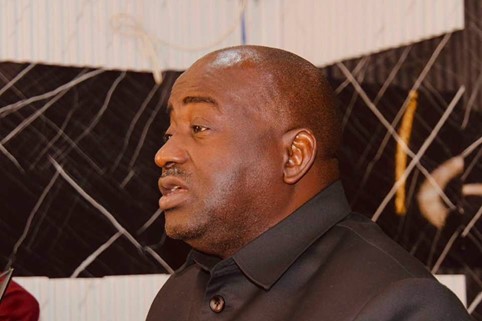
MONROVIA – Nimba County lawmaker Musa Hassan Bility has turned his column into a reckoning with Liberian partisanship. He says critics are cheered when they wound rivals and attacked when they turn on friends. His charge cuts both ways. Opposition camps forgive their own failures, while government camps excuse today’s abuses. Bility argues that an election cannot turn wrongdoing into virtue. He ties the cycle to the classroom without materials, the clinic without medicine and the hungry household. He also offers his camp as “another option” built on consistent standards. He concedes that pitch must first survive the scrutiny he demands of others. Bility insists he will hold firm despite the abuse, As THE ANALYST reports.
Nimba County District #7 Representative Musa Hassan Bility, political leader of the Citizens Movement for Change (CMC), has declared that wrongdoing does not become virtue simply because power changes hands, insisting that government and opposition must answer to the same standard.
Writing in his “Letter from Saclepea” column, titled “Between the Rock and the Hard Places,” Bility described a difficult place to stand in Liberian politics: “the place where your convictions do not change simply because the people in power have changed.”
“It is a lonely place. A rough place. A place where yesterday’s applause can become today’s abuse, even though you are still saying the same thing,” he wrote, calling that position “between the rock and the hard places.”
Bility argued that “an election cannot turn wrongdoing into virtue,” yet “too much of our politics demands precisely that transformation.”
Applause Turns to Abuse
Bility observed that when a critic targets the government, those in opposition celebrate him, sharing his words, praising his courage and declaring that he is speaking for the people.
“Then you turn the same scrutiny upon their own record, their own conduct, their own failures, and suddenly, the courageous man becomes the enemy,” he wrote.
The people in government, he noted, follow the same pattern. “Speak about yesterday’s failures, and they welcome your voice.
Speak about today’s abuses, and they question your motives, attack your character, and reach for every weapon available to silence you,” Bility stated, adding: “Your position has not changed. The issue has changed. And because the issue has changed, so has their affection for you.”
He described this as “the arduous journey of standing in the middle,” which he defined as “the ground on which every political actor must answer to the same standard.”
Standing there, he argued, “requires judgment. It requires taking a position. And it requires the courage to take that position even when your friends are the ones who must answer for it.”
One Standard for All
“If misusing public resources was wrong yesterday, it is wrong today. If arrogance in office was unacceptable yesterday, it is unacceptable today. If ordinary Liberians deserved dignity under the previous government, they deserve dignity under this one,” Bility declared.
He lamented that Liberians are “expected to condemn an act when an opponent commits it and find an explanation when a friend commits it,” and to “remember every failure of yesterday while overlooking every failure of today, or expose every failure of today while pretending that yesterday was an age of innocence.” When they refuse, he wrote, “the anger becomes personal. It becomes vehement. It becomes hateful.”
“People who embraced us yesterday begin to insult us today. People who called us principled begin to call us confused. People who celebrated our independence begin to demand our obedience,” he noted.
Bility admitted there is pain in discovering that some people supported his criticism only because it wounded somebody they disliked: “You believed you shared a principle. They believed you shared an enemy.”
He said that discovery “tests the heart” but “also clarifies our purpose,” warning that “Liberia cannot build an honest political system upon loyalties that excuse the very conduct they once condemned.”
Ordinary Liberians Bear the Cost
Bility maintained that ordinary Liberians are paying too much for this cycle. “They work, struggle, sacrifice, and hope. They contribute their sweat to a nation whose public wealth should improve their lives. Yet the struggle for power too often takes precedence over their responsibility to serve,” he wrote.
When public office becomes a means of private enrichment, he argued, the cost reaches far beyond the treasury: “It reaches the classroom without materials, the clinic without medicine, the household without enough food, and the young person who begins to believe that honest effort has no future.”
These are the people, Bility stated, who must be kept in view when the attacks come, insisting that “their suffering cannot become background noise while political camps argue over whose failures deserve forgiveness.”
Bility Pitches ‘Another Option’
That, he explained, is why he and his colleagues believe “Liberia needs another option: an option rooted in consistent standards, responsible leadership, and institutions that serve the citizen.”
He called for a system that is “grateful for the people’s trust and resourceful in meeting their needs,” one “in which public money produces public benefit” and “in which accountability reaches the powerful, including those we know, those we like, and those who stand beside us.”
Bility insisted that the commitment must begin with his own camp.
“We cannot demand scrutiny of others and seek shelter from it ourselves. We cannot promise change while carrying the same habits into a different political organization. Our own conduct must withstand the standards we ask the country to embrace,” he wrote.
He acknowledged that the work is hard and “asks more of us than a slogan,” requiring his camp “to accept correction, resist favoritism, and hold our ground when compromise would bring applause.”
Bility also admitted the temptation to make the journey easier by saying only what one camp wants to hear, leaving its failures untouched, accepting its protection and enjoying its praise, but warned that “every silence purchased that way leaves the country trapped in the same cycle.”
‘We Will Keep Going’
“We are determined to break that cycle,” Bility declared, conceding that “some days, support will fall away” and that “there will be moments when the abuse is exhausting, and the road ahead feels painfully long.” He said his camp must prepare for those moments “without letting them govern our decisions.”
The support they seek, he wrote, “must grow around a shared commitment to Liberia, a commitment strong enough to survive disagreement and honest criticism.”
Bility said he wants citizens “who can stand with a principle even when that principle challenges their preferred leader,” adding: “We must be willing to do the same. That is how trust becomes durable. That is how political culture begins to change.”
“So yes, we stand between the rock and the hard places. We feel the pressure. We understand the danger. We know how quickly applause can turn into hostility. And still, we are firm,” he wrote.
Bility closed by insisting that the country deserves the effort, its people deserve the courage, and “our children deserve to inherit something better than an endless power struggle between people who condemn in opposition what they excuse in government.”
“The journey is arduous. The work is difficult. But we believe in it. We are committed to it. And we will keep going,” he concluded, wishing readers a blessed week.
See more Liberia News Network stories in Google Search by adding LNN as one of your Preferred Sources.
★ Add LNN as a Preferred Source