
Published: October 12, 2026
Liberia does not belong to the men who occupy its highest offices. Neither does the House of Representatives belong to whichever faction can gather enough lawmakers to obstruct it. Both belong to the Liberian people, whose needs must take precedence over another struggle for the gavel.
That principle should govern Tuesday’s sitting.
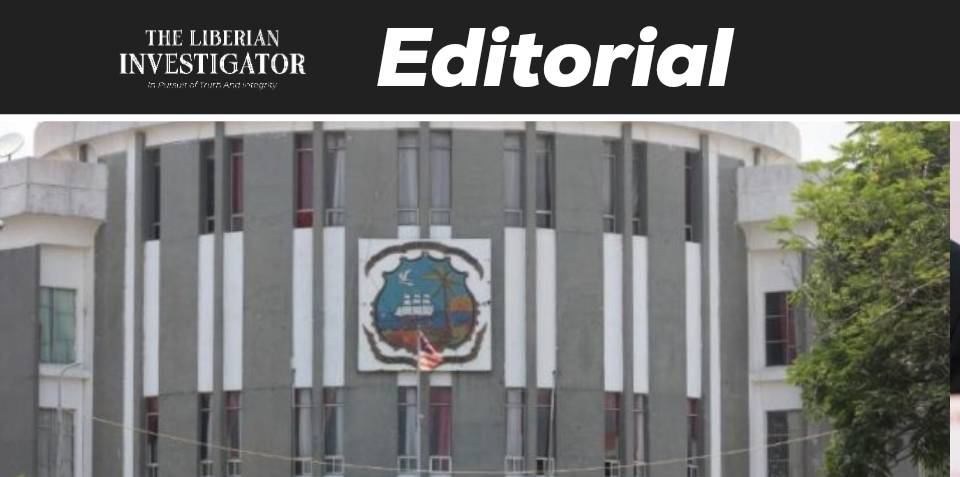
Our report describes a chamber facing renewed division as it approaches the work of considering the 2027 national budget. Forty lawmakers signed an attendance sheet at a separate meeting while the House’s reopening ceremony drew poor turnout. Some are pressing for leadership changes; at least one has expressly rejected that purpose while demanding financial explanations.
Those distinctions matter. Attendance at a meeting does not establish support for every proposal discussed there. Nor did absence from a ceremonial reopening prove that a regular sitting would fail. Tuesday will provide a more meaningful test.
But Liberia should not have to wait anxiously to discover whether its representatives will permit their own institution to work.
The Liberian Investigator’s position is clear: the House must sit, its leadership must account for public resources, and any effort to change that leadership must follow lawful procedures. These obligations can and should be pursued together.
Speaker Richard Nagbe Koon and Deputy Speaker Thomas P. Fallah have no entitlement to public sympathy merely because their leadership is under pressure. Their first responsibility is to explain their stewardship. The lawmakers challenging them have an equally binding responsibility to demonstrate that their actions serve the country.
Neither side can establish patriotism by counting its supporters.
The financial complaints require serious attention. According to our report, a resolution being circulated alleges altered allocations, mismanaged constituency funds and more than US$5 million in legislative funds and benefits that have not been properly accounted for. These remain allegations. They demand records and investigation, rather than instant verdicts.
The leadership should publish a reconciliation showing what was appropriated, what the government released, what the House received, what was spent and what remains outstanding. Where payments are delayed, identify the obligation, the responsible institution and the reason.
An allocation in the budget is not proof that the cash arrived. Equally, citing quarterly disbursements does not answer a specific question about money already received.
The Finance Ministry should provide the relevant release records so that claims can be tested against the same evidence. If discrepancies remain, they should be referred for independent examination through the appropriate oversight institutions.
These are public funds. Citizens have as much right to understand their use as the lawmakers disputing them.
A private settlement that restores benefits and silences the complaints would leave the central accountability question unanswered. If money was properly administered, publish the evidence. If it was mishandled, establish responsibility and pursue the appropriate consequences.
The country deserves a resolution that survives beyond the next political bargain.
Yet financial grievances do not give lawmakers a moral license to suspend the nation’s business indefinitely. A representative’s office needs resources to function, and legitimate obligations should be honored. But the people who elected that representative also need a functioning legislature.
The farmer waiting for a passable road, the family depending on a public clinic and the student seeking a usable classroom cannot be expected to absorb the consequences of another parliamentary confrontation. Their interests must remain present in every discussion about legislative benefits and leadership positions.
The national budget concerns those citizens’ lives. It requires scrutiny, debate and judgment. A House consumed by its own survival struggles risks denying the budget the attention it deserves.
Patriotism must therefore be expressed in attendance, honest accounts, serious committee work and respect for institutions. It should be visible in what lawmakers do with the authority entrusted to them.
The history described in our report makes the present confrontation especially troubling. Koon’s rise followed a prolonged leadership struggle marked by separate meetings, rival claims to authority and judicial intervention. The country should have emerged from that experience with a stronger commitment to procedures that prevent another institutional breakdown.
Instead, the prospect of a renewed boycott suggests that obstruction may be becoming an accepted route to political advantage.
That precedent should worry every Liberian, including those who dislike the current leadership. A tactic does not become good for the Republic because it is now directed at someone who previously benefited from it.
If every dissatisfied coalition can bring the House to a standstill until its demands are met, public service becomes dependent on the next faction’s consent. Liberia cannot build dependable government on that basis.
Koon and Fallah should respond with disclosure and fair procedures. Threats cannot resolve a credible financial question. Dissident lawmakers should present evidence, submit clear demands and pursue their case while maintaining legislative business. The merits of their complaints must not disappear beneath the damage caused by their tactics.
President Joseph Nyuma Boakai and Vice President Jeremiah Kpan Koung also have a responsibility to respect the House’s institutional independence. Any mediation should encourage transparency and a lawful settlement. Executive influence should never determine which legislative faction receives recognition or access to public resources.
The country needs a legislature capable of scrutinizing the executive. Its authority is weakened when internal disputes can be settled only through presidential intervention.
On Tuesday, citizens should see representatives prepared to work and leaders prepared to answer questions. The House should publish attendance, establish a transparent process for resolving the financial complaints and protect the budget timetable from factional disruption.
Liberians have entrusted these lawmakers with a national institution. They should not have to plead with them to keep it functioning.
Koon’s tenure will end. Fallah’s tenure will end. Every faction will eventually change its name, membership or purpose. The Republic must endure beyond them all.
Let the House conduct itself with that permanence in mind. Liberia comes first.
See more Liberia News Network stories in Google Search by adding LNN as one of your Preferred Sources.
★ Add LNN as a Preferred Source