
Gbeisay raises alarm over Mark Jabateh’s appointment amid threats linked to contested Ganta land dispute
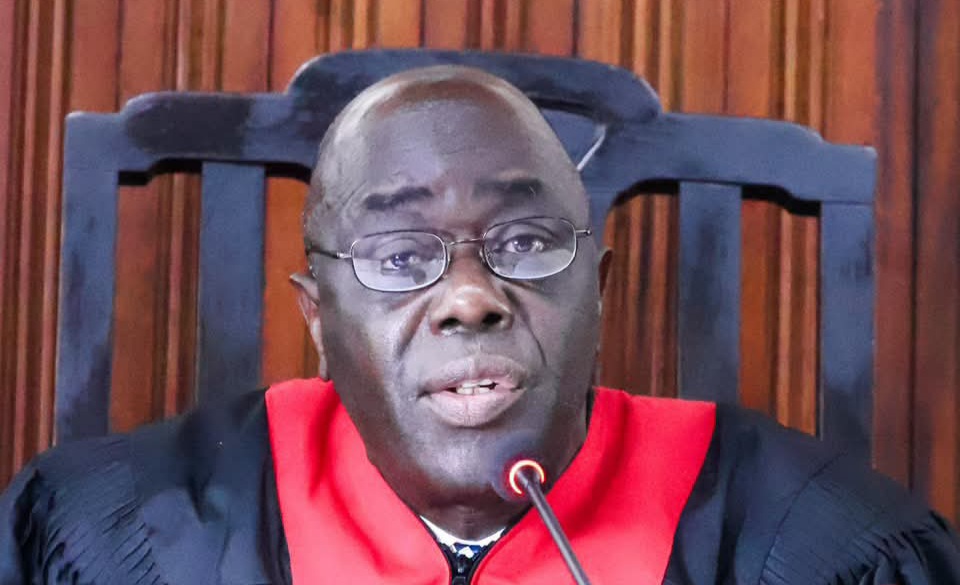
MONROVIA, LIBERIA — Chief Justice Yamie Quiqui Gbeisay Sr. has sharply criticized the administration of President Joseph Nyuma Boakai over its appointment of Mark Jabateh to a ministerial position, raising serious questions about the government’s commitment to judicial independence amid a contentious land dispute in Ganta, Nimba County.
Delivering his Charge at the opening of the Supreme Court’s October 2026 Term on Monday, October 12, Chief Justice Gbeisay alleged that individuals connected to a dispute over land claimed by the Kalefa Turay family had obstructed judicial proceedings and that he and members of his immediate family had subsequently faced serious threats linked to the enforcement of a court judgment.
The Chief Justice’s remarks place the Boakai administration under renewed scrutiny over the relationship between the Executive and the Judiciary, particularly when politically connected individuals are implicated in disputes involving the enforcement of court decisions.
In a pointed reference to Jabateh’s appointment, Gbeisay declared: “The past government took no action; instead, the present government rewarded him with a ministerial position in government.”
The statement raises a fundamental question: What message does the appointment of a person accused of obstructing judicial processes send to citizens who depend on the courts to protect their rights and enforce the law?
JUDICIAL INDEPENDENCE UNDER SCRUTINY
The Chief Justice’s allegations are particularly significant because they involve the alleged obstruction of judicial functions and threats against the head of Liberia’s Judiciary and his family.
If substantiated, such conduct would raise serious concerns about the safety of judicial officers, the enforcement of court judgments, and the ability of the courts to operate without intimidation.
The controversy also presents a difficult question for the Boakai administration: whether appointments to public office adequately account for allegations of conduct that could undermine the authority of the courts.
A ministerial appointment does not, by itself, establish wrongdoing or prove that an individual has obstructed justice. However, when the Chief Justice publicly raises concerns about a person’s alleged conduct in connection with a judicial dispute, the government faces legitimate questions about the circumstances surrounding that appointment.
The administration should therefore clarify the basis for Jabateh’s appointment and address the Chief Justice’s concerns with the seriousness they warrant.
THE GANTA LAND DISPUTE
At the center of the controversy is a contested parcel of land in Ganta, Nimba County, claimed by the Kalefa Turay family.
According to Gbeisay, the enforcement of a court judgment concerning the property was accompanied by serious threats directed at him and members of his immediate family.
The allegations raise concerns extending beyond the ownership of the disputed property. They touch on whether court judgments can be enforced without intimidation and whether judicial officers can discharge their constitutional responsibilities without fear of personal retaliation.
Nevertheless, the specific nature of the alleged obstruction, the individuals involved, and the details of the threats require further documentation and independent verification.
The public also deserves clarity regarding the underlying court judgment, the parties to the dispute, and the steps taken by law enforcement authorities to investigate the alleged threats.
WHAT IS THE GOVERNMENT’S RESPONSE?
President Boakai’s administration now faces questions about whether it will publicly address the Chief Justice’s allegations and explain the circumstances surrounding Jabateh’s appointment.
The government should clarify whether it was aware of the allegations before the appointment, whether any investigation was conducted, and whether law enforcement authorities have taken action regarding the alleged threats.
Jabateh should also be given an opportunity to respond to the allegations and explain his position regarding the land dispute.
These questions are essential to ensuring that public scrutiny does not become a substitute for due process.
A TEST FOR THE RULE OF LAW
The controversy presents an important test of the relationship between Liberia’s Executive and Judiciary.
The Judiciary is responsible for interpreting the law and ensuring that court decisions are respected. The Executive, meanwhile, has a responsibility to uphold the law, protect judicial officers, and ensure that allegations of threats or obstruction are investigated impartially.
Neither political affiliation nor public office should determine whether allegations of interference with judicial proceedings receive serious attention.
The Chief Justice’s public intervention makes the matter especially consequential. His allegations warrant a transparent response, an impartial investigation where appropriate, and safeguards against any threats to judicial officers or their families.
Ultimately, the issue is not simply whether Mark Jabateh should hold a ministerial position. It is whether Liberia’s institutions can demonstrate that judicial authority will be respected regardless of the political connections or public standing of the individuals involved.
For a country seeking to strengthen public confidence in its justice system, the credibility of the courts depends not only on the judgments they issue but also on whether those judgments can be enforced without intimidation or political interference.
See more Liberia News Network stories in Google Search by adding LNN as one of your Preferred Sources.
★ Add LNN as a Preferred Source