
Former President’s Remarks Spark Questions About Liberia’s Long-Standing Dependence on Washington and Africa’s Quest for Sovereignty
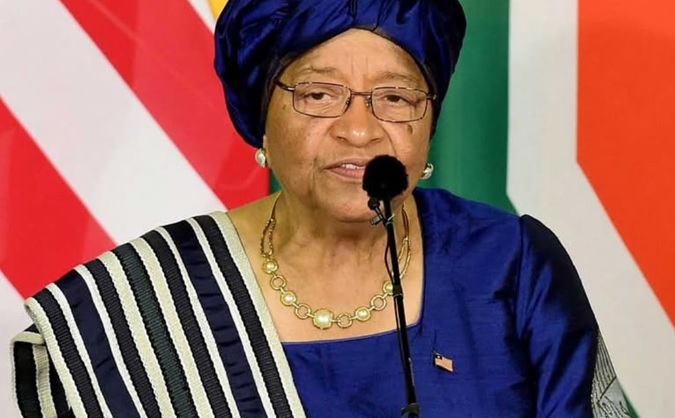
MONROVIA, LIBERIA — Former Liberian President Ellen Johnson Sirleaf has called for a fundamental change in Liberia’s political mindset and foreign policy orientation, declaring that the country must stop following America and embrace a new era of African sovereignty and independent decision-making.
Her remarks, made during a radio interview, have drawn attention because of Liberia’s historically close relationship with the United States and Sirleaf’s own reputation for maintaining strong ties with Washington during her presidency.
“It’s time to change,” Sirleaf declared, arguing that Liberia cannot continue operating under the same structures, policies, attitudes, and mindsets while the rest of the world continues to evolve.
“Running on the same structure, same kind of policies, same type of attitudes and mindset must stop. It is time for change. Africa is changing, the world is changing, and we can’t be left behind,” she said.
She further urged Liberia to reconsider its long-standing tendency to follow America, calling instead for the country to join what she described as Africa’s growing push for sovereignty and respect.
Her statement raises a fundamental question: Can Liberia genuinely pursue an independent national development agenda while continuing to rely heavily on political, economic, and diplomatic relationships with the United States?
A REMARKABLE DEPARTURE FROM LIBERIA’S TRADITIONAL APPROACH
Sirleaf’s comments are particularly significant given Liberia’s historical relationship with the United States, which has influenced aspects of the country’s political institutions, economic relationships, and international outlook.
During her presidency from 2006 to 2018, Sirleaf maintained close diplomatic and development ties with Washington. Her administration operated within a framework that emphasized international partnerships, foreign investment, and cooperation with Western governments and institutions.
Her latest remarks therefore invite scrutiny of whether Liberia’s traditional approach to international relations has delivered the level of economic independence, institutional strength, and national development that Liberians expect.
However, maintaining close relations with America is not necessarily incompatible with national sovereignty. The central issue is whether Liberia’s international partnerships advance its own interests or leave the country with limited room to make independent policy decisions.
Sirleaf’s statement appears to challenge Liberian leaders to examine that distinction.
LIBERIA’S HISTORICAL TIES WITH AMERICA: PARTNERSHIP OR DEPENDENCE?
Liberia’s relationship with the United States is rooted in the country’s founding in the nineteenth century. Over time, the relationship has extended into diplomacy, education, security cooperation, trade, development assistance, and investment.
Yet the existence of a longstanding partnership does not automatically guarantee economic transformation or political independence.
Liberia continues to face major development challenges, including poverty, unemployment, infrastructure deficits, limited industrial production, and dependence on imported goods.
These conditions raise important questions about the country’s development priorities and the effectiveness of successive administrations.
Have Liberia’s leaders sufficiently used the country’s international partnerships to build domestic industries, strengthen public institutions, improve education, and create sustainable employment?
And have successive governments developed policies that allow Liberia to negotiate with foreign partners from a position of national interest rather than simply accepting established arrangements?
These are questions that deserve serious public debate.
Nevertheless, Liberia’s development challenges cannot be attributed solely to its relationship with America. Domestic governance, public-sector accountability, investment decisions, infrastructure constraints, and the management of national resources also play significant roles.
AFRICA’S PUSH FOR SOVEREIGNTY
Sirleaf’s remarks also come against the background of wider African discussions about economic independence, regional integration, resource ownership, and the continent’s position in global affairs.
Across Africa, governments and regional institutions have emphasized the importance of strengthening intra-African trade, developing local industries, adding value to natural resources, and reducing vulnerabilities arising from excessive dependence on external markets and financing.
The African Continental Free Trade Area, for example, seeks to expand trade among African countries and support a more integrated continental market.
However, the pursuit of sovereignty does not require African countries to abandon cooperation with America, Europe, China, or other international partners.
Rather, it raises the question of whether African governments can establish relationships based on mutual respect, transparent agreements, balanced economic benefits, and the freedom to determine their own development priorities.
For Liberia, that could mean strengthening regional trade, investing in agriculture and manufacturing, negotiating better terms for natural-resource concessions, and improving public oversight of agreements with foreign investors.
It could also mean building the institutional capacity necessary to negotiate international agreements that produce measurable benefits for ordinary citizens.
WILL LIBERIA’S LEADERS ACT ON THE MESSAGE?
One of the most important questions arising from Sirleaf’s statement is whether the country’s political leadership will translate calls for change into practical reforms.
Liberia has experienced successive administrations under different political parties, but many of the country’s longstanding development problems remain.
Changing the national development trajectory requires more than rhetoric. It demands consistent policies, stronger institutions, effective public financial management, investment in human capital, and accountability for the use of public resources.
It also requires leaders to distinguish between maintaining productive international relationships and allowing external interests to dictate domestic priorities.
If Liberia is to pursue greater sovereignty, its leaders must demonstrate how that principle will influence decisions involving foreign assistance, natural-resource concessions, trade agreements, national security, and economic policy.
Equally important, any shift in foreign policy must be guided by the national interest rather than hostility toward a particular country or alignment with another global power.
THE QUESTIONS SIRLEAF’S STATEMENT LEAVES BEHIND
Sirleaf’s remarks place several important questions before Liberia’s political establishment.
Why should Liberia continue relying on established policy approaches if they have not produced the desired level of economic transformation?
What concrete measures would allow Liberia to exercise greater independence in its foreign relations?
How can the country strengthen its sovereignty while preserving mutually beneficial partnerships with the United States and other international partners?
And, perhaps most importantly, what would a more independent Liberian development strategy mean for citizens struggling with unemployment, rising living costs, poor infrastructure, and limited economic opportunities?
These questions require answers grounded in evidence, policy, and measurable results.
A CALL FOR A NEW NATIONAL DIRECTION?
Sirleaf’s declaration that Liberia must stop following America represents a notable intervention in the debate over the country’s future relationship with Washington and its place within a changing international order.
Her message, as expressed in the reported interview, is that Liberia cannot afford to remain trapped in familiar structures and ways of thinking while Africa and the wider world evolve.
But the real test of such a call will not be the strength of the words. It will be whether Liberia’s political leaders can articulate and implement a credible national strategy that advances economic independence, protects national interests, and improves the lives of ordinary citizens.
For Liberia, the challenge is not simply whether to follow America or turn elsewhere. It is whether the country can build the institutions, economic capacity, and political leadership necessary to make decisions on its own terms.
That is the substance of the sovereignty debate Sirleaf’s remarks have brought into focus.
See more Liberia News Network stories in Google Search by adding LNN as one of your Preferred Sources.
★ Add LNN as a Preferred Source