
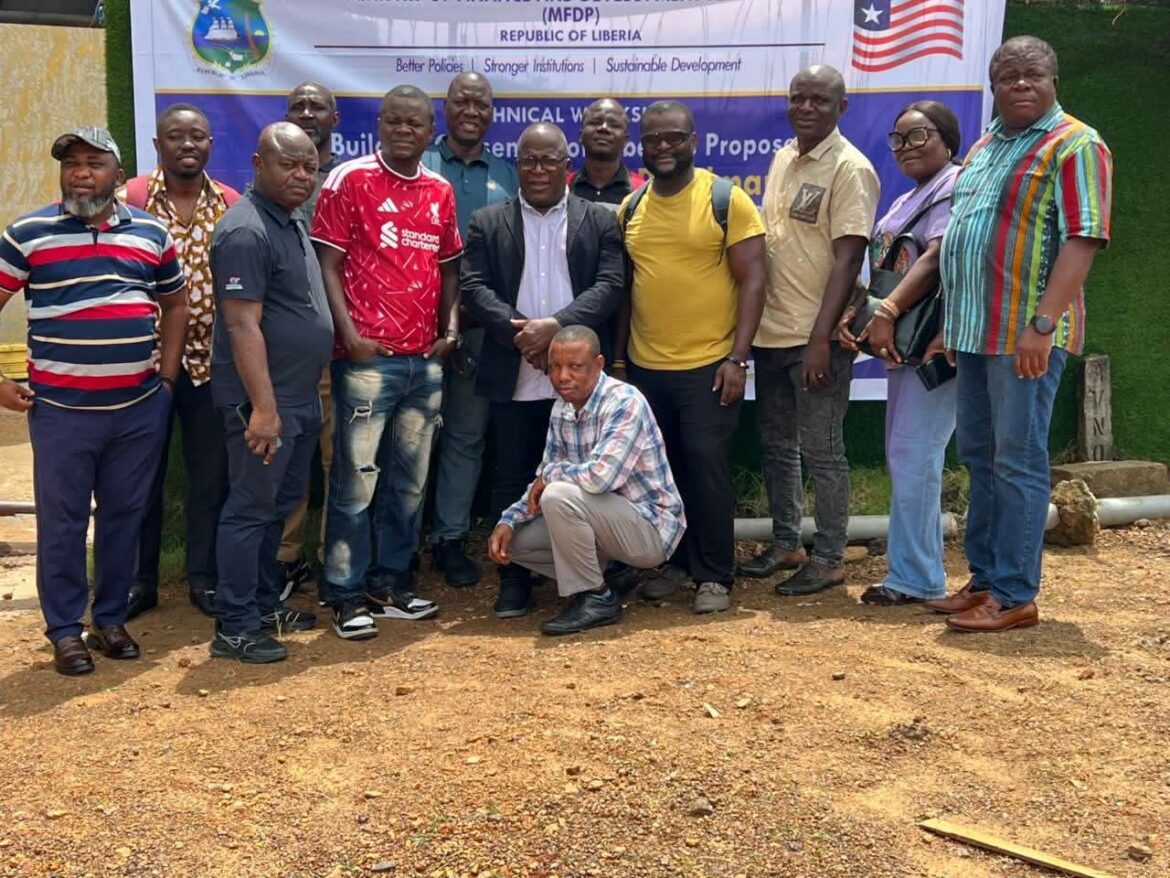
BUCHANAN, Grand Bassa County, October 20, 2026 – The Ministry of Finance and Development Planning (MFDP) has concluded a comprehensive review of Liberia’s public financial management reforms ahead of the country’s next Public Expenditure and Financial Accountability (PEFA) assessment.
The review, conducted through the ministry’s Public Financial Management Reform Coordination Unit (RCU), is intended to evaluate progress, identify weaknesses and update Liberia’s existing reform roadmap to strengthen fiscal discipline, transparency and accountability.
According to a press release, the five-day exercise, held from October 6 to 10, brought together representatives from key government institutions, oversight bodies and civil society organizations.
Participating institutions included the MFDP, Ministry of Local Government, Public Accounts Committee, General Auditing Commission (GAC), Internal Audit Agency (IAA), Public Procurement and Concessions Commission (PPCC) and Ministry of State.
The exercise focused on reviewing progress against the 31 performance indicators under the PEFA 2016 framework and aligning outstanding reforms with Liberia’s Public Financial Management Strategy and Action Plan (PFMSAP) 2024–2027.
Speaking at the opening session, National Coordinator of the PFM Reform Coordination Unit Joseph K. Fahnbulleh outlined three major objectives of the exercise.
He said the review sought to assess progress against weaknesses identified in Liberia’s previous PEFA assessment, evaluate the country’s readiness to incorporate gender-responsive and climate-responsive public financial management standards, and refine the existing PEFA Improvement Roadmap.
Fahnbulleh explained that the process would enable participating institutions to verify reforms already implemented, identify persistent gaps and determine priority actions necessary to improve financial governance.
He emphasized that preparations for the expanded PEFA++ assessment require examining how government policies, budget processes, institutional arrangements and financial management systems incorporate gender equality and climate considerations.
Meanwhile, Fahnbulleh disclosed that US$150,000 had been secured to support Liberia’s forthcoming PEFA assessment through assistance from the African Development Bank (AfDB), in collaboration with the Pan African Federation of Accountants (PAFA).
The support is being provided under the Strengthening PAFA and PFM Resilience in Africa (SPRA) Project.
He urged participating institutions to provide credible evidence of reform achievements, identify documentation and capacity gaps, and take responsibility for implementing agreed recommendations.
According to Fahnbulleh, the government’s objective extends beyond improving Liberia’s PEFA performance ratings to strengthening financial accountability, fiscal discipline and effective public service delivery.
Participants reviewed the seven pillars of the PEFA framework, examining institutional performance and identifying areas requiring further improvement.
The findings are expected to inform revisions to Liberia’s existing PEFA Improvement Roadmap and preparations for the next assessment under the government’s four-year public financial management reform cycle.
See more Liberia News Network stories in Google Search by adding LNN as one of your Preferred Sources.
★ Add LNN as a Preferred Source