
n
President Joseph Nyuma Boakai has signaled the possibility of changes within his administration, urging ministers to accept reassignment where necessary and warning that officials who fail to perform may be replaced as his government intensifies efforts to deliver measurable results for the Liberian people.
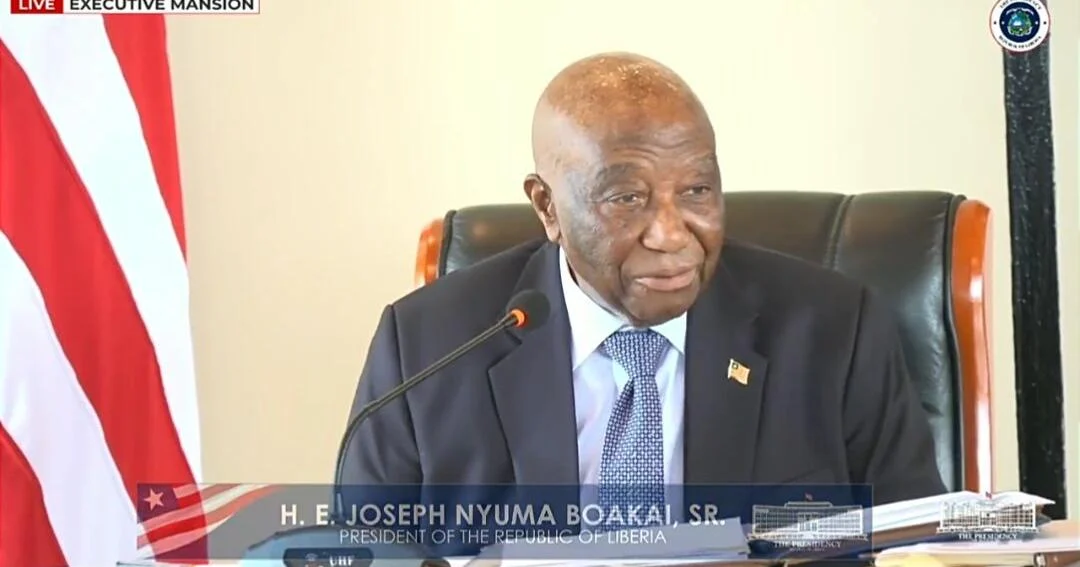
Speaking at a Cabinet meeting on Friday, October 23, 2026, President Boakai said government positions must be treated as responsibilities to serve the country rather than privileges to protect, stressing that competence, accountability and effective service delivery must take precedence over personal prestige.
The President said some officials might be better suited for different assignments, suggesting that moving personnel into positions where they could perform more effectively should be considered part of efforts to strengthen government operations.
“It’s not a matter of prestige. It’s a matter of service, and service in government, everywhere is service,” Boakai told members of his Cabinet.
He explained that reassignment did not necessarily mean an official was incompetent but could provide an opportunity for the government to improve performance by matching individuals with responsibilities suited to their abilities.
“Sometimes, at some point in time, you will feel that maybe you can take another assignment to see if somebody else can come. It’s not that we believe that you are not competent or so forth, but there are some jobs that people are better fitted in to and they can perform better,” he said.
Although the President did not announce specific personnel changes, his remarks underscored his administration’s intention to hold public officials accountable and consider changes where existing arrangements were not producing the expected results.
Boakai also issued a stern warning to ministers about retaining underperforming personnel, urging them to ensure that their deputies, assistants and other employees contribute meaningfully to the government’s development agenda.
“It’s not friendship club. It’s not family club. Make people work,” he declared.
“If they don’t work, sometimes we have to replace them,” he added.
The President said government appointments should not be influenced by personal relationships or considerations of prestige, insisting that ministers must take responsibility for the performance of the teams they supervise.
His comments come as his administration approaches the end of its third year, with the President calling for greater urgency in implementing government programs, monitoring progress and demonstrating tangible benefits for citizens.
Boakai expressed concern that government institutions sometimes carry out activities without adequately reporting what they have accomplished, making it difficult to assess their performance or determine whether public resources are producing the intended results.
“Sometimes we do it, but we neglect reporting. And if we don’t report what we do, then people don’t know what you’re doing,” he said.
He added: “Because if we don’t know what you’re doing, we don’t know how to grade it.”
The President said he had discussed the need for regular reporting with Mark Mulbah, head of the Presidential Delivery Unit (PDU), as part of efforts to establish a more consistent system for tracking government performance and identifying implementation gaps.
He stressed that the administration must move beyond announcing programs and undertaking projects to demonstrating what has been accomplished, what remains outstanding and how government interventions are improving people’s lives.
The President also called on ministers to ensure that projects funded by the government meet acceptable standards, warning that poor-quality work undermines public confidence and weakens the value of investments made with taxpayers’ money.
“You’re giving it to the Liberians. They deserve the best. You should not compromise on quality,” Boakai said.
He cited renovation work at a university and the production of furniture for public use as examples of projects that should reflect the quality expected of public institutions.
“That’s our university. Our country. It reflects on us,” he said.
Boakai further challenged officials to ensure that government equipment and other resources are used effectively, arguing that the delivery of machinery alone does not constitute success if the equipment fails to benefit the public.
“The machines are here. They’ve been delivered,” he said. “But those machines they mean nothing if we don’t use them effectively and benefit the people.”
He urged officials to pay closer attention to education and healthcare delivery, particularly in remote communities where children continue to face barriers to schooling and residents have limited access to essential services.
While acknowledging that Liberia’s development challenges had accumulated over many years and could not be resolved overnight, Boakai said available resources must be managed responsibly and translated into measurable improvements.
The President also praised officials who represented Liberia during engagements surrounding the recent United Nations General Assembly in the United States, saying those meetings had opened opportunities for attracting investors, development partners and other forms of support.
He disclosed that one contact was seeking to manufacture approximately 2,000 computers for the country’s school system, while Google had offered 125 computers expected to be shipped by the end of March 2027.
Boakai also referred to substantial support from an unnamed donor for the health sector, emphasizing the need for the government to use external assistance effectively and maintain partners’ confidence.
Earlier, Director of the Cabinet Nathaniel Kwabo said the government was strengthening its reporting and monitoring systems to improve decision-making, track development progress and identify areas where implementation was falling short.
Kwabo said reliable data would enable the administration to assess what had been achieved and determine where corrective action was required.
“Reporting improves decision making,” he said, adding that the Cabinet Office was working toward a comprehensive mechanism for consolidating government reports and monitoring progress across national development priorities.
He also disclosed that the government was establishing a citizen feedback mechanism to assess people’s experiences with public services.
The Cabinet meeting’s agenda included presentations on accelerating government delivery, implementing Cabinet decisions, tracking legislation and reorganizing Cabinet standing committees.
Ministers were also expected to consider an interim jobs strategy, which would serve as a precursor to a comprehensive five-year employment strategy, as well as a mobile identification registration system to be presented by the Liberia Revenue Authority.
The meeting also addressed coordination and implementation issues intended to strengthen the administration’s delivery of its development agenda.
See more Liberia News Network stories in Google Search by adding LNN as one of your Preferred Sources.
★ Add LNN as a Preferred Source