
n
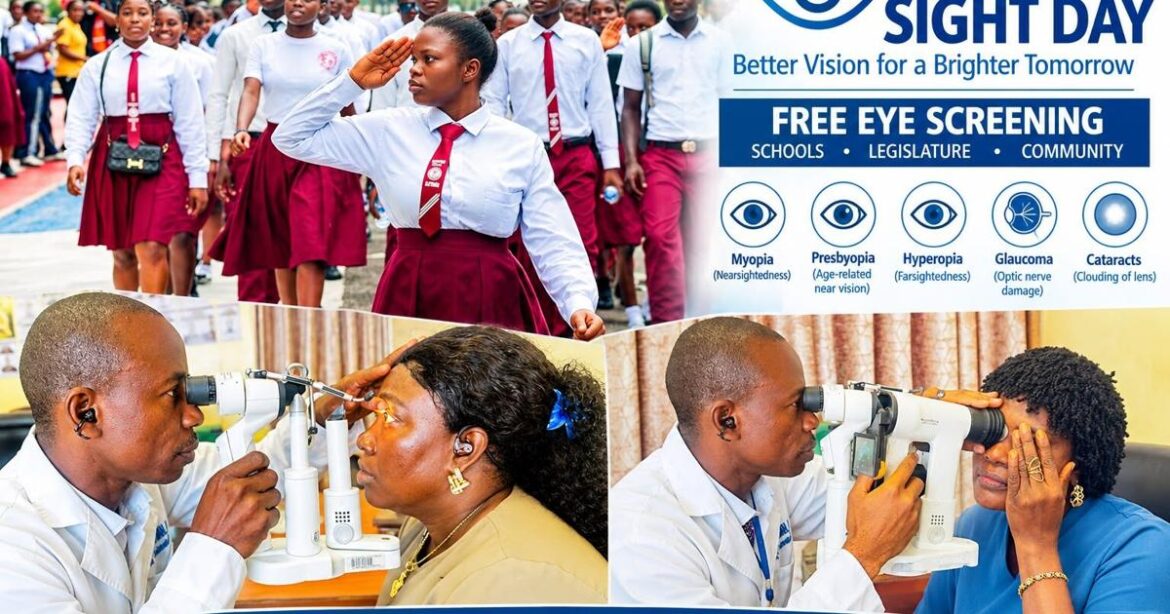
The Liberia Eye Center at the John F. Kennedy Memorial Medical Center (JFK) has identified myopia, presbyopia, hyperopia, glaucoma, and cataracts as the most common eye conditions diagnosed during its 2026 free eye-screening campaign, which reached several schools across Montserrado County and the House of Representatives.
The campaign, held in observance of World Sight Day, focused on promoting preventive eye care, encouraging routine eye examinations, and facilitating the early detection of vision-related disorders among students, public officials, and employees.
During a screening exercise at the Capitol Building on Tuesday, the House of Representatives committed to covering the cost of prescribed eyeglasses and lubricating eye drops for beneficiaries who require them, at an estimated cost of less than US$15 per person.
The commitment is expected to help eligible beneficiaries obtain corrective eyewear and Refresh Tears, a lubricating eye drop prescribed by qualified eye-care professionals following their clinical assessments.
Speaker of the House of Representatives Richard Nagbe Koon commended the Liberia Eye Center for selecting the Legislature as one of the institutions to benefit from the screening exercise, describing the initiative as significant and timely.
“Routine eye examinations are essential for detecting conditions such as refractive errors, cataracts, glaucoma, and retinal disorders, some of which may progress without noticeable symptoms during their early stages,” Koon said.
He emphasized that early diagnosis and appropriate clinical management could help prevent complications and reduce the risk of irreversible vision loss.
According to the Speaker, regular eye examinations are critical to preserving vision, detecting ocular diseases, preventing avoidable blindness, and promoting the overall health and well-being of public officials and employees.
Koon also praised the Liberia Eye Center for expanding access to ophthalmic services and raising public awareness about preventive eye health, describing the initiative as a contribution to institutional wellness and the broader public-health agenda.
The House’s decision to cover the cost of prescribed eyeglasses and lubricating eye drops extends the benefits of the screening beyond diagnosis by helping beneficiaries obtain items recommended by eye-care professionals.
Meanwhile, Dr. Maxwell Suah, a resident doctor in the Department of Ophthalmology at JFK, said the 2026 campaign extended beyond the Legislature to several educational institutions across Montserrado County.
The participating institutions included Gabriel Kpolleh School in New Georgia Estate and Lombardi International School System on Tusa Field, both in Gardnersville.
Other schools reached were J.J. Roberts High School on 12th Street in Sinkor, J.J. Ross High School on Ashmun Street in Monrovia, and Greater Outreach Christian Academy in Paynesville.
Dr. Suah said the most frequently identified conditions included myopia, presbyopia, hyperopia, glaucoma, and cataracts, highlighting the importance of routine examinations and timely medical attention.
“Myopia, commonly known as nearsightedness, affects a person’s ability to see distant objects clearly. Presbyopia is an age-related condition that makes it increasingly difficult to focus on nearby objects, while hyperopia, also known as farsightedness, can affect near vision and, in some cases, distance vision,” he explained.
“Glaucoma refers to a group of eye diseases that can damage the optic nerve and affect vision if not appropriately managed. Cataracts involve clouding of the eye’s natural lens, which can cause blurred or reduced vision,” Suah added.
The conditions identified during the exercise vary in their causes and effects, but early examination can help determine the appropriate care. Refractive errors, including myopia and hyperopia, may be corrected with prescribed lenses, while presbyopia commonly affects near vision as people age.
Glaucoma requires particular attention because it can damage the optic nerve and cause permanent vision loss if not detected and managed appropriately. Cataracts can also impair vision, with treatment determined by clinical assessment and the severity of the condition.
The campaign underscores the importance of expanding access to preventive eye-care services, particularly in schools, where undetected vision problems may affect students’ classroom participation, reading, and learning.
By bringing screening services directly to educational institutions and public offices, the Liberia Eye Center sought to encourage more people to undergo examinations and seek professional care when abnormalities are identified.
The initiative also demonstrated the importance of collaboration between health institutions and public bodies in reducing financial barriers that may prevent people from obtaining recommended eye-care products.
World Sight Day is observed annually on the second Thursday of October to raise global awareness about blindness and vision impairment and advocate equitable access to comprehensive eye-care services.
The observance was initiated in 2000 through the SightFirst campaign of the Lions Clubs International Foundation and has since developed into an international advocacy platform promoting blindness prevention, public education on eye health, and access to quality eye-care services.
The 2026 screening campaign forms part of broader efforts to promote preventive health care and encourage early intervention for conditions that could otherwise threaten vision.
Through its outreach to schools and the Legislature, JFK’s Liberia Eye Center highlighted the importance of regular examinations, timely referrals, and access to prescribed corrective eyewear and treatment.
The initiative’s impact will depend not only on identifying eye conditions but also on ensuring that beneficiaries can obtain the necessary follow-up care, corrective lenses, and medical treatment recommended by qualified professionals.
For students, public officials, and other beneficiaries, early detection and appropriate management remain important steps toward protecting vision, preventing avoidable complications, and supporting their long-term health and well-being.
See more Liberia News Network stories in Google Search by adding LNN as one of your Preferred Sources.
★ Add LNN as a Preferred Source