
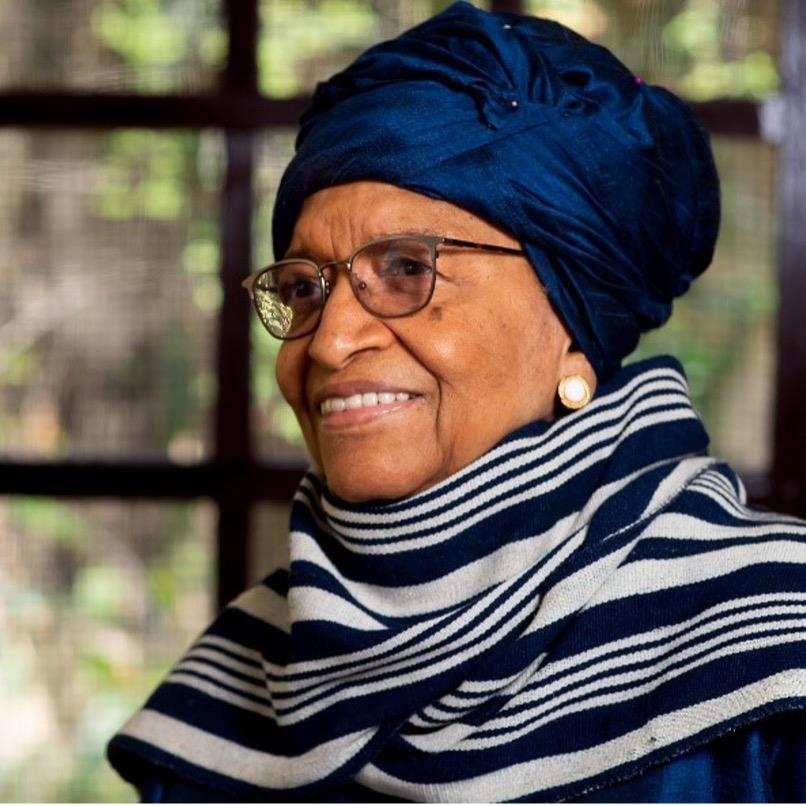
MONROVIA – Ellen Johnson Sirleaf has spoken for herself for most of Liberia’s modern history. At 88, her public words now form a record of their own. The piece draws them from speeches, letters, testimony and interviews across four decades. Read together, they show a leader who rarely claimed final victory. The word she returns to most often is fragile. She used it of Liberia’s gains in 2011 and of Africa’s progress in 2025. The record also holds her hardest public admission, about warlord Charles Taylor. It shows a woman who measured herself against peace more than power. On her birthday, those words are a fair place to begin judging her.
Former President Ellen Johnson Sirleaf did not sit for the birthday interview sought today, Thursday, October 29, 2026, the day she turns 88. She has, however, been speaking on the record for most of her adult life, in courtrooms and parliaments, at a Nobel podium, in open letters during an epidemic and on Monrovia breakfast radio. What follows is her story told as far as possible in her own words, each line drawn from a public speech, statement, letter or interview, with its date and setting.
None of it is new, and that is partly the point. Taken one at a time, these lines were news on the day she said them. Placed side by side, they show what she kept saying, what she changed her mind about and what she admitted when admitting it cost her something.
A Prophecy and a Memoir
Sirleaf was born in Monrovia on October 29, 1938. She took the title of her 2009 memoir, This Child Will Be Great, from a prediction she recounts was made over her as a newborn by an old man who came to see the baby. She has told the story with a mixture of amusement and seriousness, as a family tale that she later had reason to remember.
The road from that prophecy ran through Liberia’s Treasury, where she began her career in 1965, through banking and the United Nations, and through the prison cell and exile that followed her clashes with the military government of Samuel Doe in the 1980s. She came back to contest the 1997 presidential election and finished a distant second to Charles Taylor.
The Admission About Taylor
The hardest words she has spoken in public were about Taylor. Testifying before the Truth and Reconciliation Commission (TRC) in February 2009, she acknowledged that she had backed his rebellion against Doe in its early days, while denying that she was ever part of the rebel movement. Her apology was short: “I was fooled by Mr. Taylor.”
She told the commission that the regret stayed with her daily. Five months later, the TRC recommended that she be barred from public office for 30 years over her support for the warring parties. The ban was never enforced, and the admission became a permanent part of her public record, quoted by admirers as proof of candor and by critics as proof of the charge.
“A Fundamental Break With the Past”
On January 16, 2006, with United States First Lady Laura Bush and Secretary of State Condoleezza Rice among the guests, Sirleaf took the oath as Africa’s first elected woman head of state. In her inaugural address she promised Liberians “a fundamental break with the past,” and pledged to fight corruption in a government that would run on a donor-backed program overseeing public spending.
Two months later, on March 15, 2006, she stood before a Joint Meeting of the United States Congress in Washington and set a target that would follow her for 12 years. “We will strive to be America’s success story in Africa,” she told American lawmakers. In the same address she paid tribute to Liberian women, describing them as present “some in the marketplaces and some in the high levels of government.”
Those two speeches set the terms by which she asked to be judged. The first promised Liberians clean government at home. The second promised Washington a partner worth its investment. For the next decade, her supporters and her critics would argue mostly about how far she kept the first promise, while few disputed that she worked tirelessly at the second.
“Our Gains Are Fragile”
The word that recurs most often in her public speech is “fragile.” In June 2011, speaking at the United States Institute of Peace (USIP) in Washington, she listed Liberia’s economic gains and its strengthening democracy and then cautioned her audience: “In Liberia, as elsewhere in Africa, our gains are fragile.” It was an unusual note for a sitting president seeking re-election that year.
Fourteen years later, in Freetown in July 2025, she used the same idea about the whole continent, telling African women leaders at the NALAFEM Summit that progress is fragile, “especially in fragile states.” Between those two speeches lay an epidemic, a disputed party split and a change of government. The word did not change.
The Nobel Lecture
On December 10, 2011, she delivered her Nobel lecture in Oslo, sharing the Peace Prize with fellow Liberian Leymah Gbowee and Yemen’s Tawakkol Karman. The committee had honored the three women for their non-violent struggle for the safety of women and for women’s right to full participation in peacebuilding.
In the lecture she spoke of the cost of Liberia’s wars in the plainest terms she has used before an international audience: “We have paid in the currencies of blood, of tears, and of dignity.” She told the audience there had been no roadmap for rebuilding a country after such a war, and she urged women around the world to raise their voices for peace, however small those voices might seem.
The prize came four days before Liberians voted in the 2011 presidential election, and her opponents protested its timing. She won that election. The lecture remains the text she is most often quoted from abroad, and the one in which she most clearly linked her own story to the women of Liberia who marched for peace in 2003.
Ebola: A Letter to the World
In October 2014, with Ebola spreading through Liberia, Guinea and Sierra Leone, Sirleaf wrote an open letter to the world. She argued that the virus had found its footing in three fragile states still recovering from interconnected wars. She was frank that the international response had started slowly and inconsistently.
She also recorded a turning point. “The community of nations has realised they cannot simply pull up the drawbridge,” she wrote, crediting the global mobilization that followed. Liberia was declared free of Ebola transmission the following year, though at a cost in lives that still marks families across the country.
Leaving Office, Losing a Party
On January 17, 2018, five days before handing power to George Manneh Weah, Sirleaf delivered her farewell message to the nation. She reviewed 12 years in office, counted two peaceful elections and a transfer of power as proof of a democracy taking root, and asked Liberians to stand behind the incoming administration. “My parting wish is that you will support your new government,” she said.
The words carried a sting she did not mention. Days earlier, her own Unity Party had expelled her, accusing her of undermining its candidate, her Vice President Joseph Nyuma Boakai, in the 2017 election. She denied the accusation. Her farewell nonetheless asked the country to rally behind the man who had defeated her own party’s standard-bearer, and she left office on schedule.
Prizes and Second Chances
In February 2018, accepting news that she had won the 2017 Ibrahim Prize for Achievement in African Leadership, Sirleaf pointed to the foundation’s own governance index. “Liberia was the only country on the continent to improve in every category,” she stated. The Mo Ibrahim Foundation cited what it described as exceptional and transformative leadership in the face of unprecedented challenges.
Three years later, when Forbes Africa included her among the continent’s icons in its 100th issue in 2021, she struck a quieter note. “I am humbled to be considered an African icon,” she told the magazine, adding that she hoped the recognition would encourage others to pursue the causes they care about.
The Freetown Charge
Her keynote at the NALAFEM Summit in Freetown on July 2, 2025, reads in places like a summary of everything above. She described her inauguration as an inheritance of responsibility rather than power, and told the women in the hall that their place was in every room where decisions are made, because they are “wise, prepared, and capable.”
She also turned her own experience into a warning about what power is for. “Power is often misunderstood,” she said, before arguing that its true test is whether it changes lives and opens doors for others. At 86 when she spoke, she was still describing the work as unfinished.
On Boakai, and on Now
In May this year, asked on the Truth Breakfast show about her relationship with President Boakai, her former deputy, she described a friendship kept at a respectful distance and said she was not in regular contact with him. “If the need arises, he’ll reach out,” she said, placing the decision to call on her squarely with the sitting president.
Her most recent public act came to light this week, when the development news platform Devex reported that she had nominated the United States Agency for International Development (USAID) for the Nobel Peace Prize. In the letter, she credits the agency with helping her government through postwar reconstruction and the Ebola epidemic, the same years her own speeches had described in such stark terms.
What the Record Says
Read across 40 years, Sirleaf’s public words are more cautious than her reputation. She promised a break with the past, then spent much of her presidency warning that the gains were fragile. She owned her early support for Taylor in a single sentence that has never stopped being quoted. She asked the country to support the government that replaced her own party.
The interview sought today would have asked her to add to that record. Until she does, these are the words she has chosen to leave on it, and they are the fairest evidence Liberians have on the day she turns 88.
See more Liberia News Network stories in Google Search by adding LNN as one of your Preferred Sources.
★ Add LNN as a Preferred Source