
Dr. Yarkpawolo’s anticipated engagement with donors is expected to highlight the importance of translating international environmental commitments into financial support capable of producing measurable improvements in vulnerable communities. His decision to accept the advocacy responsibility also reflects an emphasis on strengthening cooperation between environmental financing institutions and countries experiencing the consequences of climate change, biodiversity loss and environmental degradation
YEREVAN, Armenia – The Executive Director of the Environmental Protection Agency (EPA), Dr. Emmanuel King Urey Yarkpawolo, has accepted an invitation to spearhead advocacy for increased financial contributions to the Global Environment Facility (GEF), positioning the country to play a greater role in international efforts to mobilize resources for biodiversity conservation, climate resilience and environmental protection.
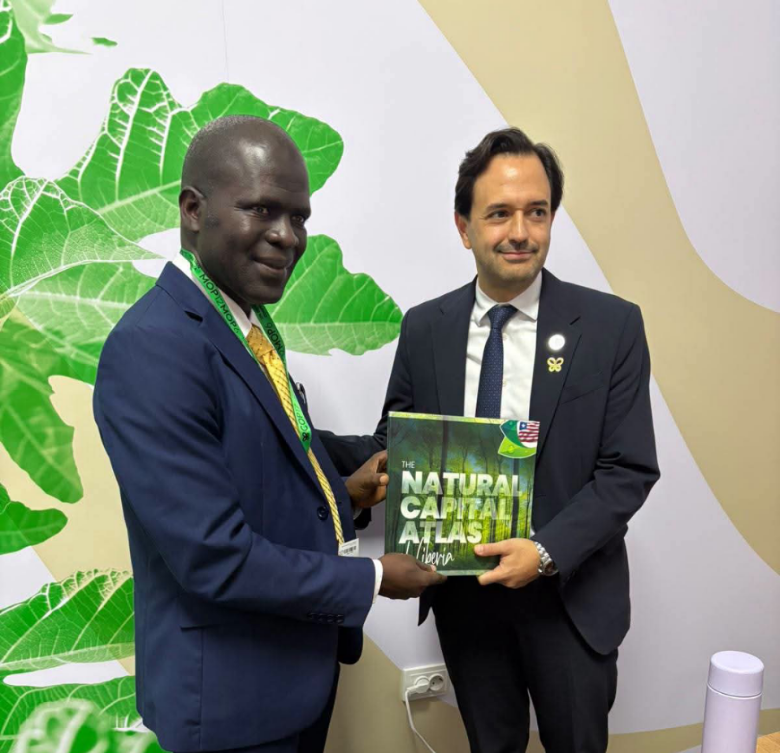
The decision followed a high-level meeting Thursday between Dr. Yarkpawolo and the newly appointed Chief Executive Officer and Chairperson of the GEF, Diego Mesa Puyo, in Yerevan, Armenia, where world leaders, environmental experts and policymakers are participating in the 17th Conference of the Parties to the Convention on Biological Diversity (COP17).
During the discussions, the GEF leadership invited the Liberian environmental official to engage directly with international donors and development partners to encourage stronger financial commitments to the institution, which supports environmental projects in developing countries.
Dr. Yarkpawolo accepted the invitation, taking on an advocacy responsibility that could strengthen Liberia’s participation in global environmental financing discussions while highlighting the difficulties confronting countries with significant natural resources but limited financial capacity to protect them.
The engagement comes amid growing international concern over inadequate financing for biodiversity conservation, climate adaptation and sustainable natural resource management, particularly in developing countries where environmental degradation continues to threaten livelihoods and economic development.
Liberia, home to a substantial portion of the remaining Upper Guinean tropical rainforest, has consistently emphasized the importance of international financial assistance in protecting its forests, wildlife habitats and other natural resources while pursuing economic development.
Dr. Yarkpawolo’s anticipated engagement with donors is expected to highlight the importance of translating international environmental commitments into financial support capable of producing measurable improvements in vulnerable communities.
His decision to accept the advocacy responsibility also reflects an emphasis on strengthening cooperation between environmental financing institutions and countries experiencing the consequences of climate change, biodiversity loss and environmental degradation.
The Liberian environmental official is expected to draw attention to the country’s conservation responsibilities, particularly the challenge of protecting tropical forests while ensuring that rural communities have access to sustainable livelihood opportunities.
Dr. Yarkpawolo said: “Countries like Liberia are protecting environmental resources that are important not only to our people but to the entire world. However, conservation cannot succeed on commitments alone. We need stronger financial partnerships, predictable funding and practical investments that allow vulnerable communities to protect nature while improving their livelihoods.”
Beyond the donor mobilization discussions, Thursday’s meeting provided an opportunity for Dr. Yarkpawolo to brief the GEF leadership on Liberia’s ongoing environmental initiatives and identify priority areas requiring additional international support.
Among the projects discussed was the Strengthening Agricultural Resilience through Transformational Livelihood Adaptation in Liberia (SARTLA) initiative, which has received its first disbursement of funding.
The project is designed to strengthen the ability of agricultural communities to withstand climate-related challenges while promoting livelihood adaptation and improving resilience among vulnerable populations.
Agriculture remains an important source of employment and household income across Liberia, particularly in rural communities where families depend heavily on farming for their survival.
However, changing rainfall patterns, flooding, soil degradation and unpredictable weather conditions continue to create difficulties for farmers, threatening agricultural productivity and household food security.
The SARTLA initiative is intended to help address some of these challenges by supporting adaptation measures that strengthen agricultural livelihoods and reduce vulnerability to environmental shocks.
During the meeting, Dr. Yarkpawolo provided updates on the project’s financing progress, underscoring the importance of sustained support for initiatives designed to protect vulnerable communities against climate-related threats.
The discussions also focused on a proposed US$10 million Urban Resilience Project, which Liberia is seeking to advance as part of broader efforts to address environmental risks affecting urban communities.
The proposed project comes as several urban settlements in Liberia continue to experience flooding, drainage problems, environmental pollution and infrastructure challenges associated with rapid population growth and unplanned development.
In Monrovia and surrounding communities, seasonal flooding remains a recurring concern, often disrupting transportation, damaging properties and exposing residents to health and sanitation risks.
Environmental experts have repeatedly emphasized the need for investments in drainage infrastructure, improved urban planning and climate-resilient development to reduce the vulnerability of densely populated settlements.
The proposed Urban Resilience Project could provide an opportunity to strengthen Liberia’s response to these challenges if the necessary financing is secured and the project moves into implementation.
Although no new funding approval for the proposed initiative was announced during Thursday’s meeting, its inclusion in the discussions demonstrated Liberia’s interest in expanding cooperation with the GEF to address emerging environmental challenges.
Another important component of the engagement centered on Liberia’s priorities under the ninth replenishment cycle of the Global Environment Facility, known as GEF-9. The replenishment process is important because it determines the financial resources available to support future environmental projects across eligible countries.
For Liberia, access to GEF financing remains significant because domestic resources alone are insufficient to address the country’s extensive environmental protection and climate adaptation needs. The country faces the difficult responsibility of preserving globally important ecosystems while responding to economic pressures, infrastructure deficits and the development needs of communities dependent on natural resources.
Its forests provide habitats for endangered wildlife species, support biodiversity conservation and contribute to broader international efforts to address climate change.
At the same time, forest-dependent communities require sustainable economic opportunities that can reduce pressure on natural resources without undermining their livelihoods.
The EPA Executive Director’s anticipated donor advocacy could therefore reinforce Liberia’s position that environmental financing must go beyond international declarations and provide practical assistance to communities confronting environmental threats.
Such assistance could include strengthening agricultural resilience, improving urban environmental management, supporting biodiversity conservation and building the institutional capacity required to implement environmental programs.
He added: “My commitment to engaging donors is driven by the urgent need to close the financing gap confronting developing countries. We must demonstrate that every investment in biodiversity conservation, climate resilience and sustainable development is an investment in the future of humanity. Liberia is prepared to play its part, but international solidarity must be reflected in concrete financial support.”
The GEF chief welcomed the updates presented by Dr. Yarkpawolo and expressed confidence in continued support for Liberia’s environmental protection and climate resilience efforts.
Mr. Mesa Puyo’s response highlighted the continuing relationship between Liberia and the international financing institution, which has supported initiatives aimed at addressing environmental degradation and strengthening national capacity to manage natural resources.
The Global Environment Facility serves as a major international financing mechanism for projects addressing biodiversity loss, climate change, land degradation, international waters and pollution.
Its financial contributions are particularly important to developing countries seeking assistance to implement environmental commitments under international agreements.
Thursday’s meeting also produced another significant development, with Dr. Yarkpawolo extending an invitation to the GEF chief to visit Liberia and personally assess projects supported by the institution.
Mr. Mesa Puyo accepted the invitation, creating an opportunity for future engagement with government institutions, project implementers and communities benefiting from GEF-supported interventions. Although a date for the proposed visit was not disclosed, the planned engagement could allow the GEF leadership to observe the implementation of environmental projects and better understand the challenges confronting beneficiary communities.
The visit could also provide Liberia with an opportunity to present additional financing needs and demonstrate how international environmental investments contribute to community development and ecosystem protection.
For Dr. Yarkpawolo, the proposed visit represents an opportunity to strengthen the connection between decisions made by international financing institutions and the realities experienced by communities implementing environmental projects.
Direct interaction with project beneficiaries could help demonstrate the benefits of existing investments while identifying gaps that require additional financial and technical support. Such engagement is particularly important in Liberia, where environmental challenges frequently intersect with poverty, limited infrastructure, agricultural dependence and inadequate access to essential services.
See more Liberia News Network stories in Google Search by adding LNN as one of your Preferred Sources.
★ Add LNN as a Preferred Source