
MONROVIA — Liberia’s economy grew 5.1 percent in 2025, driven largely by a 17 percent jump in mining, but the World Bank Group said Monday that more and better jobs are needed for that growth to reduce poverty.
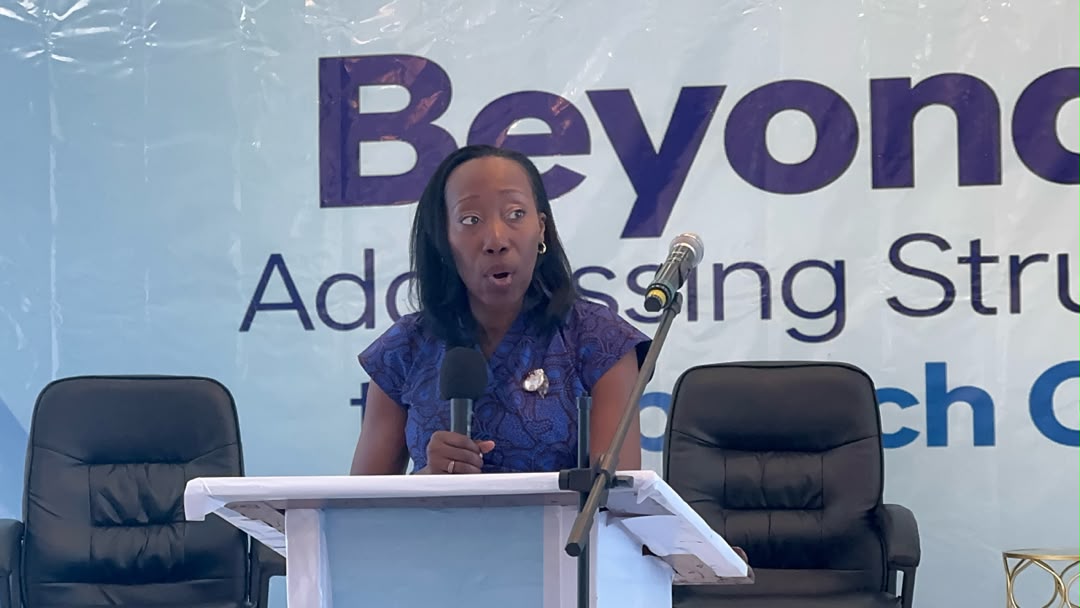
The assessment is the central finding of the World Bank Group’s seventh Liberia Economic Update, “Beyond Growth: Addressing Structural Constraints to Job-Rich Growth in Liberia,” launched in Monrovia. The report also warns that the country’s external buffers remain thin, with international reserves covering about 1.6 months of imports at the end of 2025, leaving Liberia vulnerable to external shocks.
“Liberia’s recent economic gains are encouraging. The key challenge now is translating growth into opportunities and improvements in people’s lives,” said Georgia Wallen, the World Bank Group’s country manager for Liberia.
Wallen said meeting the country’s development goals would require “sustaining macroeconomic stability while addressing the structural barriers that prevent businesses from expanding, workers from accessing productive opportunities, and communities from fully participating in the country’s growth.”
Outside mining, growth was slower. Services grew 4.6 percent, supported by trade, electricity supply, and transportation, while agricultural growth slowed to 2.6 percent, according to the report.
The government’s fiscal position improved. The overall fiscal deficit narrowed to 2.1 percent of GDP, down from 2.5 percent in 2024, and public debt fell from 56.4 percent to 55.1 percent of GDP. The report said inflation remained contained, supported by tight monetary policy, a broadly stable exchange rate, and moderate global food and fuel prices.
The second part of the report examines state-owned enterprises, which it said provide important services but carry implications for public finances. It calls for stronger oversight, transparency, financial reporting and performance at the enterprises, greater attention to the fiscal risks they pose and clearer accountability for their financial and operational results.
“State-owned enterprises play an important role in delivering essential services, but strong oversight is critical to ensuring that they operate transparently and sustainably,” said Bonnie Ann Sirois, a senior public sector specialist at the World Bank Group and a co-author of the report. “Improved financial reporting, accountability, and monitoring of fiscal risks can help protect public resources and strengthen their contribution to Liberia’s development.”
The report sets out four priorities: preserving macroeconomic stability through prudent fiscal management, stronger domestic revenue mobilization and rebuilt external buffers; removing constraints that limit productive investment and economic diversification so the private sector can grow and create jobs; strengthening governance and oversight of state-owned enterprises; and directing policy and investment toward expanding productive opportunities and improving livelihoods.
“Liberia needs to build on its macroeconomic progress by addressing the structural constraints that limit productive investment and job creation,” said Gweh Gaye Tarwo, the World Bank Group’s country economist and the report’s lead author. “Stronger fiscal management, a more enabling environment for the private sector, and improved governance of state-owned enterprises can help put the economy on a more sustainable and job-rich growth path.”
See more Liberia News Network stories in Google Search by adding LNN as one of your Preferred Sources.
★ Add LNN as a Preferred Source