
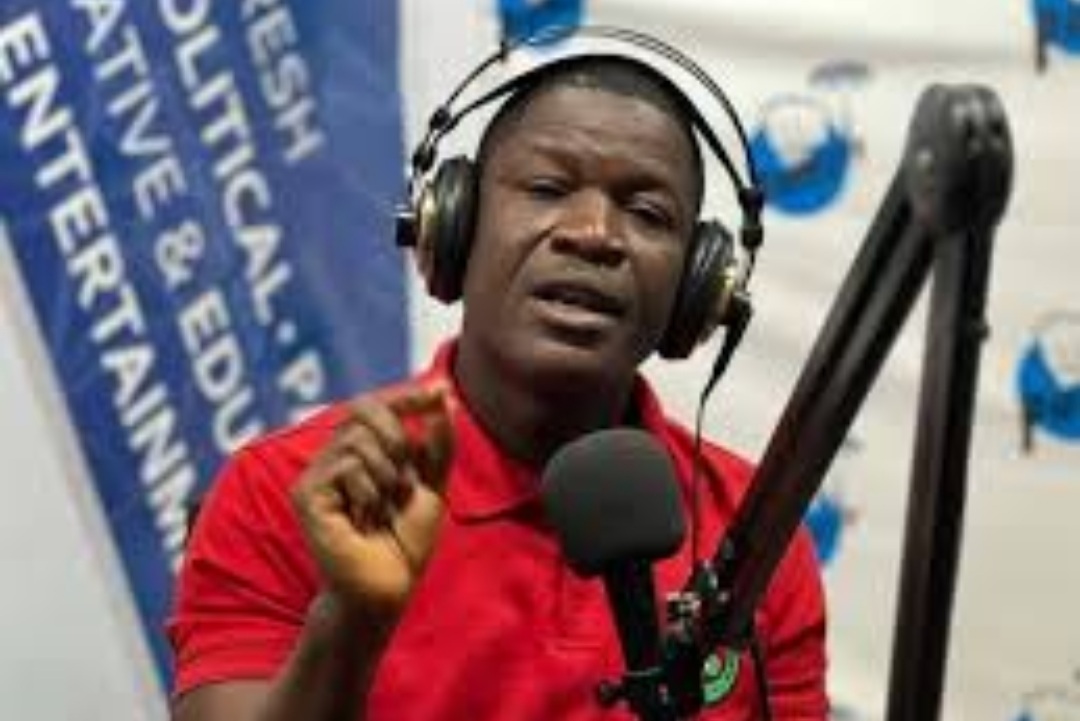
MONROVIA, LIBERIA — Political tensions surrounding President Joseph Boakai’s administration may be heading toward a new confrontation after Economic Freedom Fighters of Liberia (EFFL) leader Emmanuel C. D. Gonquoi issued a dramatic declaration.
His forceful criticism came barely a day after he announced his resignation from the National Port Authority (NPA).
In a Facebook statement titled “The Difficult Truth,” Gonquoi delivered a sweeping indictment of Liberia’s political leadership.
He accused successive administrations of failing the country, using religion to evade public accountability, and placing political influence ahead of ordinary citizens’ welfare.
His statement concluded with the ominous words, “The Coming Revolution,” followed by the rallying call, “Our feet shall take us there.”
The statement appears to signal a more confrontational political stance from someone who was once a vocal supporter of President Boakai’s 2023 presidential campaign.
The timing is especially significant. Gonquoi’s resignation from the NPA, where he served as Executive Director of the Training Department, removes a prominent contradiction in his political position, with the criticism that he had been a government official under an administration he repeatedly criticized while leading a political party that called for better governance.
But Gonquoi’s latest statement raises a more crucial question; is he preparing to shift from a dissatisfied political ally in the Boakai administration to an outright opponent?
Gonquoi’s political relationship with the Unity Party did not begin in conflict. In August 2023, the EFFL publicly endorsed Boakai’s presidential bid, backing the opposition leader’s so-called Rescue Mission to unseat former President George Weah and the Coalition for Democratic Change (CDC).
At the time, Gonquoi described the EFFL’s endorsement as an expression of solidarity with ordinary Liberians.
He argued that the country needed to move beyond what he characterized as corruption, unemployment, institutional decline, and political elitism.
The honeymoon, however, did not last. By May 2025, Gonquoi was voicing frustration with the Boakai administration’s performance.
He asserted that about 60 percent of government institutions were operating ineffectively and warned that the EFFL might organize civil action against underperforming ministries and agencies.
In June of that year, his criticism grew more pointed. Speaking to supporters, Gonquoi accused the Unity Party of failing to fulfill its promises despite receiving two years of political backing from the EFFL.
He declared that the EFFL had given the government two years to prove its commitment to Liberians, but had seen too little progress.
In remarks that drew considerable attention, he warned that the EFFL was ready to challenge the very political establishment it had helped bring to power.
“We brought them to power, if we ready today we will take the power from them,” he declared, according to Smart News Liberia.
The statement was especially striking because Gonquoi was serving in the same government he was publicly challenging.
His role at the NPA created an uncomfortable political contradiction: he was an activist demanding accountability from an administration in which he held an executive appointment.
Howbeit, the dispute between Gonquoi and the ruling establishment has increasingly centered on their political partnership, not just the government’s performance.
In June 2026, the EFFL leader announced that his party would review its existing agreement with the Unity Party-led government, accusing officials of disrespecting EFFL members and supporters.
He warned that his organization would no longer tolerate what it viewed as the marginalization of political partners who had helped secure Boakai’s victory.
Two months later, Gonquoi stepped up his criticism. Speaking publicly in August 2026, he accused the Unity Party of abandoning the political consultation mechanisms established during the 2023 campaign.
He stated that political partners who had worked to secure Boakai’s victory were increasingly being treated as outsiders after the elections.
He noted at the time that the government had failed to create meaningful avenues for alliance partners to engage the President on national security, economic challenges, and governance.
His warning was clear, indicating that the EFFL would not guarantee Boakai a second term.
“We are an independent political institution, and we will conduct ourselves accordingly,” he declared.
The statement suggested that the EFFL was already preparing to distance itself politically from the ruling establishment, even before Gonquoi’s latest resignation.
Gonquoi’s departure from the NPA therefore appears to be more than a routine resignation from public service.
His resignation letter, dated November 10, 2026, and addressed to NPA Managing Director Sekou A. M. Dukuly, states that his tenure as Executive Director of the Training Department will end on November 20.
Announcing his decision, Gonquoi said he had formally submitted his resignation to NPA management and that the time had come to focus on the EFFL and Liberia.
He also offered a pointed remark that could be seen as a response to critics who had questioned his choice to combine government employment with political activism.
“The debate over future government experience is over! Hahaha,” he wrote recently.
The timing of his latest political declaration makes his resignation all the more consequential.
Having stepped down from his government post, Gonquoi can now pursue his political agenda without the institutional contradiction that previously undercut his criticism of the administration.
He no longer needs to explain why someone who publicly challenges the Boakai government’s performance remains employed by it.
Howbeit, resigning does not, by itself, prove that he has ended his political ties with President Boakai or the Unity Party.
Perhaps the most politically provocative element of Gonquoi’s latest Facebook statement is his assertion that Liberia’s transformation will happen regardless of how the country’s political elites treat its people.
Under the title “The Difficult Truth,” he rejects the tendency to blame Liberia’s continuing poverty and underdevelopment on spiritual problems.
Instead, he points to what he regards as the country’s core challenges; poor leadership, a lack of patriotism, corruption, and the absence of a sincere commitment to national development.
He also criticizes religious leaders and politicians who, in his view, invoke God and seek refuge in churches and mosques when faced with public dissatisfaction about their performance.
“Using God’s name to cover up failure is the greatest crime against Him, and those involved should stop immediately,” Gonquoi warned.
His criticism extends beyond the current administration. By accusing successive political establishments of failing to improve healthcare, education, the justice system, and the economic circumstances of ordinary Liberians, he holds the wider political class responsible for the country’s continuing hardships.
He singles out what he calls the political elite’s obsession with becoming county godfathers and godmothers, rather than developing the country.
He argues that political competition has increasingly turned into a struggle for influence, appointments, and control instead of an effort to improve citizens’ lives.
More troubling for the political establishment is his suggestion that ordinary Liberians—including young people facing severe economic hardship—have become willing participants in a political culture that serves powerful individuals rather than the public.
His concluding declaration, “The Coming Revolution,” therefore warrants attention.
However, Gonquoi does not clarify whether he means an electoral movement, mass political mobilization, civic resistance, or a broader ideological transformation.
His statement makes no explicit call for armed confrontation or violence. Even so, its language indicates an intention to rally political support around dissatisfaction with the existing order.
Perhaps this is the most important question raised by the EFFL leader’s resignation and latest outburst.
The EFFL was not simply a casual supporter of Boakai in the 2023 presidential election. It was among the political movements that joined the Unity Party’s Rescue Mission, helping to build the coalition that ultimately removed the CDC from power.
Consequently, Gonquoi’s increasingly confrontational stance has significant political implications for the ruling party.
His resignation removes him from government service, but it does not automatically end any political agreement between the EFFL and the Unity Party. Nor does his latest Facebook statement constitute a formal announcement that the EFFL has withdrawn from the governing alliance.
Nevertheless, the sequence of events indicates that the relationship is undergoing a substantial shift.
At least three political paths are possible. First, Gonquoi could reposition the EFFL as an independent movement that supports the government when it performs well but openly criticizes it when it falls short.
Second, the EFFL could ultimately leave its existing arrangement with the Unity Party and develop into a more organized opposition force.
Third, the movement could use its political independence to negotiate a new relationship with the ruling establishment, especially as Liberia approaches the 2029 general elections.
Whatever course he chooses, Gonquoi’s earlier warning that the EFFL would not guarantee Boakai a second term suggests that the movement is no longer willing to be taken for granted.
Meanwhile, the Unity Party must address mounting dissatisfaction among some of the political partners who helped secure its electoral victory.
So far, there has been no verified public announcement confirming that the EFFL has formally ended its agreement with the Unity Party, nor any response from President Boakai to Gonquoi’s latest declaration.
For Gonquoi, the resignation may signal the start of a new phase in his political career.
For years, he has sought to balance two roles; serving as a government official under President Boakai while acting as a political activist calling the same administration to account. That balancing act now appears to be nearing its end.
His latest statement indicates that he wants the EFFL to adopt a more prominent political identity, especially as public debate remains focused on economic hardship, institutional performance, political inclusion, and the government’s fulfillment of its campaign promises.
Yet the EFFL leader also faces a challenge. After accusing Liberia’s political elites of putting personal influence ahead of national development, Gonquoi will increasingly be judged on whether his own movement can offer a credible alternative.
Condemning poverty, criticizing political godfathers or announcing an impending revolution will not suffice.
Liberians will want to know what the EFFL would do differently, how it would tackle the country’s economic difficulties, and whether its promised alternative governance platform can turn political rhetoric into practical solutions.
For President Boakai, Gonquoi’s departure from government could mean losing a political ally who, despite his criticisms, remained part of the administration.
For the Unity Party, it may serve as another warning that the coalition behind its 2023 victory is growing increasingly restless.
For Gonquoi, however, the real test starts now; can he turn his rhetoric into an organized political movement capable of challenging the very establishment he once helped bring to power?
His final words may offer the clearest indication of where he hopes to lead his supporters: “Our feet shall take us there.”
The question is whether the destination he promises represents a new political order for Liberia or merely another struggle for control of the country’s political arena.
See more Liberia News Network stories in Google Search by adding LNN as one of your Preferred Sources.
★ Add LNN as a Preferred Source