
The US Dollar Is Declining, So Why Is There No Relief in the Market?
For years, Liberians have faced a familiar economic contradiction. When the US dollar strengthens against the Liberian dollar, the prices of basic goods rise, transportation costs increase, and ordinary citizens’ purchasing power suffers further. Yet when the exchange rate shifts in the opposite direction and the Liberian dollar gains value, the expected relief is often nowhere to be seen.
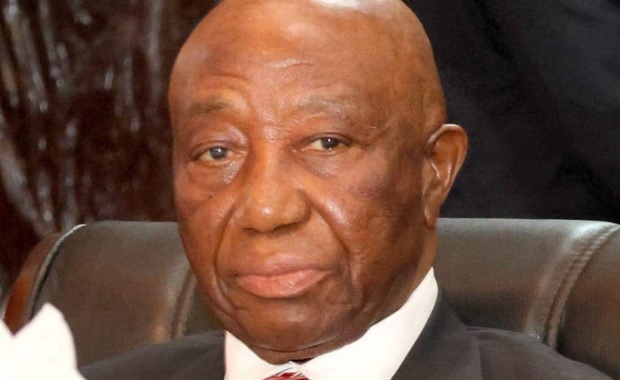
This painful economic reality has challenged successive administrations. Now, under President Joseph Boakai’s administration, ordinary Liberians are asking the same question once again: If the US dollar is losing ground against the Liberian dollar, why does the cost of living remain so burdensome?
The issue is not whether the exchange rate has improved. Official data indicate that it has. According to the Central Bank of Liberia, the US dollar’s selling rate stood at approximately L$171.02 on November 13, 2026, down from L$172.06 on October 7.
More notably, the World Bank reported that the Liberian dollar had appreciated 9.6 percent against the US dollar year over year as of June 2026. These are undoubtedly noteworthy developments.
In normal economic conditions, a stronger Liberian dollar should help lower the domestic prices of imported goods, especially fuel, pharmaceuticals, building materials, the country’s staple; rice, and other essential commodities.
Yet the central question remains: How is the ordinary Liberian benefiting?
For a mother struggling to provide food for her family, exchange-rate figures offer little comfort when rice remains unaffordable.
For a civil servant whose salary is exhausted before the middle of the month, a stronger Liberian dollar is scarcely a victory if transportation, food, rent, and other household costs still consume nearly all of their earnings.
For a young Liberian who has to buy a scratch card to stay in touch with family, friends, or business associates, even a small, recurring expense serves as another reminder of the strain on household finances.
THE ECONOMIC CONTRADICTION
Liberia should give serious consideration to an important economic principle: exchange-rate pass-through.
In straightforward terms, when a country’s currency appreciates, imported goods should generally cost less in local currency, assuming international prices, shipping costs, taxes, and other expenses remain relatively stable.
For example, suppose a trader imports a product valued at US$100. At an exchange rate of L$180 to US$1, the product costs L$18,000 before other expenses. If the rate declines to L$170, the same purchase costs L$17,000. This is a L$1,000 reduction in the foreign-exchange cost alone.
Naturally, the final retail price is also affected by shipping, port charges, storage, transportation, taxes, financing, and the trader’s operating costs.
An improvement in the exchange rate does not necessarily have to result in an immediate or proportional decrease in market prices.
Howbeit, when the exchange rate repeatedly shifts in consumers’ favor while retail prices barely change, the public is justified in asking for an explanation.
Economists call this pattern asymmetric price transmission. In practical terms, prices may rise rapidly when exchange rates worsen but decline more slowly when rates improve.
This leads to a difficult question about Liberia’s trading environment: Are consumers benefiting from currency appreciation, or are some of its gains being captured in business margins? This issue warrants investigation rather than speculation.
THE WORLD BANK’S FINDING SHOULD CONCERN EVERYONE
The World Bank’s October 2026 Liberia Economic Update provides important insight into the country’s inflation trends.
According to the report, headline inflation averaged 4.5 percent in the first half of 2026, down from 11.8 percent in the same period of 2025. This represents significant progress.
The report also notes that food inflation had fallen to negative 1.7 percent by December 2025. This was partly due to lower international rice prices and the government’s decision to reduce the wholesale price of a 25-kilogram bag of rice from US$16.75 to US$14.
Howbeit, the report also highlights another concern. Non-food inflation averaged 9.9 percent in 2025, driven largely by services, healthcare, housing, and utilities—expenses families cannot easily avoid.
In other words, even as pressure on food prices subsides, other costs can continue to erode household purchasing power.
This dissimilarity matters because lower inflation does not necessarily mean that living costs have fallen; it means prices are rising more slowly.
A family that struggled to afford rice when prices were increasing by 15 percent will not automatically regain its purchasing power simply because inflation has dropped to 4 percent.
Prices may remain high even as the inflation rate declines. For this reason, government officials should not celebrate improved macroeconomic indicators without showing how those gains are affecting the daily lives of ordinary households.
THE TRANSPORTATION QUESTION
Transportation also requires serious attention. For thousands of Liberians—particularly workers, students, small-scale traders, and market women—transportation is not a luxury but a daily necessity.
When fuel prices increase, transport operators often point to higher operating costs to justify fare increases. Yet when fuel prices or exchange-rate pressures ease, do commuters see fares fall accordingly? The government should ensure this question is answered with evidence, not speculation.
Fuel prices, vehicle operating expenses, transport fares, and the true costs of moving people and goods should be assessed regularly.
When economic conditions warrant lower fares, commuters should benefit.
A transport system where fares rise promptly with costs but remain unchanged when costs fall places an unfair burden on people who have no choice but to travel.
EVEN THE SMALLEST EXPENSES MATTER
The problem is not limited to rice and transportation. Telecommunications have become essential to modern economic life.
Students require mobile data to access information, small businesses rely on communication to reach customers, and families depend on mobile networks to stay in touch.
The prices of scratch cards and other telecommunications services therefore warrant close scrutiny. Telecommunications providers and regulators should clarify how exchange-rate changes, operating expenses, taxes, and service-delivery costs influence local tariffs. Transparency is essential.
Consumers should not be left questioning why their money seems to buy less even as the national currency is reportedly becoming stronger.
THE GOVERNMENT MUST MOVE BEYOND ECONOMIC STATISTICS
To be fair, the Boakai administration cannot be blamed for every structural problem Liberia inherited. Nor can currency appreciation, by itself, resolve the country’s longstanding economic difficulties.
Liberia remains highly dependent on imported goods. According to the World Bank’s October report, food imports reached approximately US$478.9 million in 2025, while merchandise imports increased substantially.
This dependence leaves the economy exposed to international price fluctuations, shipping costs, supply disruptions, and other external shocks.
The country also continues to face longstanding challenges, including inadequate infrastructure, costly electricity, low agricultural productivity, and a weak domestic manufacturing sector.
These structural shortcomings make it difficult for exchange-rate gains to translate fully into lower prices.
But that is precisely why government responsibility matters even more.
The Ministry of Commerce and Industry should enhance market monitoring, investigate unexplained price changes, and regularly publish comparative price assessments.
The Central Bank of Liberia should continue to explain exchange-rate developments and strengthen the channels through which monetary policy influences the real economy.
The Liberia Telecommunications Authority should promote transparency in telecommunications pricing and investigate consumer complaints when appropriate.
Above all, the government must boost domestic agricultural production, improve transport infrastructure, and lower the cost of doing business.
The truth is, a country that imports much of what it consumes will remain vulnerable to foreign-exchange pressures, regardless of how often its currency appreciates.
HOW LONG MUST LIBERIANS WAIT?
This is where the conversation must now extend beyond political arguments and economic statistics.
Liberians have lived through these fluctuations under successive administrations, including those of Ellen Johnson-Sirleaf and George Weah.
Names and political slogans may change, but the public’s economic frustration remains strikingly familiar.
When the US dollar rises, consumers are told the economy is under pressure. When it drops, they are still told prices cannot drop because other costs remain high.
When will ordinary Liberians begin to feel the benefits of economic stability?
How much longer must market women struggle to restock their inventories?
How much longer must parents calculate whether their earnings will cover food, transportation, school expenses, and medical bills?
How much longer must workers spend an excessive share of their salaries traveling to and from work?
And how much longer must Liberians hear about economic improvements that appear more tangible in official reports than in their everyday lives?
The solution cannot be another political speech, economic forecast, or promise that conditions will improve eventually.
People need measurable results. The government should publish a monthly consumer-price dashboard tracking the prices of rice, flour, cooking oil, fuel, transportation, and other essential goods alongside the exchange rate.
This would enable consumers, journalists, and policymakers to assess whether currency appreciation is leading to meaningful reductions in household expenses.
Businesses should also be encouraged to explain how they set prices, while regulators should investigate evidence of anti-competitive practices or unjustified price increases.
The goal should not be to penalize businesses merely because they earn profits. Rather, it should be to ensure fair competition, protect consumers, and share the benefits of economic progress across society.
Ultimately, a stronger Liberian dollar should not be judged solely by how many Liberian dollars can be exchanged for one US dollar.
Its true worth must also be reflected in how much rice a family can afford, whether workers can pay for transportation, how many children parents can send to school, and how much money households have left after covering essential expenses.
Economic stability that fails to improve people’s lives risks remaining an abstract accomplishment.
Liberians cannot eat exchange-rate figures. They cannot send their children to school with inflation statistics, nor pay transportation fares with promises of future prosperity.
The true measure of economic recovery is not simply whether the US dollar is dropping. It is whether everyday living costs are becoming manageable.
For a population that has faced years of economic hardship under successive administrations, this is not an unreasonable demand. It is the least people should expect from a government entrusted with improving their lives.
See more Liberia News Network stories in Google Search by adding LNN as one of your Preferred Sources.
★ Add LNN as a Preferred Source