
MONROVIA – The Liberia Revenue Authority (LRA) has collected US$1.26 billion in total revenue, surpassing its full-year domestic revenue target ahead of the close of Fiscal Year 2026, while seeking a five percent allocation of tax revenue collected to strengthen its operational capacity.
\n
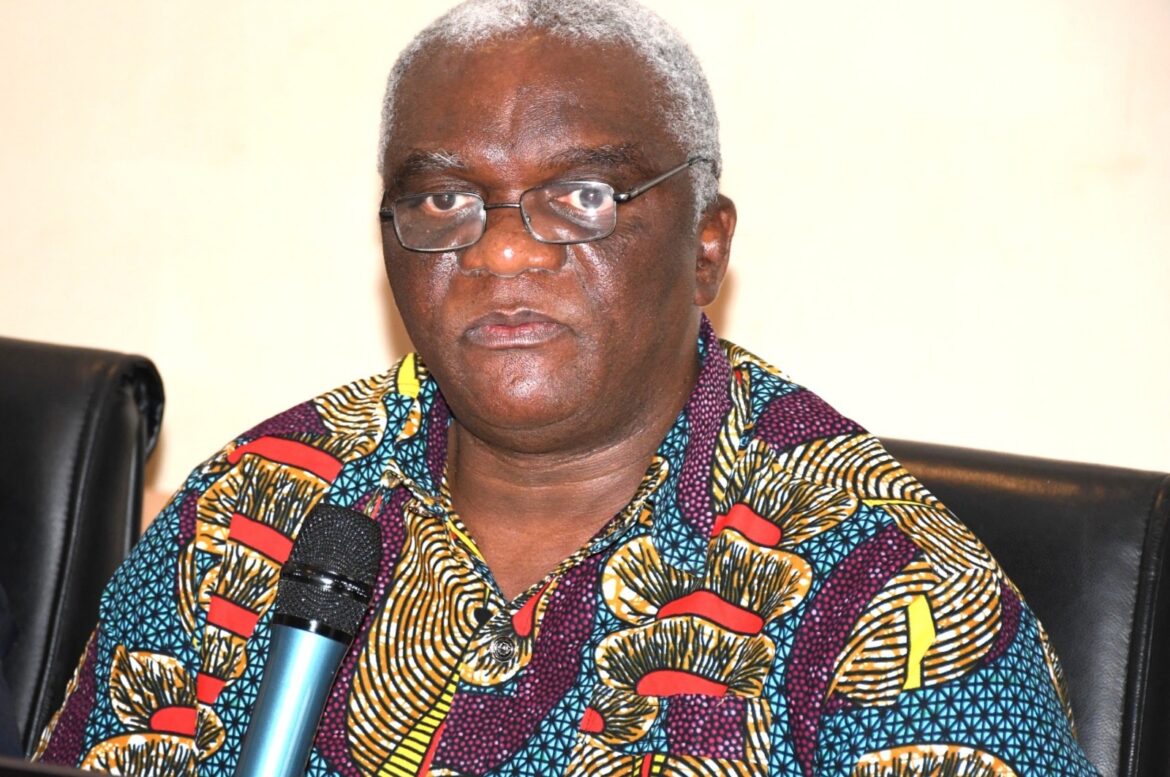
LRA Commissioner General James Dorbor Jallah made the disclosure Monday during the Public Hearing on the Revenue Component of the Draft FY2027 National Budget before the House of Representatives at the Capitol Building.
Presenting the Authority’s revenue performance and outlook, Commissioner General Jallah reported that total revenue collections had reached US$1.260 billion as of November 21, representing 97 percent of the approved FY2026 target of US$1.302 billion. Domestic revenue accounted for US$1.181 billion, exceeding its full-year target with approximately six weeks remaining in the fiscal year.
\n
He further disclosed that the Customs Department had achieved 105 percent of its annual revenue target, while the Domestic Tax Department had attained 99 percent, with overall tax revenue collections reaching 102 percent of the LRA’s target.
CG Jallah explained that the remaining shortfall in total revenue was attributable primarily to external resources, particularly borrowings, which fall outside the LRA’s revenue collection mandate.
\n
Comparing the performance with previous years, he noted that domestic revenue collections in 2026 had already exceeded the entire 2025 collection of US$847 million by approximately 39 percent, with domestic revenue nearly doubling since 2023.
The Authority projects total revenue collections to reach approximately US$1.380 billion by the end of 2026. The LRA Commissioner General attributed the performance to the collective efforts of LRA employees, other revenue-generating agencies, taxpayers, and the support of the Legislature.
\n
LRA Seeks Five Percent Operational Allocation
Despite the positive revenue performance, CG Jallah identified inadequate operational funding as a major constraint affecting the Authority’s ability to effectively execute its mandate.
\n
He called for an amendment to the Liberia Revenue Authority Act to provide the LRA with five percent of the tax revenue it assesses and collects as its operational budget. The proposed allocation would exclude royalties, contributions from state-owned enterprises and the maritime sector, fees, fines, and external resources.
According to the Commissioner General, the proposed arrangement would strengthen the Authority’s institutional capacity and provide the resources needed to sustain revenue administration and improve collection performance.
\n
He highlighted shortages of vehicles and equipment, inadequate office infrastructure, unreliable electricity in rural areas, and low staff morale as major operational challenges. He further warned that these constraints contribute to the loss of skilled professionals, particularly auditors and information technology specialists, whose expertise is critical to modern revenue administration.
“Fund the collector, and the collector will grow the collection,” Commissioner General Jallah emphasized.
\n
The LRA Commissioner General also urged lawmakers to work with the Authority to review and rationalize existing tax exemptions, which he identified as a significant threat to the country’s revenue base.
He disclosed that between January and October 2026, customs exemptions amounted to US$442 million, compared with US$278 million collected from international trade during the same period. He noted that the value of exemptions represented more than 60 percent of potential trade revenue.
\n
He further reported that cumulative exemptions from 2023 to date had reached US$1.3 billion, while duty waivers on petroleum products alone amounted to approximately US$10.7 million in 2025.
LRA Outlines 24 Reform Initiatives
\n
CG Jallah announced that the LRA will implement 24 reforms in FY2027 to modernize revenue administration, strengthen compliance, and boost domestic revenue mobilization.
Key priorities include expanding ASYCUDA to all border posts, implementing the National Single Window, rolling out VAT and electronic invoicing, and extending LITAS and real property tax administration across all 15 counties.
\n
Other measures include enhanced revenue monitoring in key sectors, integration with the Central Bank of Liberia’s payment switch, and stronger institutional integrity controls.
The reforms form part of the Authority’s broader efforts to improve compliance, strengthen accountability, and modernize revenue administration.
\n
Government Projects US$1.54 Billion in FY2027 Revenue
Providing the Government’s perspective on the proposed revenue framework, Deputy Minister for Fiscal Affairs at the Ministry of Finance and Development Planning (MFDP), Anthony G. Myers, said the FY2027 revenue forecast is designed to strengthen fiscal sustainability and reduce reliance on one-time revenue sources.
\n
Deputy Minister Myers disclosed that the proposed revenue envelope stands at approximately US$1.539 billion, representing an 11.5 percent increase over the FY2026 year-end estimate of US$1.380 billion.
He explained that the forecast places greater emphasis on recurring domestic revenue, with tax revenue projected to increase by 26.5 percent, from US$847.5 million to US$1.072 billion.
\n
According to him, the services, agriculture, and fisheries sectors are expected to play significant roles in driving revenue growth, providing a more stable revenue base than the mining sector, which is more susceptible to global market uncertainties.
Among the key measures underpinning the projections is the implementation of the 15 percent Value Added Tax (VAT), effective January 1, 2027, which is expected to generate approximately US$224.8 million. Myers clarified that rice and petroleum products will remain outside the VAT regime.
\n
Other measures include the two percent advance corporate income tax on the turnover of mining and agriculture companies, expected to generate US$57.3 million on a full-year basis, improved petroleum tax collection, and strengthened tax compliance and administration.
Deputy Minister Myers also highlighted proposed provisions under the Liberia Tax Amendment Bill 2026, including electronic tax invoicing, stronger customs controls, third-party information matching against tax returns, and excise on digital financial service fees, with exemptions to protect low-income users.
\n
Addressing concerns about the feasibility of the revenue projections, the Deputy Minister Myers acknowledged potential challenges associated with the first year of VAT implementation, commodity price fluctuations, mining output, and the timing of external resource disbursements.
He assured lawmakers that the government had adopted conservative to moderately optimistic assumptions and would strengthen monthly revenue monitoring to manage potential risks.
\n
Legislature Calls for Credible Revenue Projections and Accountability
Meanwhile, the Chairman of the House Committee on Ways, Means, Finance and Budget, Representative P. Mike Jurry, said the public hearing was intended to scrutinize the credibility, feasibility, and sustainability of the Government’s proposed FY2027 revenue framework.
\n
Representative Jurry emphasized the importance of strengthening domestic revenue mobilization through improved tax compliance, expansion of the tax base, effective customs administration, and reduction of exemptions and revenue leakages.
He also called for greater oversight of revenue contributions from state-owned enterprises and public institutions, stressing that all eligible taxpayers and economic actors must contribute fairly in accordance with Liberia’s laws.
\n
The Chairman of the House Committee on Ways, Means, Finance and Budget further underscored the need to complement revenue mobilization with transparency, fiscal discipline, prudent expenditure management, and accountability to ensure that public resources translate into essential services and national development.
The budget hearing forms part of the Legislature’s regular oversight engagements aimed at thoroughly reviewing the draft National Budget, assessing projected revenue sources, and ensuring that revenue targets are realistic, achievable, and aligned with the Government’s fiscal priorities.
See more Liberia News Network stories in Google Search by adding LNN as one of your Preferred Sources.
★ Add LNN as a Preferred Source