
Published: November 23, 2026
\n
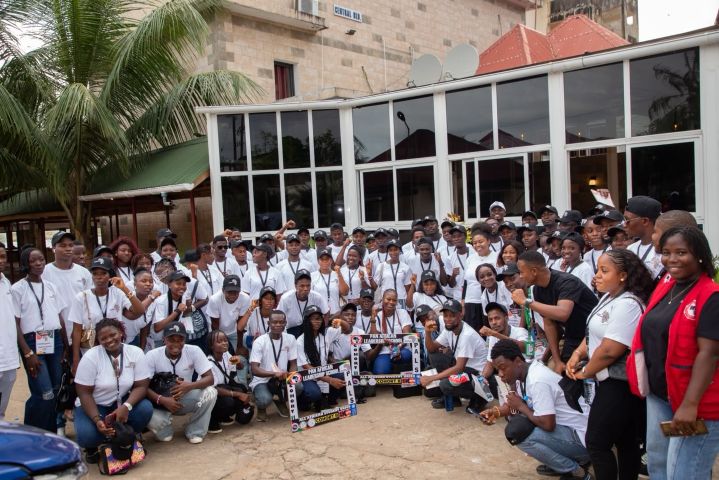
MONROVIA — The All-Africa Students Union (AASU) has officially opened the second cohort of its Pan-African Leadership School (PALS) in Monrovia, bringing together emerging African leaders for five days of intensive training aimed at transforming criticism of the continent’s challenges into practical solutions.
\n
The program, which opened Monday, Nov. 23, and runs through Friday, Nov. 27, is being held under the theme, “From Criticism to Problem Solving: Nurturing the Leaders Who Will Build Africa.”
\n
The initiative seeks to strengthen young Africans’ leadership capacity through policy dialogues, intellectual exchanges, governance discussions and practical exercises designed to equip participants with the knowledge and skills needed to contribute to Africa’s development.
\n
The official opening attracted government officials, representatives of partner institutions, student leaders, members of the diplomatic community, civil society actors and participants from Liberia and other African countries.
\n
Delivering the official opening statement, AASU Executive Committee Member for West Africa and PALS Country Lead Amb. Oumu T. Sall challenged young Africans to move beyond identifying the continent’s problems and begin developing workable solutions.
\n
“Africa’s future will not be built by waiting for others to solve our challenges. It will be built by people who challenge injustice, organize around what is possible, and work together to make change real,” Sall declared.
\n
She described the school’s theme as a call to action, emphasizing that Africa’s transformation requires young leaders who are prepared to confront injustice, demonstrate responsibility and work collectively to address the continent’s challenges.
\n
Sall said the program represents a continuation of the vision of its founder, the late H.E. Varney A. Jarsey, whom she described as her former leader and mentor.
\n
“The Pan-African Leadership School was established by Varney A. Jarsey, my former leader and mentor. I had the privilege of participating in Cohort 1,” she said.
\n
“Today, as Executive Committee Member for West Africa of AASU, I am honored to continue this Pan-African journey. Despite the challenges we have faced, we are here together to open Cohort II and advance this important work for our continent.”
\n
Reflecting on the importance of African unity and self-determination, Sall invoked the words of Ghana’s first president, Dr. Kwame Nkrumah: “We face neither East nor West; we face forward.”
\n
She encouraged participants to embrace that philosophy by developing the confidence, knowledge and determination needed to shape Africa’s future.
\n
“Over the coming days, let us think boldly, speak honestly, and turn our ideas into practical solutions. Let us build the knowledge, courage, and solidarity needed to serve our communities and shape a stronger, more united Africa,” she urged.
\n
The opening ceremony also received a commitment of potential government support from Bong County Sen. Prince K. Moye, chairman of the Liberian Senate Committee on Ways, Means, Finance and Budget.
\n
Moye pledged to advocate for the inclusion of the Pan-African Leadership School in Liberia’s national budget, describing the initiative as an important investment in youth development and the continent’s future leadership.
\n
The senator said his position as chairman of the Senate’s budget committee provides an opportunity to engage fellow lawmakers on the importance of supporting the program.
\n
“I will do everything humanly possible to sell the idea to my colleagues in the Senate,” Moye assured the organizers.
\n
He argued that with Liberia considering a national budget approaching US$1.5 billion, providing financial support to a leadership development initiative would be a worthwhile undertaking.
\n
Moye also proposed expanding the school beyond Monrovia to allow young people in other counties to benefit from its activities.
\n
He suggested that future editions could be organized twice yearly and hosted in different locations, including Bong County.
\n
“We’re going to work to support the team so that we have it done biannually and spread it across the country in different ways,” he said.
\n
The Bong County lawmaker recalled his interactions with the late Jarsey, describing him as a persistent advocate who regularly sought support for the leadership initiative.
\n
He praised the organizers for continuing the founder’s vision and urged participants to share the knowledge acquired during the training with their colleagues and communities.
\n
“The knowledge in here should be used to impact others as you leave from here,” Moye emphasized.
\n
Earlier, PALS Program Lead Augustus B. Abayomi-Cole II outlined the objectives and activities of the five-day program, stressing that the school is intended to produce leaders capable of taking practical action rather than merely participating in discussions.
\n
Abayomi-Cole, who serves in the Office of the AASU Executive Committee Member for West Africa, said the training would feature critical conversations, intellectual exchanges, policy dialogues and reflections on Africa’s historical and contemporary development challenges.
\n
“Our objective is not simply to gather young African students,” he said.
\n
According to him, the initiative seeks to strengthen emerging leaders’ ability to think critically, act responsibly, engage constructively and contribute meaningfully to Africa’s transformation.
\n
He disclosed that the training would include discussions on the historic 1963 gathering in Addis Ababa, Ethiopia, alongside examinations of leadership, governance and ethical decision-making.
\n
Among the scheduled facilitators is Dr. Aaron Weir, who is expected to deliver a lecture on leadership and governance, examining its meaning, concepts, history and practice in Africa.
\n
Another session will focus on ethics and leadership, including the question of whether leaders should accept positive outcomes produced through unjust systems.
\n
Abayomi-Cole said the discussion would challenge participants to examine the relationship between results, accountability and the processes through which decisions are made.
\n
He also emphasized the importance of punctuality, discipline and active participation, warning that repeated unexcused absences could affect participants’ eligibility for certification.
\n
Beyond academic discussions, the program is expected to provide opportunities for young Africans to build networks, exchange experiences and develop approaches to addressing challenges within their respective communities.
\n
Sall expressed appreciation to the school’s partners, facilitators and organizing team for sustaining the initiative despite the challenges encountered.
\n
She urged participants to regard the training as the beginning of a broader commitment to leadership, service and continental transformation.
\n
“Let PALS Cohort II be more than a program. Let it be a beginning — a commitment to learn, organize, and build Africa together,” she said.
See more Liberia News Network stories in Google Search by adding LNN as one of your Preferred Sources.
★ Add LNN as a Preferred Source