
For more than seven decades, deplorable road conditions have remained one of Liberia’s most persistent development challenges. Across the country, particularly in rural communities, poor roads have restricted access to markets, healthcare, education, agricultural opportunities, and essential public services.
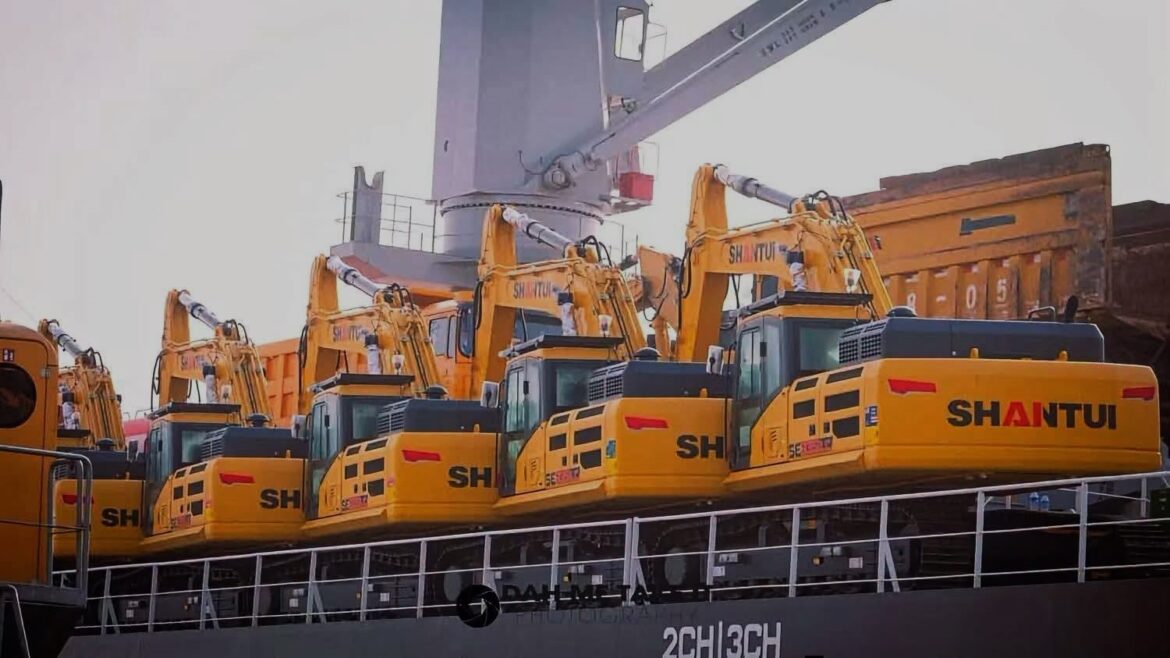
The recent deployment of 285 pieces of heavy-duty earth-moving and support equipment across all 15 counties, through 19 operational hubs, represents a historic opportunity to address these longstanding challenges. Good roads are not just about easier transit; they are economic lifelines. They allow farmers to move produce to markets, reduce transportation costs and post-harvest losses, help children get to school, allow patients to reach health facilities, and connect isolated communities to opportunities that would otherwise remain out of reach.
As a journalist passionate about telling under-reported stories, I know these realities are not distant or difficult to find. They are the everyday lived experiences of millions of Liberians, like Felecia Zarkpah and Catherine Martor. For them, good roads restore dignity. They mean the difference between life and death—such as a pregnant woman or a patient in a health emergency being able to reach a clinic in an ambulance, rather than dying on a muddy road. No community in one of Africa’s oldest republics, founded in 1847, should feel forgotten or disconnected simply because of where they live.
However, beyond the celebrations, commissioning ceremonies, and nationwide deployment, there is an equally critical question that Liberia must confront: How do we ensure these machines remain operational and serve the country for years to come?
Liberia has a history of seeing public investments in equipment and infrastructure lose their usefulness prematurely due to poor maintenance, inadequate supervision, weak management systems, and a lack of accountability. These 285 machines represent significant public resources, and their protection must be viewed as a national responsibility.
To ensure this initiative does not become “business as usual,” we need a robust, transparent maintenance framework. This includes properly trained operators and mechanics, adequate budgets for servicing and spare parts, secure equipment storage, regular performance assessments, and public reporting on where the machines are deployed, the roads they rehabilitate, and their operational status. The 19 operational hubs must not simply be dispatch points; they must serve as centers for maintenance, monitoring, accountability, and efficient deployment.
The success of this initiative should not be measured by the number of machines commissioned, the launch ceremonies, or the photographs taken during their deployment. It should be measured by the kilometers of roads made passable, the farming communities connected, the reduction in transportation costs, the improved access to essential services, and, most importantly, the number of machines still functioning five or ten years from now. Liberia does not only need machines to fix its roads; it needs a sustainable system to maintain those machines and protect them from becoming another collection of expensive, rusted public assets.
This is where the real work—and my deepest concerns—begin.
In a country where corruption and the misappropriation of state resources have often gone unpunished, and where accountability efforts are frequently dismissed as political “witch-hunts,” safeguarding these assets is a daunting task. Too often, we have seen government vehicles, equipment, and resources abused, poorly maintained, or abandoned, particularly during transitions between administrations. There is also a worrying culture of impunity where some see no issue with using public equipment for personal business, stealing fuel, or diverting resources for private gain.
To prevent this, the government must establish ironclad monitoring and supervision. I suggest a strong, fearless, and uncompromising team with proven integrity be appointed to lead the monitoring process at every level—from counties and districts to cities and towns. This supervision must be free from political patronage or partisan favoritism. Those entrusted with this equipment must be held fully accountable, regardless of which political party is in power.
My other concern is the “court of public opinion.” We have often witnessed scenarios where calling public officials to account for their stewardship is met with resistance, politicization, or apathy. This makes me wonder if we, as a nation—both citizens and politicians—are truly ready to fight corruption and curtail the waste that has kept us far behind our neighbors. Liberia’s struggle has never been a lack of potential; it is a governance crisis, often compounded by a public unwillingness to accept hard, systemic changes.
I look forward to the day when I can comfortably drive my daughter and family from Duazon to Rivercess or Sinoe in an ordinary Toyota SUV or sedan—for vacation, sightseeing, or exploring our country’s tourism potential—and return to Monrovia without getting stuck in mud or spending days stranded on the road. This is the promise of good roads: easier movement, stronger connections, and better living conditions for everyone.
The deployment of these 285 yellow machines is indeed a commendable step by the government. But without rigorous maintenance plans, sustained funding, skilled operators, timely fuel supplies, accessible spare parts, and absolute accountability, we risk seeing another fleet of valuable assets abandon and idle, leaving the country with nothing to show for this massive investment.
Liberia cannot afford another project that begins with national excitement but ends in rusted waste. The real test is not the launch; it is the longevity, the system, and the accountability that will carry us forward. Let the real work begin.
See more Liberia News Network stories in Google Search by adding LNN as one of your Preferred Sources.
★ Add LNN as a Preferred Source