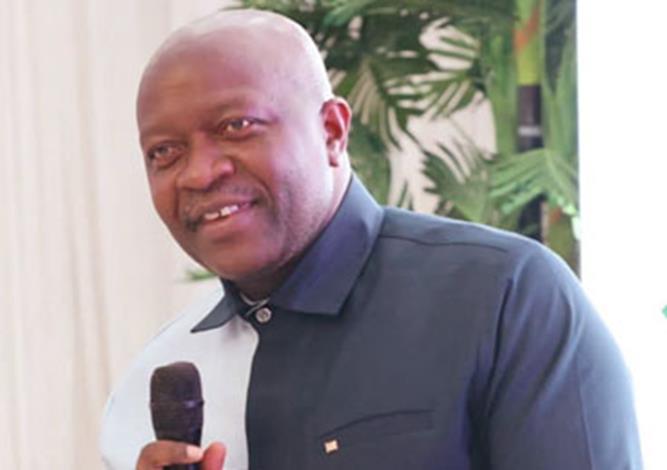
MONROVIA – Public reaction to Liberia’s US$1 billion revenue milestone exposes a gap between government’s fiscal celebration and citizens’ economic experience. George Werner argues that cumulative collections should not be mistaken for unspent cash because government disburses revenue during the year. Samuel Jackson questions whether the announced total represents core domestic taxes when donor, contingent, and one-time revenues are included. Wantoe Teah Wantoe attacks the President’s presentation, while trader Hannah Kollie measures the achievement against prices, school fees, unemployment, and poverty. Their responses do not erase the record. They demand an accounting of what was raised, what was spent, and what remains. Without visible services and economic relief, celebration risks deepening frustration rather than building public confidence.
Hours after President Joseph Nyuma Boakai stood before the nation to declare a historic $1 billion domestic revenue milestone, sharp skepticism and public pushback have mounted across the capital, with policy experts, former government officials, and market vendors warning the administration against creating a false sense of national prosperity.
While few dispute the statistical figures released by the Liberia Revenue Authority (LRA) regarding cumulative tax collections, financial analysts emphasize that framing annual intake as a sudden windfall is creating a dangerous public illusion.
At the heart of public concern is a fundamental misunderstanding being fueled by official rhetoric: the notion that $1 billion sits intact inside the vault at the Central Bank of Liberia (CBL) waiting to be distributed.
Economic commentators point out that revenue collection is a fluid process where incoming funds are immediately disbursed to service national debt, pay public salaries, and cover operating expenses throughout the year.
Werner Explains Revenue Spending
Addressing the public confusion, former Minister of Education George Kronnisanyon Werner invoked a famous local refrain to explain the reality of public finance: “Money finished, Go Home!”
“You have heard the song in Liberia. It comes to mind as some Liberians celebrate the billion-dollar revenue milestone, as though one billion United States dollars has suddenly arrived and the sharing is about to begin,” Werner remarked. “But the sharing did not wait for the celebration. Government has been spending revenue as it came in. The announcement does not mean a fresh billion dollars is sitting somewhere, available for new demands.”
Werner warned that failing to clearly explain this distinction creates severe political risks for the government when citizens begin demanding immediate benefits from funds that have already been expended.
“Consider a civil servant whose salary was harmonized to US$150 a month. After ten months, that worker can say, ‘I have earned US$1,500.’ But nobody should interpret that statement as an invitation to come and share US$1,500,” Werner illustrated. “LRA raises it. Finance releases it. Public institutions spend it. Reaching one billion does not reverse those transactions… Digested. Eaten. Gone. Celebrate the collection achievement. Explain it just as loudly. Otherwise, today’s applause may become tomorrow’s demand for money already spent.”
Jackson Questions Revenue Composition
Adding technical weight to the skepticism, renowned Liberian development economist Samuel Jackson argued that the administration is conflating total intake with core domestic tax collection. Jackson warned that padding revenue totals with non-recurring or externally dependent funds distorts the country’s actual fiscal health.
“Someone needs to teach our people the true meaning of domestic resource mobilization,” Jackson urged. “When core tax revenue is below $800m, you can’t celebrate the revenue as $1bn. Donor. Contingent revenues. Once-off payment. Inorganic.”
Political opposition figures have similarly seized on the announcement, accusing the executive of engaging in political theater over routinely executed budget operations. Youth empowerment activist and opposition figure Wantoe Teah Wantoe sharply criticized the framing of the figures.
“Nothing is more hilarious than a sitting President seemingly unaware that his government has already spent the national budget,” Wantoe stated. “The old man now issuing a statement about how the $1bn should be used is beyond embarrassing.”
Citizens Demand Visible Benefits
Beyond accounting technicalities and political pushback, ordinary Liberians expressed frustration over what they describe as a stark disconnect between high-level fiscal reporting and the harsh daily realities of survival.
Despite official reports of macroeconomic expansion, basic economic indicators on the ground remain grim for average households, where prices for essential food items and household goods continue to place severe pressure on family budgets.
At the same time, youth unemployment remains widespread, leaving thousands of university graduates with limited formal job opportunities despite reported increases in state collection, while deep-seated poverty continues to affect communities nationwide that still lack basic access to pipe-borne water, reliable electricity, and equipped health centers.
“We keep hearing about billions on television, but when we go to the market, a bag of rice is still expensive, school fees are rising, and our children cannot find work,” said Hannah Kollie, a local trader at the Duala Market. “If the government collected $1 billion, where is it? Because it is certainly not in the pockets of the people.”
Policy commentators note that even Finance Minister Augustine Kpehe Ngafuan previously cautioned that reaching the $1 billion threshold would not mean “milk and honey is flowing on Broad Street.”
Analysts contend that until higher revenue collection translates into lower commodity prices, functional infrastructure, and tangible job creation, landmark budget declarations will continue to read like a political fairy tale to those fighting to make ends meet.
See more Liberia News Network stories in Google Search by adding LNN as one of your Preferred Sources.
★ Add LNN as a Preferred Source