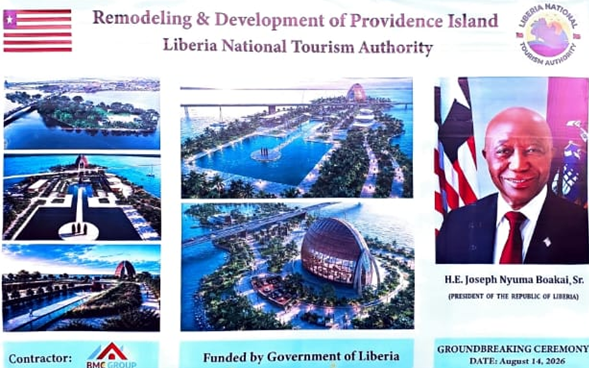
MONROVIA – President Joseph Nyuma Boakai’s tourism promise is entering its first serious test of execution. His administration is pairing a new legal framework with direct investment at Providence Island, one of Liberia’s most historically significant sites. The message is that tourism must generate revenue and jobs, not merely publicity. The 2025 Liberia National Tourism Act has created a dedicated regulator, while the historic island is slated for redevelopment before December. Together the moves signal a shift from marketing potential toward building destinations that visitors can actually use. The stakes reach across employment, heritage preservation and national image. Whether reform becomes functioning sites will define the tourism pillar of the ARREST Agenda, as THE ANALYST reports.
President Joseph Nyuma Boakai is increasingly matching his administration’s rhetoric on tourism with concrete action. Government is moving simultaneously to strengthen the legal framework governing the sector and to embark on a landmark project aimed at transforming Providence Island into a major heritage and tourism destination.
The developments mark a significant step in implementing the tourism component of the President’s ARREST Agenda. That agenda identifies tourism, alongside agriculture, roads, rule of law, education and sanitation, as one of the administration’s priority areas for national transformation.
Rather than leaving Liberia’s potential at the level of beaches, rainforests, historic landmarks and cultural attractions, the administration is seeking to build the institutions, infrastructure and visitor experiences needed to turn those assets into productive resources. Officials describe the approach as a deliberate move from promotion toward development.
At the center of the strategy is the enactment of the 2025 Liberia National Tourism Act, which amended Title 30 of the Public Authorities Law. The legislation established the Liberia National Tourism Authority (LNTA) as an autonomous statutory institution dedicated to regulation, destination marketing and tourism infrastructure development.
The law represents a major institutional shift in the management of the industry. Previously, tourism responsibilities were housed within the broader mandate of the Ministry of Information, Cultural Affairs and Tourism.
The creation of a specialized authority is intended to provide a more focused mechanism for regulating the sector, improving hospitality standards and developing investment opportunities. It is also expected to sharpen efforts to market Liberia as a competitive destination internationally.
From Law to Destination
The significance of the Providence Island project becomes clearer when viewed against the institutional transformation the President has initiated. The Tourism Act provides the legal foundation upon which the administration’s new strategy is being built.
The LNTA is not designed merely to promote Liberia as a destination. Its broader responsibilities include supporting infrastructure development, preserving cultural heritage and strengthening the economic potential of the tourism and creative sectors.
President Boakai has moved to operationalize the institution by putting in place its leadership structure. He has also constituted the inaugural LNTA Board, bringing together government and private-sector representation in an effort to connect public policy with enterprise and investment.
Providence Island now offers an opportunity to demonstrate what the new framework can deliver. The site is not simply another attraction; its historical importance gives it a special place in Liberia’s national story and links heritage preservation to tourism development.
Taken together, the measures point to a sequenced strategy: build the institution, develop the destination, involve Liberian businesses and then market the finished product to the world. That sequence, officials argue, is the critical distinction emerging under the administration.
Turning History into Asset
Liberia is preparing to commence a landmark development project at Providence Island, a site of profound historical and national significance. The initiative is intended to combine modern tourism infrastructure with the preservation of the island’s character and memory.
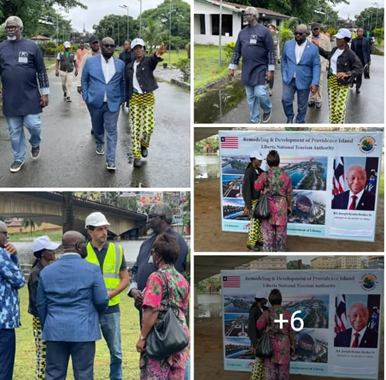
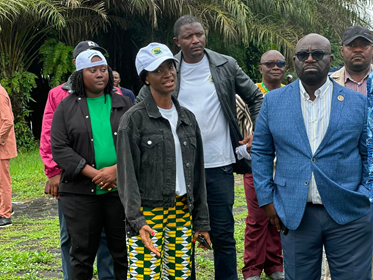
Ahead of the works, a high-level delegation toured and inspected the historic island. It included Minister of State for Presidential Affairs Hon. Samuel A. Stevquoah, Director General of the Cabinet Hon. Nathaniel T. Kwabo, LNTA Board Chairman Ambassador Christopher Hayes Onanuga, LNTA Director General Princess Eva Cooper and Nimba County Senator Samuel G. Kogar, alongside senior tourism officials and media executives.
The inspection allowed the officials to assess the site, examine existing facilities and consider how development can protect the island’s historical integrity. The exercise underscored the national importance being attached to the project.
The project, funded by the Government of Liberia through the Public Sector Investment Program (PSIP), is being implemented under a Design and Build arrangement. Under this approach, the final design and construction interventions will respond to technical assessments, existing site conditions and the need to protect the island’s cultural integrity.
Preparations are reportedly underway. The project is expected to commence in September 2026, with December 2026 identified as the targeted completion period.
Plans include the rehabilitation of historic structures and visitor facilities. Proposed experiences could include heritage walks, historical interpretation, cultural performances, arts and crafts, Liberian cuisine, community vending, guided tours and spaces for educational engagement, along with an events stage and other visitor-oriented facilities.
Beyond Beautification
The initiative goes considerably beyond a physical facelift. At its core is the effort to transform a historic location into a living heritage destination where Liberia’s history can be experienced, interpreted and connected to contemporary tourism.
For decades, Liberia has promoted its natural beauty and historical significance as evidence of enormous potential. Yet the emerging approach recognizes that international competitiveness requires more than attractive locations.
Visitors require accessibility, quality facilities, safety, professional management, interpretation and hospitality services. They also want compelling experiences that encourage them to stay longer, spend more and return.
The island is therefore being positioned as an early demonstration of Liberia’s transition from marketing potential to developing market-ready destinations. The transformation could also establish it as an anchor for a wider Monrovia heritage tourism circuit linking other historic and cultural landmarks across the capital.
Jobs and Local Economic Opportunities
The strategy carries an important economic dimension. A professionally managed Providence Island could generate opportunities for tour guides, artisans, cultural performers, food vendors, photographers, content creators, transport operators, event organizers, hotels, restaurants and other small and medium-sized businesses.
The inclusion of community vending, cultural commerce and local crafts in the concept could help ensure that activity produces linkages beyond the island itself. This is consistent with the administration’s aim of ensuring tourism benefits reach ordinary Liberians rather than remaining confined to large investors.
The potential impact extends beyond direct employment. As visitor traffic increases, demand could grow for transportation, accommodation, food services, entertainment, handicrafts and other visitor-related services, creating a wider ecosystem of economic activity.
Education, Culture and National Identity
Providence Island also offers an opportunity to strengthen domestic tourism and historical education. Properly developed, the site could become a destination for students, families, researchers, universities and young people, supporting school excursions, academic research and national commemorative activities.
The project could help move historical education beyond textbooks by creating a physical environment in which Liberians interact with their national story. Internationally, the island’s significance provides a platform to deepen Liberia’s appeal to the growing heritage, cultural and diaspora tourism markets.
Building the Destinations Behind the Marketing
The current drive is supported by broader efforts to map and identify Liberia’s tourism assets. Authorities and sector partners have undertaken mapping activities covering coastal and historic areas, including the identification of surfing zones and attractions in southeastern Liberia.
The administration has also placed renewed emphasis on preserving national monuments and cultural assets, including Providence Island, the National Museum and rural cultural sites. Regulatory compliance and standards for cultural pageantry and public events have likewise received attention as part of efforts to improve safety and organization.
These initiatives matter because the emerging philosophy recognizes that promotion alone cannot build an industry. Liberia can market its beaches, forests and historical sites internationally, but visitors must ultimately find functioning destinations, infrastructure, interpretation and services capable of meeting their expectations.
A Broader Economic Vision
The project consequently represents a broader rethink of tourism as an economic sector. Under the administration’s emerging vision, tourism is expected to contribute to employment creation, investment attraction, cultural preservation, community development, national revenue and Liberia’s international image.
The participation of senior Executive Branch officials, legislative leadership, the LNTA and major media institutions in the inspection underscores the importance being attached to the initiative. It also sends a symbolic message that Liberia’s historical assets are increasingly viewed as economic and educational resources for the future.
For President Boakai, the combination of legislative reform and physical investment gives greater substance to the tourism component of the ARREST Agenda. The authority provides the institutional mechanism, the Tourism Act provides the legal foundation, and the Providence Island project provides an early practical demonstration.
As the site moves toward construction, the administration is effectively attempting to establish a new model for the sector, one in which heritage is preserved, destinations are developed, communities participate and visitors encounter a Liberia prepared to receive them. The ultimate ambition is to move the country from possessing extraordinary potential to developing, managing and monetizing it sustainably.
In that sense, the Providence Island project is more than another infrastructure undertaking. It represents an early test of the President’s determination to turn the “T” in the ARREST Agenda into a productive pillar of Liberia’s economic transformation.
See more Liberia News Network stories in Google Search by adding LNN as one of your Preferred Sources.
★ Add LNN as a Preferred Source