
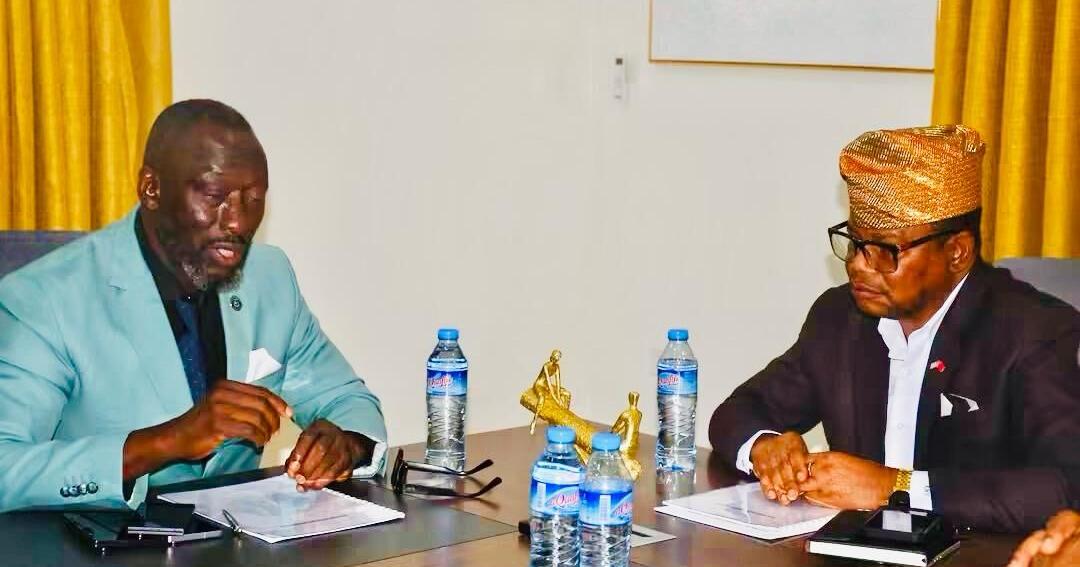
The Government of Liberia’s new anti-illegal mining enforcement mechanism has officially begun operations, with the Protect Our Resources Taskforce (PORT) holding its first technical engagement aimed at launching a nationwide campaign to combat illicit mining activities and strengthen governance within the extractive sector.
The inaugural technical meeting, held on Wednesday, July 1, 2026, at the Ministry of Mines and Energy in Monrovia, brought together PORT leadership, key government agencies, and technical officials to define the framework for implementing the taskforce’s mandate.
The meeting marked the formal operational start of the multi-agency initiative established by President Joseph Nyuma Boakai Sr. through Executive Order 167, signed on June 26, 2026.
Under the executive order, PORT has been tasked with curbing illegal mining, strengthening regulatory enforcement, improving compliance monitoring, and promoting accountability in Liberia’s mineral sector.
The establishment of the taskforce comes amid growing concerns over illegal mining activities across the country, including environmental destruction, unauthorized occupation of mining concessions, mineral smuggling, loss of government revenue, and violations of mining regulations.
Presenting the Technical Administrative Framework (TAF) for PORT, Minister of Mines and Energy R. Matenokay Tingban described the initiative as a major shift toward intelligence-driven enforcement and stronger coordination among government institutions responsible for managing Liberia’s natural resources.
Minister Tingban emphasized that Liberia’s minerals are national assets that must contribute meaningfully to economic transformation, national development, environmental protection, and improved public revenue.
He warned that illegal mining should no longer be viewed as a minor regulatory violation but as a serious threat to Liberia’s economy and governance system.
According to Tingban, illicit mining contributes to revenue losses, environmental degradation, economic crimes, and undermines legitimate investors operating within the law.
He stressed that protecting Liberia’s mineral resources requires a coordinated response involving all relevant state institutions.
The Technical Administrative Framework outlines PORT’s responsibilities, including intelligence gathering, routine and risk-based inspections, identification of illegal mining hotspots, enforcement operations, seizure of illegal mining equipment, and referral of suspected economic crimes for prosecution.
The taskforce will also conduct public awareness campaigns and monitor compliance throughout the mining sector.
Its operations will cover all categories of mining activities, including industrial, commercial, and artisanal operations.
Officials said the taskforce will focus on ensuring compliance with mining licenses, royalty obligations, environmental protection requirements, occupational safety standards, and community agreements.
Beyond enforcement, PORT’s broader objectives include increasing government revenue collection, protecting Liberia’s natural resources, strengthening institutional collaboration, promoting environmental sustainability, disrupting illegal mining networks, and restoring confidence among legitimate investors.
Chairman of the Protect Our Resources Taskforce, Abraham Kromah, urged member institutions to prioritize cooperation, information sharing, and collective responsibility as the taskforce begins nationwide operations.
“The success of this Taskforce will depend on our collective commitment,” Kromah said.
“We must operate as one coordinated team—sharing intelligence, enforcing the law fairly, engaging communities, and ensuring accountability for those exploiting our mineral resources illegally.”
Kromah assured stakeholders that PORT would operate professionally, transparently, and within the framework of Liberia’s laws.
He emphasized that the taskforce would not only focus on enforcement but also work with communities and stakeholders to promote responsible resource management.
The first technical engagement brought together members of PORT, including Ashford Peal, Prince Mulbah, Tarnue Kesselly, and Charles Johnson.
Representatives from key government institutions also attended, including officials from the Ministries of Finance and Development Planning and Justice, the Armed Forces of Liberia, the Environmental Protection Agency (EPA), the Liberia Revenue Authority (LRA), and the Liberia Immigration Service.
Senior officials from the Ministry of Mines and Energy were also present, including Assistant Minister for Mineral Exploration and Environmental Research Sam Summerville, Inspector-General for Mines Agatius Coker, and Deputy Inspector-General Adolphus Gleekia.
The participation of multiple institutions reflects the government’s effort to create a coordinated enforcement structure rather than relying on a single agency to address illegal mining.
Government officials said PORT represents a renewed commitment by the Boakai administration to protect Liberia’s mineral wealth and ensure that natural resources benefit citizens.
They noted that illegal mining has long posed challenges to environmental sustainability, state revenue collection, and community development.
The taskforce is expected to begin nationwide engagements, inspections, and enforcement activities as it implements its operational framework.
With the launch of PORT, the government is signaling a tougher approach toward individuals and groups involved in illegal mining while seeking to strengthen transparency, accountability, and responsible management of Liberia’s extractive resources.
