Liberia’s leading anti-corruption organization, the Center for Transparency and Accountability in Liberia (CENTAL), has welcomed the government’s aggressive response to the country’s largest-ever narcotics trafficking scandal but warned that dismissing officials alone will not address the institutional weaknesses that allowed a massive drug operation to penetrate Liberia’s borders.
CENTAL said the discovery of cocaine shipments worth hundreds of millions of dollars exposes serious governance and integrity failures within Liberia’s security and border management systems, requiring comprehensive reforms rather than isolated disciplinary actions.
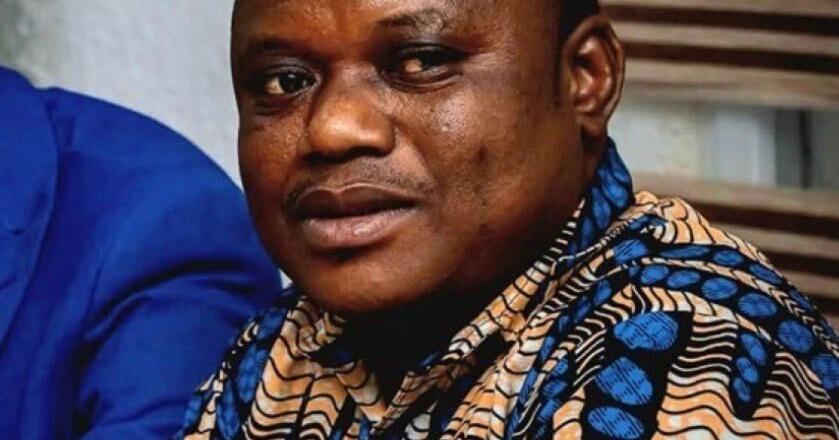
The warning came Wednesday when CENTAL Executive Director Anderson Miamen addressed a press conference in Monrovia, where he praised President Joseph Nyuma Boakai’s decision to suspend, dismiss, and pursue prosecution against senior government and security officials linked to the investigation.
The administrative actions followed two major drug seizures in 2026 that authorities described as the largest narcotics interceptions in Liberia’s history.
The first major seizure occurred at the Roberts International Airport (RIA), where law enforcement authorities intercepted approximately 237.6 kilograms of cocaine, with an estimated street value exceeding US$19 million.
Shortly afterward, security forces uncovered a much larger drug operation in Duazon, outside Monrovia, seizing approximately 3,971 kilograms — nearly four metric tons — of processed cocaine, reportedly valued at hundreds of millions of United States dollars.
The combined seizures, estimated at about 4.2 metric tons, were publicly destroyed by Liberian authorities in a move government officials said demonstrated their commitment to fighting international drug trafficking networks.
Following the investigation, President Boakai ordered disciplinary actions affecting senior officials from key security institutions, including the Roberts International Airport security structure, the Liberia Drug Enforcement Agency (LDEA), the National Security Agency (NSA), and the Liberia National Police.
While commending the government for acting on the findings instead of allowing the matter to disappear, Miamen said the scale of the trafficking operation reveals deeper institutional problems.
“Narcotics of such quantity do not transit a country whose borders, seaports, and airports are functioning without compromises and collusive networks,” Miamen said. “This is a governance failure before it is a criminal one, and it will not be cured by merely removing individuals.”
According to CENTAL, the ability of traffickers to move such a significant quantity of illegal drugs through Liberia points to possible weaknesses in oversight mechanisms, internal controls, and accountability structures within state institutions.
Miamen warned that failure to address these systemic issues could further damage public confidence in government institutions and expose Liberia to increased risks associated with organized crime.
He urged the government to ensure transparency throughout the investigation process by providing regular updates and making clear that no individual, regardless of political influence or position, would be protected.
CENTAL also called for the involvement of international partners, civil society organizations, and independent national actors in the ongoing investigation to strengthen public confidence in the process.
The anti-graft group recommended several measures, including stronger vetting procedures for security sector appointments, periodic rotation of personnel assigned to sensitive border and security positions, and full prosecution of all individuals found to have participated in the trafficking network.
“Accountability must go beyond the removal of officials. The systems that allowed these networks to operate must be identified and fixed,” CENTAL emphasized.
Beyond the narcotics investigation, CENTAL also highlighted Liberia’s recent performance under the 2026 Extractive Industries Transparency Initiative (EITI) validation process, describing the achievement as a significant step forward in strengthening transparency in the mining and natural resources sector.
Liberia, through the Liberia Extractive Industries Transparency Initiative (LEITI) Secretariat, achieved an 80 percent implementation score in the latest validation report, reflecting progress in promoting openness and accountability within the extractive industries.
CENTAL congratulated LEITI and stakeholders involved in the process but cautioned that important challenges remain.
The organization identified outstanding concerns requiring attention, including gaps in beneficial ownership disclosure, inconsistencies in revenue reporting, and environmental impacts associated with mining activities.
Miamen said continued reforms are necessary to ensure that Liberia’s natural resources benefit citizens and contribute meaningfully to national development.
He urged the government to use the EITI findings as a roadmap for further strengthening transparency, improving public access to information, and ensuring greater accountability among companies operating in the extractive sector.
CENTAL’s latest intervention comes amid growing national debate over corruption, institutional accountability, and the need for stronger governance systems as the Boakai administration advances its reform agenda.
See more Liberia News Network stories in Google Search by adding LNN as one of your Preferred Sources.
★ Add LNN as a Preferred Source