With the next general elections still three years away, Bong County Senator Prince Kermue Moye Sr. is steadily expanding one of the county’s most ambitious grassroots outreach campaigns—combining multimillion-dollar donations, scholarships, community projects and infrastructure pledges in what supporters describe as responsive leadership but political observers increasingly view through the prism of 2029.
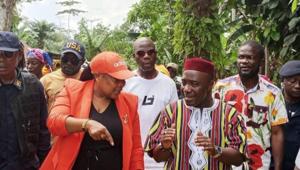
Over recent months, the first-term senator has traveled extensively across Bong County, visiting dozens of towns and villages, where he has distributed cash to women’s groups, volunteer teachers, schools, churches and youth organizations while promising roads, markets, electricity, schools, clinics and water systems.
Although Senator Moye insists the initiative is a citizen-engagement exercise designed to understand the development priorities of rural communities, the scale, frequency and political symbolism of the outreach have inevitably prompted discussion about whether it also represents an early effort to consolidate support ahead of the 2029 elections.
In Liberia, constituency engagement has long served two purposes.
For elected officials, regular visits to communities provide opportunities to assess local needs, monitor ongoing projects and strengthen relationships with constituents. At the same time, such outreach inevitably carries political significance in a country where voters often judge leaders by their visibility and responsiveness between elections rather than campaign promises alone.
This makes it difficult to separate development initiatives from political strategy.
Senator Moye, elected during the 2020 Special Senatorial Election, has not formally declared any intention to seek re-election in 2029. Nevertheless, his countywide activities are already attracting increasing political attention.
The latest phase of the senator’s outreach concluded with a three-day tour of Salala District, where he announced a broad package of financial assistance and development commitments.
Among the interventions were L$500,000 for women’s empowerment in Salala City; financial support for Muslim and Christian communities; university scholarships; funding for volunteer teachers; support for village savings groups; construction materials for markets and churches; solar lights; motorcycles; fuel support; roofing materials; and cash grants for women’s organizations.
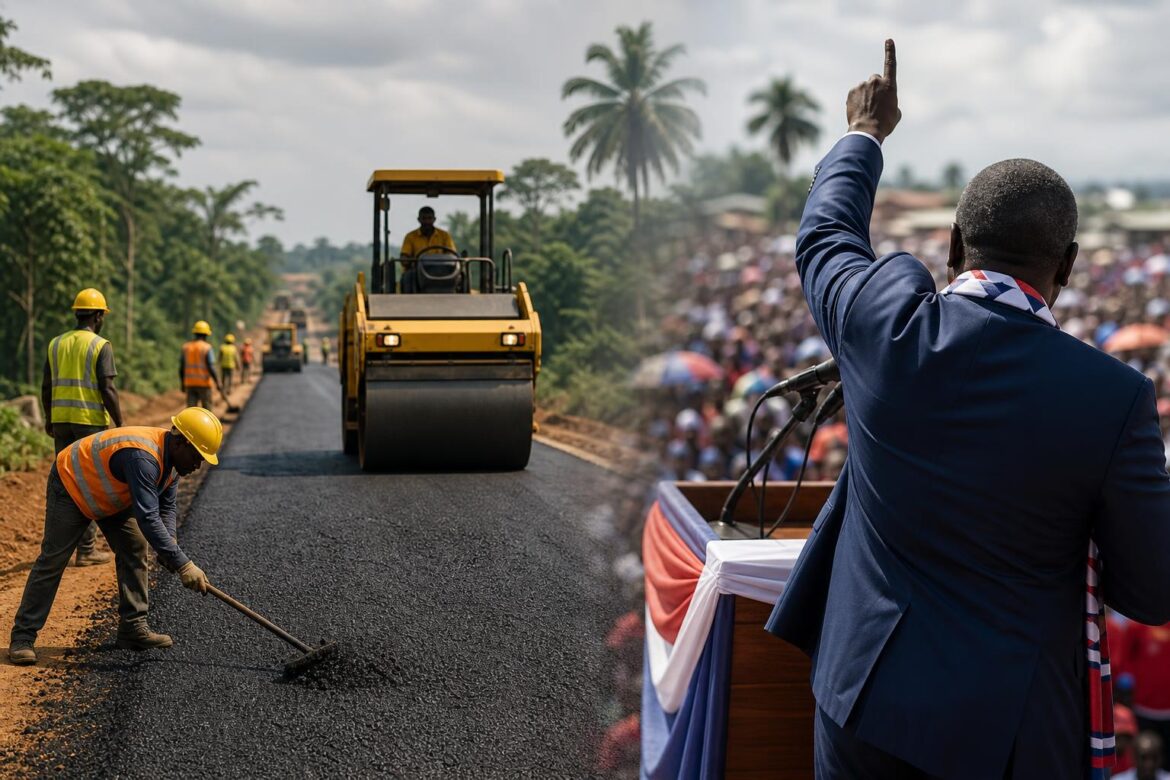
The senator also pledged future investments in roads, markets, schools and electricity infrastructure throughout the district.
Speaking during the tour, Moye said his objective was to hear directly from residents about the problems confronting their communities.
He also thanked voters for supporting the Unity Party during the 2023 elections—a political reference that has further fueled speculation about the broader significance of the outreach.
One of the defining characteristics of Senator Moye’s outreach has been his emphasis on education.
His office reports distributing L$690,000 to volunteer teachers and schools across several electoral districts while also providing additional assistance for school projects through the Bong County Education Office.
Beyond direct financial assistance, the senator has repeatedly pledged to construct or renovate elementary schools and has expanded scholarship opportunities for students attending Bong County University, Cuttington University and Lutheran University.
Education analysts note that support for volunteer teachers remains politically and socially significant because many schools across rural Liberia continue to depend on instructors who work for years without placement on the government payroll.
Infrastructure has formed another major pillar of the outreach.
Throughout Bong County, Senator Moye has pledged support for road rehabilitation, electricity expansion, market construction, water systems and healthcare facilities.
Among the larger commitments are rehabilitation of major feeder roads; extension of Liberia Electricity Corporation (LEC) connections; electricity access through the CLSG transmission corridor; construction of a referral hospital in Salala; and support for rural water systems.
Many observe, however, that most of these larger projects depend upon national budget allocations, executive agencies or legislative appropriations beyond the direct authority of any individual senator.
Senator Moye has acknowledged this limitation, frequently stating that he intends to lobby government institutions and collaborate with fellow lawmakers to secure funding.
Perhaps no constituency has received greater attention than women.
Across multiple districts, women’s organizations have received direct financial support, village savings assistance, farming tools and entrepreneurship funding.
Political analysts say the focus reflects the growing importance of women’s networks within Liberia’s rural political landscape.
Women’s organizations often serve not only as economic associations but also as influential community structures capable of mobilizing civic participation and shaping public opinion.
The senator’s office, however, characterizes the assistance primarily as an economic empowerment initiative designed to strengthen household incomes and support small businesses.
Alongside community development initiatives, Senator Moye has continued investing in organizational structures associated with Team Moye, including motorcycles and financial support for local coordinators.
While such structures are common within Liberian politics, their continued expansion naturally attracts political interpretation.
Analysts caution, however, that the existence of organized support networks does not by itself establish that a formal campaign has begun.
Rather, it reflects a broader pattern of constituency organization that has become increasingly common among elected officials seeking to maintain year-round engagement with voters.
The central question raised by Senator Moye’s activities is not whether they are developmental or political—but whether they are both.
In democratic systems, constituency service and political strategy frequently overlap.
Delivering schools, supporting teachers, assisting market women and improving infrastructure are legitimate legislative priorities.
They are also activities that strengthen relationships between elected officials and the electorate.
Supporters argue that Moye is fulfilling the responsibilities expected of a senator by remaining visible, responding to community concerns and investing personal and political capital in rural development.
Critics may contend that the intensity of the outreach reflects an effort to consolidate countywide political support well before the next electoral cycle.
Both interpretations can coexist.
Ultimately, the lasting significance of Senator Moye’s outreach will depend less on the announcements themselves than on implementation.
Immediate assistance—cash grants, cement, chairs, scholarships and motorcycles—can deliver tangible short-term benefits.
Longer-term promises involving hospitals, roads, schools, electricity and markets require sustained funding, technical planning and institutional collaboration.
Some residents believe that the central issue is neither politics nor campaign strategy. It is delivery.
As the source material notes, communities struggling with poor roads, weak educational infrastructure, inadequate healthcare and limited electricity often place greater value on completed projects than on political debate.
With Senator Moye indicating that his countywide tour will continue, Bong County is likely to remain one of Liberia’s most closely watched political landscapes.
The 2029 campaign has not officially begun.
But in the eyes of many observers, the contest for public confidence may already be underway.
See more Liberia News Network stories in Google Search by adding LNN as one of your Preferred Sources.
★ Add LNN as a Preferred Source