By Lincoln G. Peters
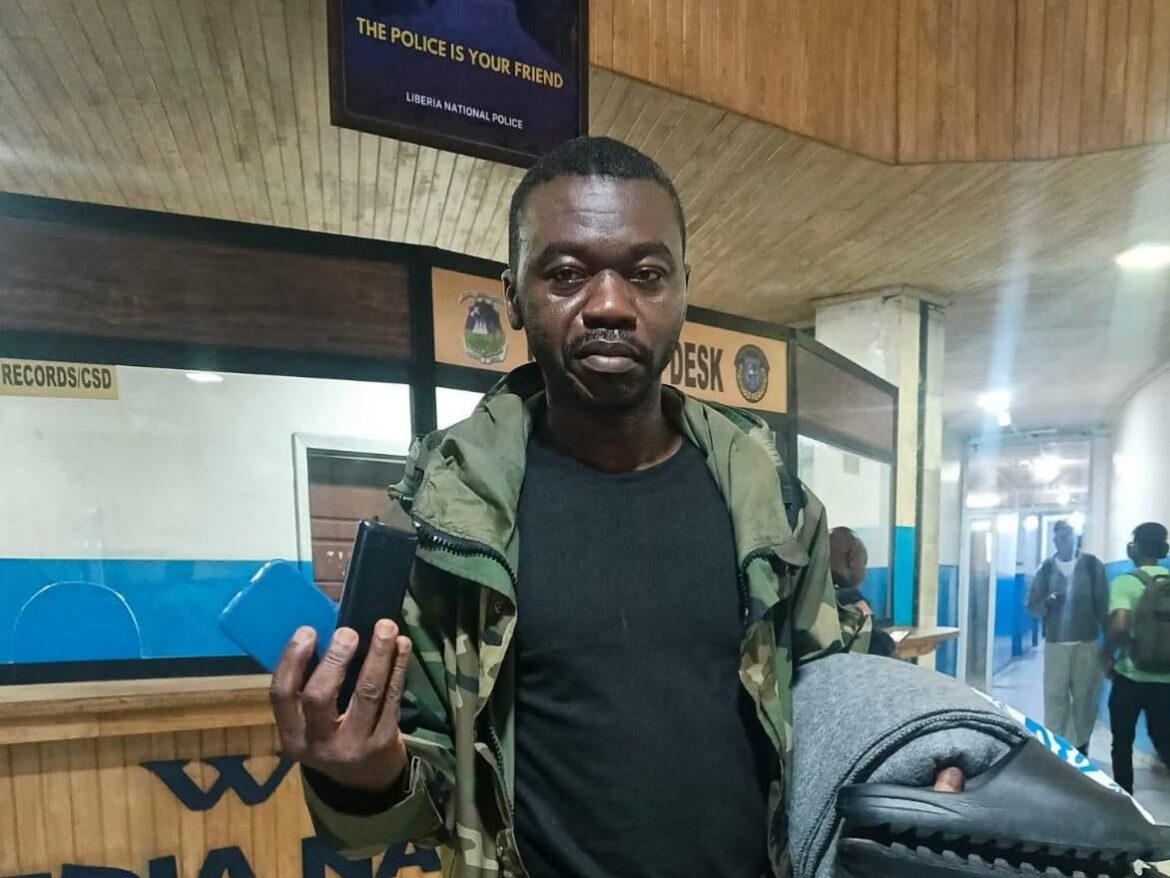
MONROVIA, Liberia, August 9, 2026 — Suspended Monrovia Central Prison Deputy Superintendent for Operations Jackson K. Kolako has called on President Joseph Nyuma Boakai and the Ministry of Justice to transfer detainees linked to the US$317 million cocaine case to a more secure facility, alleging circumstances that he claims could threaten their continued detention.
Kolako, who was suspended following accusations that he disrupted an inmate interview by an external security agency, suggested that the detainees be transferred outside Liberia, preferably to Morocco, while awaiting trial.
His appeal followed his suspension by the Bureau of Corrections and Rehabilitation (BCR) over an August 1 incident at the Monrovia Central Prison involving security personnel seeking access to one of the foreign nationals detained in connection with the massive cocaine seizure.
In a “Stand Down Order Pending Formal Investigation” dated August 3, the Office of Assistant Justice Minister for Rehabilitation Robert B. Boi said BCR leadership had received a briefing from the Office of the Attorney General concerning Kolako’s alleged disruption of an inmate interview conducted by an external security agency.
The communication described the alleged action as serious unprofessional conduct and a violation of Part One, Section 4.12 of the BCR Code of Conduct.
“In view of the foregoing, and given the seriousness of the matter, as well as to ensure a free and impartial investigation in accordance with Section 13.0 of the BCR Code of Conduct, you are hereby suspended pending the outcome of an investigation,” the communication stated.
Kolako, however, has disputed the circumstances surrounding the incident and suggested that his actions were intended to enforce established prison security procedures.
Writing on his Facebook page Sunday, August 9, Kolako said he was withholding some details because of the ongoing investigation but called for heightened security surrounding those detained in connection with the drug case.
“I respectfully call upon Cllr. Oswald N. Tweh, Attorney General and Minister of Justice of Liberia; Gen. Prince C. Johnson of the NSA, and the entire Joint Security; Madam Sarah Beslow Nyanti; the United States Embassy near Monrovia; and all others who may have the opportunity to communicate with His Excellency President Joseph N. Boakai, Sr., to convey my appeal that all individuals detained at the MCP in connection with the multi-million-dollar drug case be transferred to a secure holding facility, preferably in the Kingdom of Morocco, while awaiting trial,” Kolako wrote.
He argued that such a move would protect the integrity of the government’s ongoing fight against illicit drugs.
Kolako went further, warning: “Attempting to aid and abet prison break is a serious crime. No one will set us up for failure at the Monrovia Central Prison. We are far too experienced!”
He did not publicly provide evidence that a prison break was being planned, and the Ministry of Justice or other officials named in his statement had not publicly confirmed such a threat.
Kolako Gives His Account
Providing his account of the August 1 incident, Kolako alleged that he was arrested by three Liberia National Police officers at about 2 p.m. while on duty at the Monrovia Central Prison.
He claimed the arrest was ordered by Siafa Bahn Kemokai, Chief of Office Staff to the Minister of Justice, who he said was present at the prison.
According to Kolako, he was accused of obstructing a lawful security operation.
Kolako alleged that before Kemokai arrived, two individuals identifying themselves as National Security Agency (NSA) personnel had entered the prison seeking access to a foreign detainee connected to the US$317 million cocaine case.
He claimed the two men were dressed in shorts, which he said violated prison entry rules, and that they did not properly identify themselves or record their names and purpose of visit in the prison’s visitor logbook.
According to Kolako, the men maintained that their mission was covert and that they needed to interview the detainee.
Kolako further alleged that two senior corrections officials who were not assigned to the Monrovia Central Prison subsequently arrived and overrode established security procedures to facilitate the visit.
He claimed one of the officials repeatedly stated: “We make the law, and we can break the law.”
Kolako said that as the officer responsible for operations at the facility, he asked whether Monrovia Central Prison Chief Superintendent Roosevelt Varney and Assistant Justice Minister for Corrections Gabriel Fayiah Ndupellar had been informed about the proposed visit.
According to him, he was told they had not been informed and that the order authorizing the visit came from an authority above the Department of Corrections.
Kolako said he subsequently contacted Deputy Superintendent for Administration Janet K. Siryee, and the two reached Varney and Ndupellar by telephone.
“Both men expressed surprise and stated that they had no prior knowledge of the visitation,” Kolako claimed.
He said that after noticing the detainee being sought outside his housing unit for exercise, he ordered the inmate to return to his cell.
“I then resumed my normal supervisory responsibilities over approximately 1,800 inmates and nearly 100 officers on duty,” he said.
Kolako’s allegations add another layer of controversy to the ongoing investigation surrounding the US$317 million cocaine seizure, which has already resulted in arrests, dismissals and suspensions involving government and security personnel.
The circumstances surrounding the August 1 prison incident remain under investigation, and authorities have not publicly substantiated Kolako’s suggestion that anyone attempted to facilitate a prison break.
See more Liberia News Network stories in Google Search by adding LNN as one of your Preferred Sources.
★ Add LNN as a Preferred Source