By Lincoln G. Peters
TEMPLE OF JUSTICE, MONROVIA, August 25, 2026 — Lawyers representing former Vice President Jewel Howard-Taylor have announced an appeal to the Supreme Court of Liberia challenging a Monrovia City Court ruling that denied her request for compassionate detention at a medical facility and ordered her remanded at the Monrovia Central Prison, commonly known as South Beach.
The defense announced the move Tuesday after Magistrate Ben Barco granted Howard-Taylor’s request for a preliminary examination but rejected arguments that her reported medical condition warranted continued detention at the Gómez Institute of Medical Science.
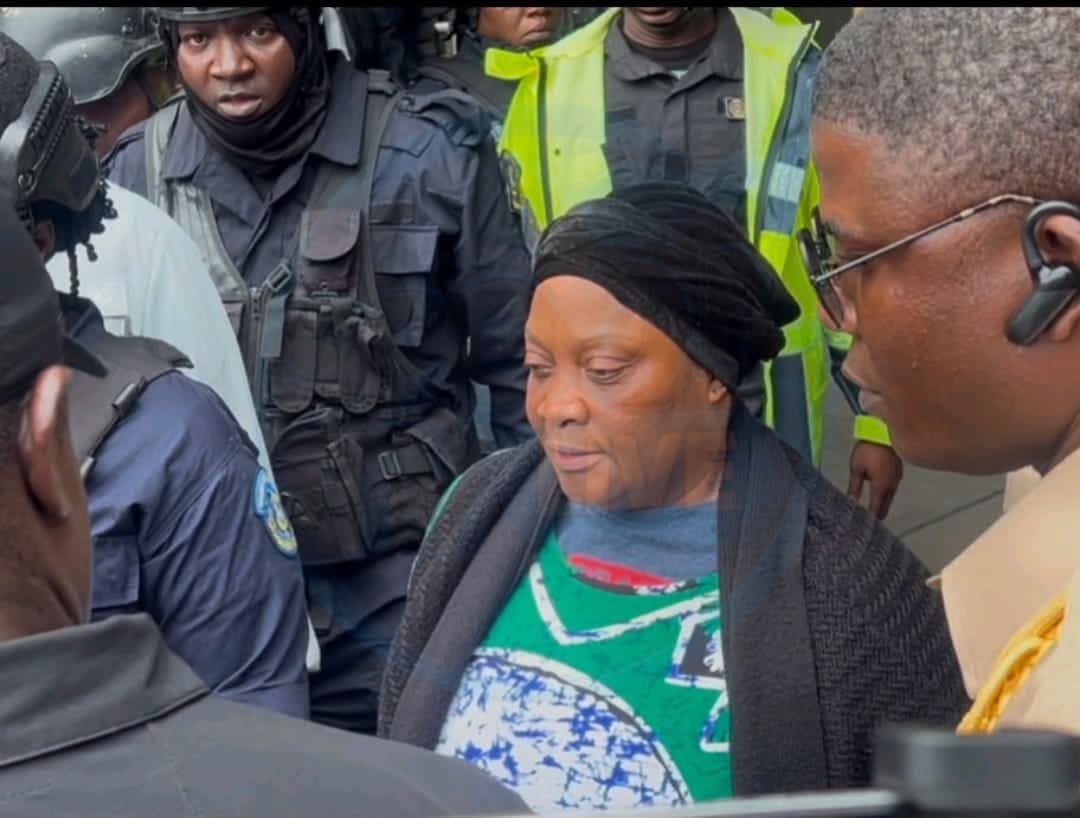
Howard-Taylor, who faces multiple charges in connection with the ongoing US$317 million cocaine case, was brought before the Monrovia City Court on Tuesday after spending several days at a medical facility following reported health complications, including high blood pressure.
During Tuesday’s proceedings, her lawyers asked the court to grant a preliminary examination and allow their client to remain at a medical facility for continued treatment, arguing that her condition could become life-threatening if she were transferred to prison.
“The defense begs to inform this court that the former Vice President Jewel Howard-Taylor’s health condition is life-threatening; that if she is not granted compassionate detention, she may lose her precious life,” the defense argued.
In support of the application, Howard-Taylor’s lawyers cited provisions of Liberia’s Criminal Procedure Law, including Chapters 34 and 13, Article 20(a) of the 1986 Constitution and Sections 25.1 and 25.2 of the Civil Procedure Law.
Prosecution Opposes Medical Detention
State prosecutors opposed the request for compassionate detention, describing it as a potential delay tactic and arguing that the medical report presented to the court showed Howard-Taylor’s vital signs and blood sugar levels were stable.
However, the prosecution did not oppose the defense’s request for a preliminary examination, acknowledging that it is a right available to the defendant under the Criminal Procedure Law.
“The state requests that the court grant the request in part and deny it in part,” prosecutors argued.
“The request for a preliminary examination should be granted because it is the right of the defendant under Chapter 12 of the Criminal Procedure Law. The request for compassionate detention should be denied.”
Prosecutors further argued that some of the offenses with which Howard-Taylor has been charged are non-bailable and that the Monrovia City Court lacks the authority to grant compassionate detention.
“This court doesn’t have the authority to hear and grant a request for compassionate detention,” the prosecution argued.
Defense lawyers disagreed, maintaining that the application was properly before the Monrovia City Court because it is the court of first instance handling the matter.
Court Denies Request
After hearing arguments from both sides, the court recessed for approximately 15 minutes before returning with its ruling.
Magistrate Barco granted Howard-Taylor’s request for a preliminary examination but denied the application for compassionate detention, ordering that she be remanded at the Monrovia Central Prison.
In justifying the decision, the court said the authority to grant compassionate leave rests with the Executive Branch rather than the Judiciary.
The preliminary examination will allow Howard-Taylor’s lawyers to challenge the basis for the charges and examine the evidence the prosecution relies upon to establish probable cause for the case to proceed.
Following the ruling, Howard-Taylor’s lawyers announced that they were challenging the magistrate’s decision before the Supreme Court, maintaining that transferring their client to prison despite her reported medical condition could endanger her life.
The legal challenge adds another dimension to the high-profile case as Howard-Taylor’s defense battles both the criminal allegations against her and the conditions under which she will remain in custody while the case proceeds.
See more Liberia News Network stories in Google Search by adding LNN as one of your Preferred Sources.
★ Add LNN as a Preferred Source