As the human-wildlife conflict in Western Liberia enters its ninth consecutive year, community members and conservation groups are attributing the crisis to severe food shortages in the deep forests driven by habitat loss, unregulated mining, and logging.
In August 2025, a response team from the Forestry Development Authority (FDA) noted that human activities like logging and mining continue to encroach on wildlife habitats, forcing animals into a desperate search for food.
One year later, representatives from the Kongba District Development Association Inc. confirmed these findings during an appearance on the Forest Hour radio program on September 17, 2026. “The elephants are coming to our towns and villages because their food is finished in the forest,” the guests stated.
But the elephants’ search for food has not come without the corresponding effects on human settlements. Over the years, countless farms have been ruined, leaving local communities completely food insecure. “Two to three thousand of our farms were destroyed by the elephants. Our rice, peanuts, cassava, and palm trees have been destroyed,” resident Pa Jackson declared on the September 17 broadcast.
These grievances mirror those documented during an August 2025 fact-finding mission led by the FDA in Gbarma District, Gbarpolu County. Residents similarly reported that elephants had decimated their crops, leaving them to struggle for survival. “We are told not to harm the elephants, but what are we supposed to do when our farms are gone?” community members asked the response team.
The 2025 fact-finding mission, jointly conducted by the FDA, the National Disaster Management Agency (NDMA), and the Ministry of Agriculture, was dispatched following urgent complaints of repeated elephant invasions.
An FDA press release later summarized the root of the crisis: “The escalating conflict is attributed to a combination of factors, including habitat loss from artisanal and industrial mining, unsustainable logging, and shifting cultivation. Conservation experts point out that these pressures, compounded by climate change, are pushing wildlife out of their traditional habitats and into direct competition with human settlements. This encroachment not only threatens livelihoods but also increases the risk of exposure to zoonotic diseases.”
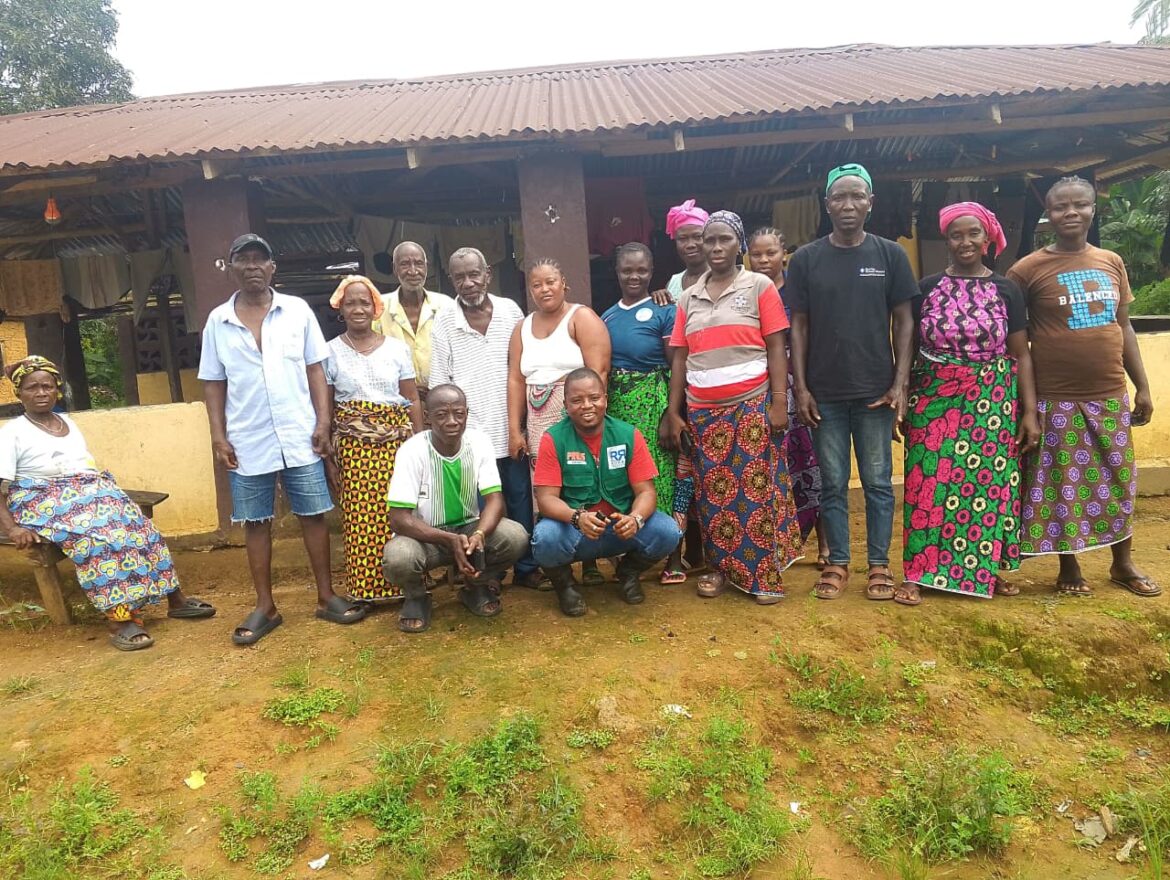
On September 26, 2026, exactly one year after the Gbarma District elephant invasion, the Rural Reporters News Network (RRNN) visited Varguaye town and surrounding communities in Gola Konneh District, Grand Cape Mount County, to follow up on a new round of elephant incursions. During the visit, residents raised a fresh alarm over recurring elephant invasions that have destroyed farms, disrupted daily life, and contributed to the deaths of three people.
For communities already struggling to make a living, the presence of these elephants has become far more than a wildlife concern; it is a direct threat to food security, household income, education, and personal safety.
Town Chief Madam Salaymatu Fofana told RRNN that residents continue to live in fear, particularly during the plum season, when elephants frequently move through communities in search of food. She recalled the tragic deaths of three residents in previous encounters and explained that the situation has become increasingly difficult to manage due to restriction orders placed on farming activities since 2017 by the Forestry Development Authority (FDA).
According to Fofana, these restrictions, combined with the repeated destruction of crops, have left families with limited options to sustain themselves. She appealed to the Government of Liberia to provide alternative and sustainable livelihood opportunities, particularly for women, to reduce the severe economic pressure on affected households.
The Chairlady of Varguaye town, Madam Jartu Johnson, explained that because traditional farming is severely restricted, artisanal mining has become the primary alternative source of income. As a result, young people are increasingly turning to mining to help feed their families.
Johnson described the situation as frustrating and called on the government to intervene with livelihood programs that offer safer, more sustainable income opportunities.
She noted that agricultural support outside high-risk areas, vocational training, small-business grants, and women’s empowerment programs could significantly reduce the community’s dependence on activities that expose residents to the ongoing risks of human-wildlife conflict.
Beyond economic hardships, the human-wildlife conflict is creating a crisis for local education. Varguaye Town Chief, Salaymatu Fofana and a resident, Moriah Sokan are urging authorities to relocate the Varguaye Town Public School, the community’s only primary school, from its current location in the bush to a safer area inside the town. They argue that the school’s isolated location exposes children, particularly younger students, to dangerous encounters with elephants.
The school’s principal, Mr. Saheidu Sesay, also expressed deep concern over the impact of these elephant invasions on education. According to Sesay, the presence of elephants creates widespread fear among students and residents alike, completely disrupting normal academic activities whenever the animals enter the community.
According to local residents, the human-elephant conflict is a long-standing issue, and authorities, including the Forestry Development Authority (FDA), have been repeatedly notified.
However, the continuous lack of a sustainable solution leaves communities trapped between wildlife conservation mandates and their own immediate survival needs. One thing is certain about human-wildlife conflict, neither side is waiting for conservation groups or the FDA to intervene. Instead, both humans and elephants are taking active steps to address the threats they face in the wild. For instance, in June 2019, elephants killed two people in Zuo, Barma District, Gbarpolu County.
Just over two years later, in October 2021, two elephants were killed in Northern Liberia, leading to the arrest of two individuals in connection with the incident.
As the battle for control of the jungle continues between humans and wildlife, the demands of Varguaye town residents go far beyond simply removing the elephants. Instead, they are calling for a long-term solution that protects both the local population and the wildlife.
As the local saying goes: The child who says their mother will not sleep will not sleep either. Such is the reality for the elephants and the people of Western Liberia.
See more Liberia News Network stories in Google Search by adding LNN as one of your Preferred Sources.
★ Add LNN as a Preferred Source