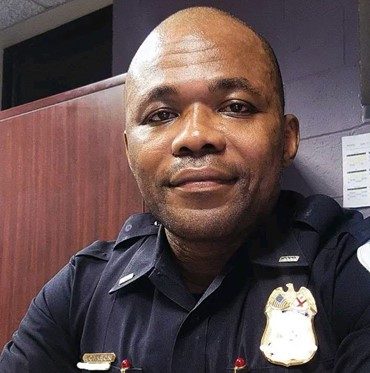
Alfred Jah Johnson’s demand shifts Liberia’s widening cocaine inquiry from who trafficked the drugs to whether the investigators can themselves be trusted. The security practitioner wants Police Inspector General Gregory O.W. Coleman to recuse himself and the National Security Agency to take command. His argument rests on an appearance-of-conflict problem, with senior police officers now entangled in the very probe their own institution oversees. Seizures valued in the hundreds of millions have already forced out one ranking officer amid the scandal. Against that backdrop, he frames institutional distance as the essential price of restoring public confidence. As THE ANALYST reports, the demand poses a structural test the government cannot easily sidestep or quietly ignore.
As Liberia’s unprecedented drug investigation continues to widen, an American-trained security practitioner, Alfred Jah Johnson, is calling for the recusal of Liberia National Police (LNP) Inspector General Gregory O.W. Coleman and urging the National Security Agency (NSA) to take over the ongoing investigation.
Johnson argues that the credibility of the investigation could be compromised by the involvement of senior police officers within the command structure of the LNP, particularly following the removal of Deputy Commissioner for Crime Services Johnny Bolar Dean, also known as the head of Unit 106, amid allegations that he accepted US$10,000 (L$1,823,600) in connection with suspects in the massive cocaine case.
Johnson made the call during an interview with the media, arguing that the latest developments have created circumstances in which the LNP should no longer remain at the center of the investigation. His argument comes at a particularly sensitive moment in Liberia’s drug saga, following two major cocaine seizures within weeks and growing scrutiny over whether the country’s security institutions are sufficiently insulated from the criminal networks they are investigating.
FROM MILLIONS TO HUNDREDS OF MILLIONS
The controversy has unfolded against the backdrop of what authorities describe as one of Liberia’s largest narcotics investigations.
In June, authorities intercepted approximately 237.6 kilograms of cocaine at Roberts International Airport, with an estimated street value of more than US$19 million (L$3.46 billion). The shipment was reportedly presented as ordinary commercial cargo and was intercepted before leaving Liberia.
The case subsequently expanded dramatically. In July, authorities announced the seizure of approximately 3,971 kilograms of cocaine in Duazon, near Monrovia, with an estimated street value of about US$317 million (L$57.81 billion). Two foreign nationals were arrested in connection with that operation, and authorities described the case as involving a sophisticated transnational trafficking network.
The sheer scale of the second seizure has transformed the issue from a conventional law-enforcement matter into a major national security concern. Authorities subsequently destroyed approximately 4.2 metric tons of cocaine, including the drugs seized in the Duazon operation and an earlier consignment intercepted at Roberts International Airport.
The destruction was presented by law enforcement as a demonstration that Liberia would not provide a safe haven or transit point for international drug networks. But the investigation has simultaneously exposed vulnerabilities within the security apparatus itself.
SENIOR POLICE OFFICER REMOVED
The removal of Johnny Bolar Dean has become one of the most consequential developments in the case. According to Inspector General Coleman, Dean was relieved of his position, interdicted and turned over to the Police Professional Standards Division after allegedly admitting to receiving US$10,000 connected to suspects being held in the cocaine investigation.
Coleman said Dean was not directly linked to trafficking the cocaine but was alleged to have compromised the integrity of the investigation by attempting to provide assistance or comfort to individuals already in police custody. The development has intensified questions about the possibility of internal compromise within Liberia’s security institutions, and it is this development that Johnson says makes Coleman’s position worthy of scrutiny.
SHOULD COLEMAN RECUSE HIMSELF?
Johnson’s argument is not that Coleman has himself been proven to have participated in drug trafficking. Rather, he contends that the involvement of senior officers within Coleman’s command structure creates an appearance of conflict that should be addressed through the Inspector General’s voluntary recusal.
According to Johnson, three senior LNP officials are allegedly connected in varying ways to the broader investigation, and that development, in his assessment, makes it prudent for Coleman to remove himself from direct oversight of the investigation. He specifically points to Dean, whom he alleges had a prior history of criminal conduct and whose return to the police, according to Johnson, was facilitated by Coleman’s recommendation.
Johnson argues that if Coleman was aware of Dean’s previous problems and nevertheless supported his return to a senior law-enforcement position, the Inspector General should be subjected to thorough scrutiny concerning the circumstances surrounding Dean’s reinstatement and subsequent role.
The allegations concerning Dean’s previous record and the circumstances of his return to service are claims made by Johnson and would require independent verification and a response from the relevant authorities.
IF THE INVESTIGATION BACKFIRES
Johnson’s central concern is institutional credibility. He argues that if an investigation is being conducted by an institution whose senior personnel are themselves becoming subjects of inquiry, public confidence could suffer regardless of the eventual outcome.
In his view, Coleman should therefore recuse himself to eliminate any appearance that the police leadership could influence, shape or otherwise interfere with an investigation involving officers under its command. Johnson draws a comparison with the decision by Liberia Drug Enforcement Agency (LDEA) Officer-in-Charge Fitzgerald T.M. Biago to recuse himself amid the continuing drug investigation.
The demand for institutional distance comes as authorities have repeatedly emphasized that the narcotics case is transnational and requires careful coordination, intelligence gathering, forensic work and preservation of evidence.
During the earlier US$19 million case, Biago told the public that investigators needed time to consolidate evidence, protect intelligence sources and develop a prosecutable case. Johnson now argues that the same principle of protecting the integrity of the investigation should apply to the LNP.
CALL FOR LNP AND LDEA WITHDRAWAL
Beyond Coleman’s recusal, Johnson is calling for the immediate withdrawal of both the Liberia National Police and the Liberia Drug Enforcement Agency from the ongoing investigation. His position is that neither institution can presently command the level of confidence required to lead such a sensitive investigation while members of their respective structures are allegedly connected to the matter.
Johnson instead proposes that the National Security Agency assume primary responsibility for the investigation, arguing that NSA personnel involved in the probe are not personally connected to the NSA Director in the same way that senior LNP officers allegedly fall within Coleman’s chain of command.
The proposal effectively calls for a restructuring of the investigative architecture around the drug case, with the NSA taking the lead while other law-enforcement institutions provide support rather than directing the investigation.
A CREDIBILITY CRISIS BEYOND COCAINE
Johnson’s intervention comes as Liberia’s drug saga has increasingly moved beyond the question of the narcotics themselves. The June airport seizure initially triggered demands for greater disclosure after authorities delayed publicly identifying several persons of interest.
The House of Representatives subsequently demanded information on suspects, while the LDEA maintained that premature disclosure could compromise a complex transnational investigation.
The July Duazon seizure then dramatically raised the stakes, with nearly four tons of cocaine recovered and senior police officials subsequently implicated in alleged efforts to compromise aspects of the investigation.
The development has left the government facing a difficult balancing act: protect the integrity of an active criminal investigation while simultaneously convincing a skeptical public that no politically connected or strategically placed individual is being shielded.
President Joseph N. Boakai has previously emphasized that the investigation must proceed thoroughly and impartially and that administrative measures taken in connection with the probe should not be interpreted as findings of guilt.
In the case of a National Oil Company of Liberia (NOCAL) board member suspended in June, the Executive Mansion specifically stressed that the action was intended to protect the integrity of the investigation and avoid any appearance of interference, not to prejudge guilt. That principle now forms an important backdrop to Johnson’s call for Coleman to recuse himself.
THE BIGGER QUESTION
At the heart of Johnson’s argument is a broader question: who should investigate the investigators when members of the investigative institutions themselves come under scrutiny? For Johnson, the answer is the NSA, which he believes can provide greater institutional distance and public confidence.
But the call also presents the government with a delicate institutional challenge. Removing the LNP and LDEA entirely from an investigation involving their personnel could disrupt operational expertise and intelligence already accumulated by the agencies. At the same time, allowing agencies to investigate allegations involving their own senior personnel can create questions about independence, even where no wrongdoing by the institutional leadership has been established.
The controversy therefore goes beyond Alfred Johnson’s demand for Coleman’s recusal. It raises a fundamental test for Liberia’s emerging anti-drug campaign: whether the government can build an investigative process that is not only effective enough to dismantle trafficking networks, but independent and transparent enough to convince Liberians that the powerful will be subjected to the same scrutiny as everyone else.
For now, Johnson is demanding that Coleman follow the example of Biago, step aside, and allow another security institution to take the lead. The ultimate test, however, will be whether the government can produce an investigation whose findings survive not only in court, but also in the court of public confidence.
See more Liberia News Network stories in Google Search by adding LNN as one of your Preferred Sources.
★ Add LNN as a Preferred Source