
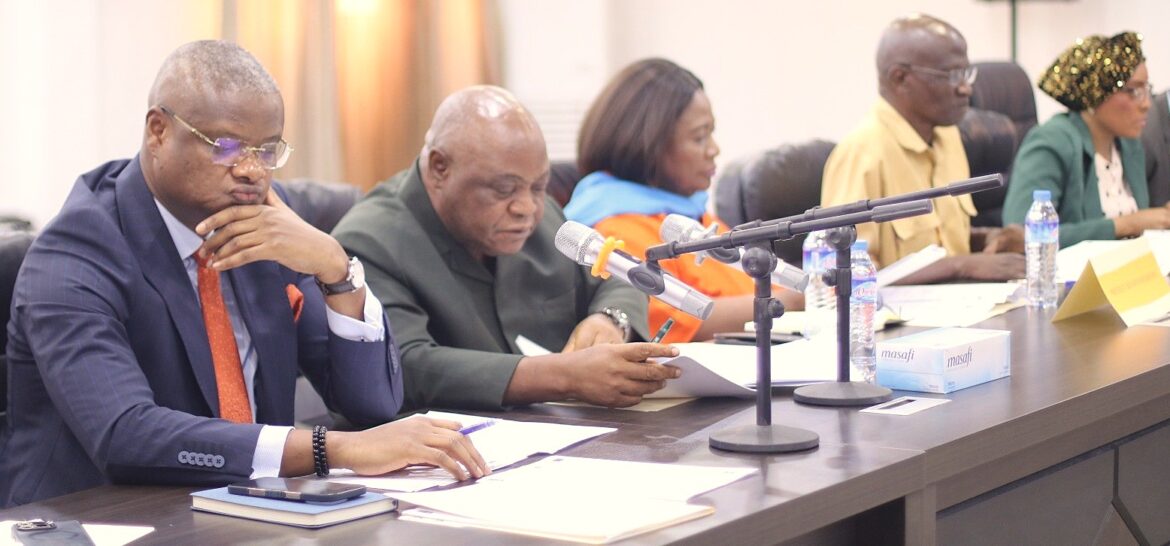
Monrovia, Liberia; July 1, 2026: The Government of Liberia, through the Ministry of Finance and Development Planning, on Tuesday, June 30, 2026, convened a Project Board Meeting of the Liberia Electoral Support Project.
The meeting brought together the National Elections Commission (NEC), UNDP, UN Women, the European Union, Sweden, Ireland, the Netherlands Institute for Multiparty Democracy and other partners to review implementation progress and chart priorities for strengthening Liberia’s electoral system within the broader framework of democratic governance.

The meeting reviewed progress since 2025, discussed priority activities for the coming period, and considered measures to facilitate the timely completion of planned project activities, including a proposed extension of the project implementation period.
Opening the meeting, Deputy Minister for Economic Management at the Ministry of Finance and Development Planning, Dehpue Y. Zuo, speaking virtually, reaffirmed the Government’s appreciation for the continued support of development partners toward Liberia’s democratic governance agenda.
Zuo underscored the importance of aligning future electoral preparations with the Government’s ongoing efforts to establish a National Identification Registry, noting that closer coordination could help create a more sustainable and cost-effective voter registration system ahead of the 2029 elections.
NEC Chairperson Johnathan K. Weedor outlined the Commission’s strategic priorities for the coming years, emphasizing the need to strengthen civic and voter education, accelerate the digitization of electoral processes, and build staff capacity.
The future of our electoral system depends not only on infrastructure but also on investing in our people.
We envision a modern, transparent, and fully digitized National Elections Commission that is equipped to deliver credible elections while strengthening public confidence in democratic institutions, Chairperson Weedor said.
He also highlighted the importance of introducing an Enterprise Resource Planning (ERP) system to strengthen financial management, procurement, and human resource administration within the Commission.
European Union Ambassador Nona Deprez congratulated the NEC leadership and commended the strong collaboration among NEC, UNDP, UN Women, NIMD, civil society organizations, and the media in implementing the Liberia Electoral Support Project.
She emphasized that the remaining months of the project should prioritize sustaining the institutional gains achieved through the programme.
We are now at an important juncture where sustaining the institutional capacity built through the project is essential, Ambassador Deprez said.
While no new electoral support programme is currently foreseen, the European Union remains committed to supporting Liberia’s democratic institutions and ensuring that the achievements of this project endure.
UNDP Resident Representative Aliou Mamadou Dia welcomed the meeting as an important opportunity to consolidate progress under the project. He noted that implementation had continued significantly while awaiting formal approval of the Annual Work Plan.
The Liberia Electoral Support Project has contributed far beyond electoral operations. It has strengthened democratic governance, promoted inclusive participation, and reinforced accountability across Liberia’s electoral landscape.
As NEC finalizes its new five-year Strategic Plan, UNDP remains committed to supporting the Commission and working with all partners to build one of the most transparent, credible, and trusted electoral management bodies in the region, Mr. Dia said.
He also expressed appreciation to the European Union, Sweden, and Ireland for their longstanding technical and financial support to Liberia's electoral process.
The meeting acknowledged NEC’s ongoing work to finalize its five-year Strategic Plan, which is expected to provide a strategic framework for future institutional development and continued collaboration with national and international partners.
The Liberia Electoral Support Project supports national institutions and processes to promote inclusive, transparent, and accountable governance. It is managed by UNDP and implemented in partnership with UN Women, the Netherlands Institute for Multiparty Democracy, and the NEC, with support from the European Union, Ireland, and Sweden.
