
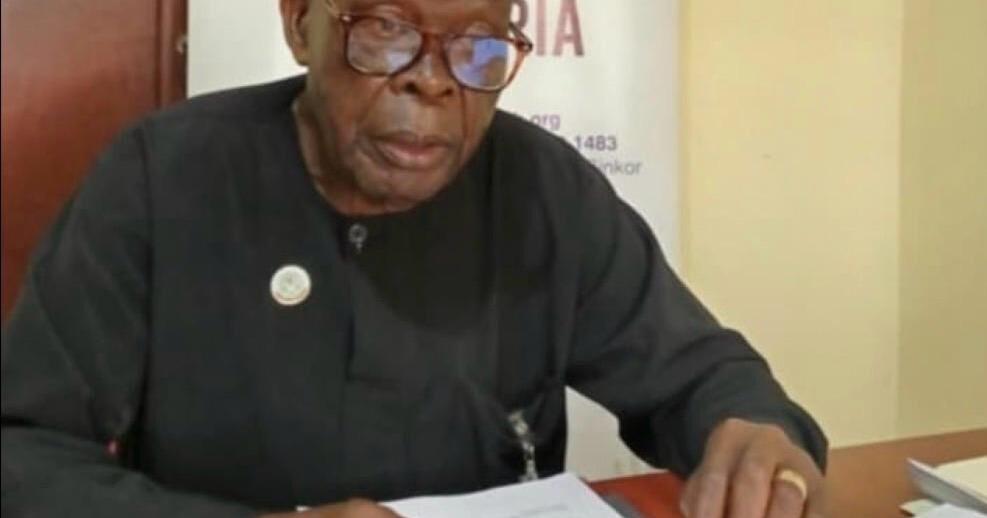
The Board of Commissioners of the Independent National Commission on Human Rights (INCHR) has referred its suspended Chairperson, Cllr. Dempster Brown, to the Liberia Anti-Corruption Commission (LACC) for a criminal investigation into the alleged unauthorized acquisition and management of a US$20,175 grant from UNICEF Liberia.
The Board also announced the immediate suspension of the Commission’s Executive Director, Atty. Urias Teh-Pour, pending investigations, while raising additional concerns over alleged payroll irregularities involving possible ghost workers and unauthorized salary payments.
The decisions were announced Tuesday during a press conference by Acting Chairperson Mohammed E. Fahnbulleh, who accused Brown of bypassing the Commission’s established financial controls in securing and managing donor funds.
According to the Board, Brown, acting without the approval of the Commissioners, sought and secured a grant from UNICEF Liberia in October 2025 to support training and public awareness activities under the Commission’s Gender Unit.
Financial records reviewed by the Board indicate that UNICEF transferred US$20,175 to the Commission on October 15, 2025.
However, Fahnbulleh alleged that the transaction was never disclosed to the Board and was processed outside the Commission’s statutory financial management procedures.
“Financial records reviewed by the Board indicate that UNICEF subsequently transferred the full amount to the Commission on October 15, 2025. The transaction was never run through the Commission’s established internal financial control framework,” Fahnbulleh said.
The Board further alleged that the signatory arrangement for the project account was altered without its knowledge, leaving only Brown and Executive Director Teh-Pour as signatories while excluding other statutory signatories, including the Vice Chairperson.
“If substantiated, such actions may represent a deliberate circumvention of established financial controls intended to ensure transparency, accountability, and proper stewardship of donor resources,” Fahnbulleh stated.
The Board said it only became aware of the UNICEF-funded project after receiving a letter dated June 24, 2026, from UNICEF informing the Commission that portions of a project report submitted on its behalf had failed to meet reporting standards.
The discovery prompted what Fahnbulleh described as a broader internal review.
“That rejection prompted the new leadership to launch a broader audit of the project file—only to find that there was almost no file at all,” he said.
The Board said it subsequently requested the project’s proposal, grant agreement, bank statements, procurement records, contracts, vouchers, financial reports, and related correspondence.
According to Fahnbulleh, those documents have not been fully provided despite repeated requests.
The Board said the failure to produce the records influenced its decision to seek an independent investigation by the LACC, which has legal authority to subpoena financial records and compel testimony.
Contacted for comment, Cllr. Brown strongly denied any wrongdoing.
He maintained that, as Chairperson, he was authorized to seek donor funding to support the Commission’s operations.
Brown said he formally requested the UNICEF grant on October 9, 2025, to finance Gender Unit training and awareness activities.
“When I received the money, I deposited it into the Commission’s account. The Gender Unit implemented the project, and we submitted the project completion report to UNICEF and it was overwhelmingly accepted. How would the Board of Commissioners accuse me of misapplication of the donor money?” Brown said.
Responding to claims that the Board was unaware of the grant, Brown acknowledged that Commissioners had not been informed but argued that many of them had abandoned their official responsibilities.
Beyond the UNICEF grant, the Board disclosed what it described as possible payroll irregularities involving individuals who may have continued receiving salaries after no longer being entitled to government compensation.
According to the Board, preliminary payroll reviews suggest that salaries and benefits may have continued to be processed in the names of former officials and staff.
“The information presently before the Board raises concerns that salaries and benefits may have continued to be processed in the names of individuals who were no longer lawfully entitled to receive compensation,” the Board said.
Among those whose names reportedly appeared on payroll records requiring verification are former Commissioner Pela Boker-Wilson, Dr. Niveda Ricks-Onuoha, Gloria M. Harris, Roseline Allison Bailey, David Dahn, and several others.
The Board emphasized that inclusion of those names does not constitute evidence of wrongdoing and said only a forensic audit can determine whether any financial misconduct occurred.
“The Board emphasizes that only a comprehensive forensic audit and criminal investigation can establish the full extent of any irregularities, identify all responsible persons, quantify any financial loss, and determine whether offenses under the laws of Liberia have been committed,” it stated.
Brown dismissed the payroll allegations, arguing that they stem from disciplinary actions he initiated against Commissioners whom he accused of abandoning their duties.
He said that in July 2024 he wrote to President Joseph Nyuma Boakai, alleging that Commissioners Mohammed Fahnbulleh, Niveda Ricks, Patmillia Doe-Paivey, and Pindarious Allison had repeatedly failed to report to work in violation of the Code of Conduct.
According to Brown, the salaries of the four Commissioners for June 2024 were returned to the government after they failed to perform their official duties.
He also referenced a July 8, 2024, letter to the Ministry of Finance and Development Planning returning the unpaid salaries.
“On behalf of the Commission, I am pleased to return to the Government Payroll Accounts the salaries of four Commissioners who did not work for the month of June 2024,” Brown quoted from the letter.
The Board revealed that concerns about the Commission’s financial management predate the current dispute.
According to the Commissioners, four members of the Board petitioned the General Auditing Commission in 2022 for an independent audit of the institution amid concerns over governance and financial management.
“The current leadership believes that an independent investigation into the matters now before the Commission is both necessary and long overdue in order to establish the facts, restore public confidence, and ensure accountability where warranted,” the Board said.
Pending the outcome of the investigation, the Board said Executive Director Urias Teh-Pour has been suspended to preserve institutional records and safeguard the integrity of the investigation.
Meanwhile, tensions within the Commission continue to deepen.
In a letter dated July 8, 2026, Brown alleged that Acting Chairperson Fahnbulleh entered his office without authorization during the afternoon and later returned after working hours to search through official documents.
As of Tuesday, the Liberia Anti-Corruption Commission had not publicly confirmed whether it had formally received the Board’s complaint or opened an investigation.
