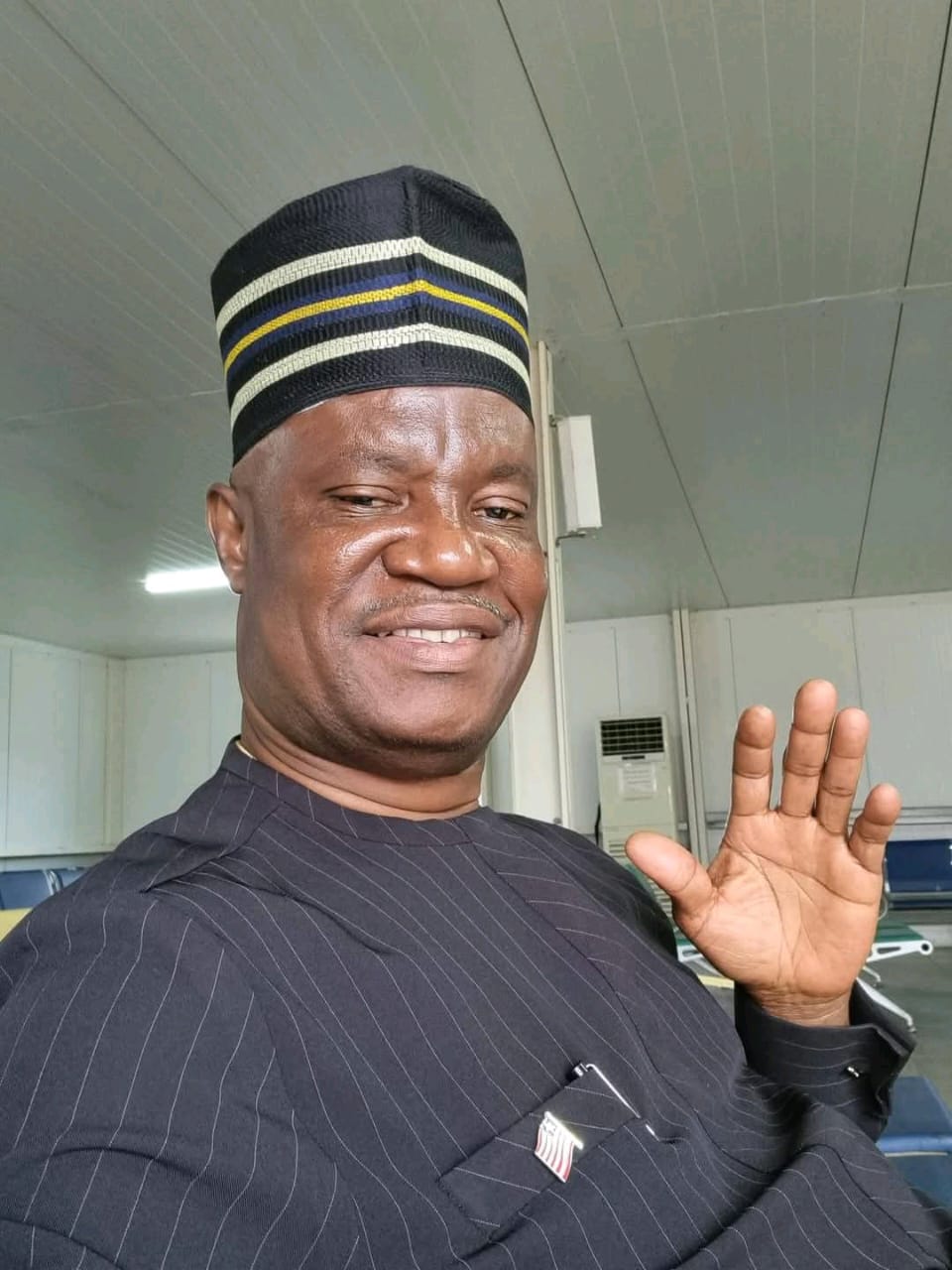
By Kruah Thompson
MONROVIA, August 27, 2026 — Nimba County Senator Samuel G. Kogar has accused the Boakai administration of shielding individuals allegedly linked to Liberia’s ongoing drug crisis while aggressively pursuing officials of the former government.
Kogar alleged that individuals associated with the current administration, including President Joseph Nyuma Boakai’s son, have been publicly mentioned in connection with allegations surrounding drug trafficking but have not been invited by authorities for questioning.
He contrasted this with the treatment of officials from the previous administration, claiming that authorities have moved swiftly against them when their names surfaced in connection with similar allegations.
The Nimba County senator made the assertions Wednesday, August 26, during an appearance at the Center for the Exchange of Intellectual Opinion (CEIO) in Monrovia.
Kogar cited a video circulated on social media in which individuals claiming to be connected to a drug cartel made allegations against the President’s son.
The President’s son has publicly denied the allegations, and the claims contained in the video have not been independently established.
Kogar nevertheless questioned why authorities have not invited him for questioning, arguing that doing so would demonstrate impartiality in the government’s investigation.
He described the situation as selective justice, alleging that the government’s enforcement actions have disproportionately targeted individuals associated with the previous administration.
Kogar also raised allegations concerning Police Inspector General Gregory Coleman, arguing that President Boakai should suspend the police chief if credible allegations exist against him to protect the integrity of the investigation and maintain public confidence.
The senator did not present evidence during his remarks establishing that either the President’s son or the police inspector general was involved in drug trafficking.
Kogar also criticized the arrest and detention of former Vice President Jewel Howard-Taylor, arguing that police could have handled the situation differently given her former position and reported health concerns.
“The VP has property here, and there’s no way she can ever leave the country and not come back,” Kogar said.
He argued that authorities had other legal options available if Taylor had been permitted to travel and subsequently failed to return to Liberia.
Kogar referred to extradition arrangements and regional protocols that, in his view, could have been invoked to secure her return.
According to him, authorities could have sought Taylor’s extradition if she traveled abroad and later refused to return to face investigation.
He also cited Mano River regional arrangements as another potential mechanism.
Kogar described the circumstances surrounding Taylor’s arrest as intimidating and disrespectful, arguing that authorities were aware of her reported health condition.
“From my little background in security, the former vice president would have been placed under house arrest,” he said.
Taylor has been charged in connection with an ongoing investigation into alleged drug trafficking and money laundering. The allegations against her remain subject to judicial determination.
Meanwhile, Kogar claimed he has received repeated warnings that he could face government retaliation if he continues criticizing the administration.
He did not identify the individuals who allegedly issued the warnings or provide evidence linking the purported threats directly to the government.
Kogar nevertheless vowed to continue speaking publicly on issues he believes require government accountability.
“If you want to fight me, fight me. I’m not afraid. We are all here for the history,” Kogar said.
“I heard people say, ‘Shut up, Kogar. If you talk, the people will fight you.’ If you want to fight, you fight. That history we here for,” he added.
The senator maintained that the government’s handling of the drug investigations should be transparent and that the same standards should be applied to all individuals whose names emerge in connection with credible allegations, regardless of their political affiliation.
See more Liberia News Network stories in Google Search by adding LNN as one of your Preferred Sources.
★ Add LNN as a Preferred Source