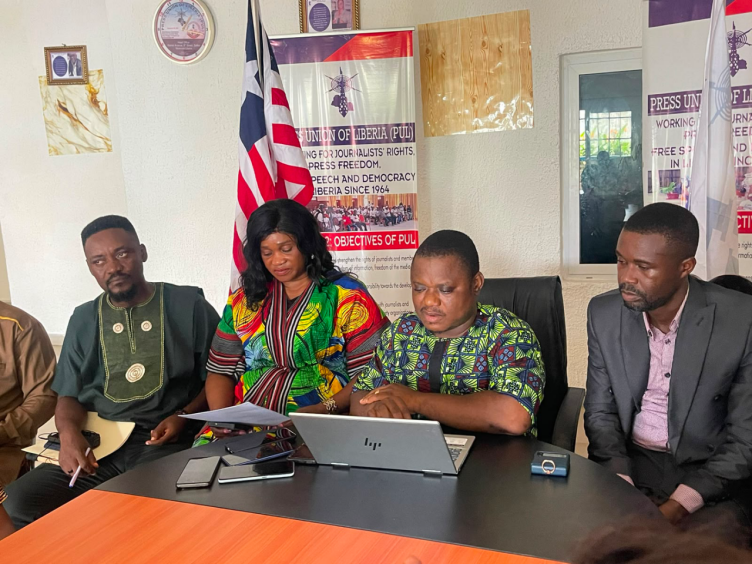
Monrovia — A coalition of Liberian civil society organizations has accused the Joseph Nyuma Boakai administration of dragging its feet on the establishment of Liberia’s proposed War and Economic Crimes Court and Specialized National Anti-Corruption Court, warning that continued delays could undermine the country’s credibility as it prepares to assume the presidency of the United Nations Security Council in December 2026.
In a strongly worded statement issued Tuesday, the National Civil Society Consortium for Transitional Justice said nearly three years into the Boakai administration, the government has yet to secure enactment of the legislation required to establish and operationalize the two courts.
The consortium said Liberia’s international leadership must be matched by concrete action at home, arguing that the country cannot credibly champion justice, human rights, accountability, peacebuilding and the rule of law internationally while leaving major justice reforms unfinished domestically.
“Accountability Delayed — Liberia Must Match Global Leadership with Domestic Accountability and Justice,” the group said in the statement.
Liberia was elected to a non-permanent seat on the UN Security Council for the 2026–2027 term, a development the consortium said reflected international confidence in the country’s transition from conflict to peace and its emerging role in international peace and security.
With Liberia scheduled to hold the Council’s rotating presidency in December, civil society leaders said the government faces a critical test of whether its international commitments are reflected in its domestic governance.
‘Justice Cannot Wait’
The consortium acknowledged steps already taken by the government, including the 55th Legislature’s passage of a joint resolution in April 2024 supporting the establishment of the War and Economic Crimes Court.
It also credited President Boakai with creating the Office for the Establishment of War and Economic Crimes Court for Liberia (OWECC) and submitting draft legislation aimed at establishing the proposed courts.
But the coalition said those measures are insufficient without final legislative action, adequate funding and full operationalization.
“Government must decisively act to complete the process,” the consortium said, calling for the enactment of the enabling statutes needed to establish and fund both institutions.
The civil society organizations said victims and survivors of Liberia’s civil wars, particularly women and children, have waited for decades for justice.
They argued that the absence of a specialized war crimes court continues to perpetuate impunity, deny victims closure and undermine national reconciliation more than two decades after Liberia’s civil conflicts.
The group specifically highlighted conflict-related sexual and gender-based violence, displacement, loss of livelihoods and other serious human rights violations suffered during the wars.
Women’s Rights at Stake
According to the consortium, establishing the War and Economic Crimes Court is also critical to Liberia’s implementation of the Women, Peace and Security agenda under United Nations Security Council Resolution 1325 and subsequent resolutions.
The coalition said a credible, victim-centered and gender-responsive court would help transform Liberia’s international commitments on women, peace and security into tangible justice for survivors.
It said women, children and other victims must be treated not merely as symbols of Liberia’s peace narrative, but as rights-holders entitled to truth, justice, remedies and guarantees that abuses will not recur.
Corruption Court Also Critical
The coalition also linked the proposed National Anti-Corruption Court to Liberia’s broader governance and development challenges.
It warned that entrenched corruption and the abuse of public resources continue to undermine democratic governance, erode public trust and contribute to poverty and inequality.
According to the group, corruption also has a direct impact on citizens’ access to essential services, including healthcare, education and electricity.
A specialized anti-corruption court, once established and adequately resourced, would therefore help strengthen accountability, protect public resources and support inclusive and sustainable economic development, the consortium argued.
‘Non-Negotiable’
The civil society coalition described the establishment of both courts as “non-negotiable,” saying they are consistent with Liberia’s obligations under international human rights law, international humanitarian law and broader UN rule-of-law principles.
It called for the courts to operate according to international standards, including judicial independence, equality before the law, due process, fair-trial guarantees, protection of victims and witnesses and meaningful participation by victims.
The consortium argued that the two institutions could collectively strengthen the rule of law, increase public confidence in government, advance economic and social justice, deter future abuses, reinforce reconciliation and demonstrate that no individual is above the law.
Warning to Legislature
The group also directed its criticism toward the National Legislature, urging lawmakers to act without further delay on the proposed legislation.
It cautioned against using constituency consultations as a justification for prolonged legislative inaction, recalling what it described as previous delays surrounding implementation of the recommendations of Liberia’s Truth and Reconciliation Commission.
While acknowledging the importance of lawmakers engaging their constituents, the coalition said such engagement should not become an excuse for delaying action on the court legislation.
Seven-Point Demand
The consortium outlined seven recommendations, calling on President Boakai to urgently engage the Senate and House of Representatives to ensure timely passage of the two bills.
It further urged the President to ensure that the 2027 National Budget includes dedicated funding for both courts while mobilizing international support for their establishment and sustainability.
The Legislature, the group said, must prioritize passage of the bills, while the Executive and lawmakers must ensure that both courts are adequately resourced and operationally independent, impartial, transparent, victim-centered and gender-responsive.
The coalition also called for Liberia’s domestic justice and anti-corruption agenda to be aligned with its international commitments on human rights, peace and security, transitional justice and Women, Peace and Security.
It urged the government to use its December 2026 UN Security Council presidency as an opportunity to demonstrate leadership by example—promoting accountability internationally while institutionalizing justice at home.
The group also called on the United Nations, European Union, United States and other international partners to continue supporting Liberians’ demands for accountability and to press for the establishment and financing of both courts.
Finally, it urged the Office for the Establishment of the War and Economic Crimes Court to deepen collaboration with the Executive, Legislature, Judiciary and other stakeholders to move the process forward.
‘The Boakai Administration Must Act Now’
The National Civil Society Consortium said it remains prepared to work with national institutions and international partners to ensure the timely establishment and sustainability of the two courts.
But it issued a blunt closing warning to the government:
“Justice delayed is justice denied. And justice denied is a recipe for human rights violations, impunity, violence, poverty and underdevelopment.”
The coalition concluded: “The Boakai administration must act now!”
The statement was signed by representatives of the Press Union of Liberia (PUL), Center for Transparency and Accountability (CENTAL), Women’s NGO Secretariat of Liberia (WONGOSOL), Association of Female Lawyers of Liberia (AFELL), National Muslim Council of Liberia (NMCL), and Liberia Council of Churches (LCC).
See more Liberia News Network stories in Google Search by adding LNN as one of your Preferred Sources.
★ Add LNN as a Preferred Source