
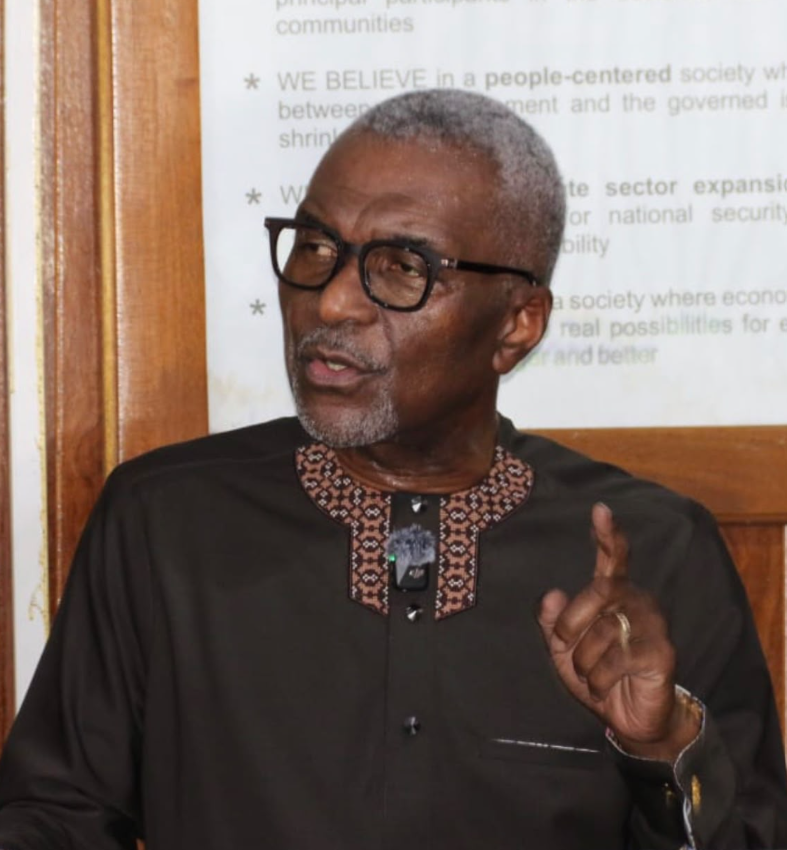
ANC Political Leader Raises Procurement, Transparency and Debt Concerns, Urges Government to Suspend Implementation Pending Independent Review of Agreement
MONROVIA – Alternative National Congress (ANC) Political Leader Alexander B. Cummings has warned President Joseph Nyuma Boakai against committing Liberia’s future mineral revenues to finance a proposed US$5.7 billion infrastructure agreement with Bea Mountain Mining Corporation, cautioning that the arrangement could impose significant financial obligations on generations of Liberians.
Cummings’ warning comes a day after President Boakai signed the proposed Master Infrastructure Development Agreement (MIDA) between the Government of Liberia and Bea Mountain Mining Corporation, a subsidiary of Avesoro Resources, a privately owned mining company linked to Turkey’s Günal family and its business network, including the MNG and Mapa groups.
The President signed the agreement in the presence of several senior government officials, including Justice Minister Betty Lamin Blamo, Finance and Development Planning Minister Augustine Kpehe Ngafuan, Mines and Energy Minister Matenokay Tingban, National Investment Commission Chairman Morley Kamara and Presidential Legal Adviser Bushuben Keita, among others.
In a statement delivered Thursday at the ANC headquarters in Monrovia, Cummings described the decision as grave, arguing that the proposed arrangement raises fundamental questions about the management, ownership and future utilization of Liberia’s mineral wealth.
He stressed that while Liberia urgently needs roads, electricity and other critical infrastructure, the country’s development ambitions should not come at the expense of transparency, prudent financial management and the interests of future generations.
“We must not become an Esau Generation,” Cummings warned, invoking the biblical account of Esau, who traded his birthright for a meal to satisfy an immediate need.
He argued that Liberia risks making a similar mistake if it commits decades of future national revenues to an infrastructure arrangement without first establishing whether the country is receiving adequate value and sufficient protection.
“Our infrastructure deficit is real. Our desire for development is legitimate. But in our urgency to solve today’s problems, we must not mortgage tomorrow’s possibilities,” he said.
Questions Over US$5.7 Billion Financing Structure
Cummings acknowledged that Liberia’s infrastructure deficit is severe, citing poor road networks, unreliable electricity, high energy costs and limited opportunities for farmers and businesses.
However, he questioned the proposed financing structure, which seeks to fund approximately US$5.7 billion in infrastructure projects using future revenues generated from Liberia’s natural resources.
According to him, the arrangement may appear attractive because it promises large-scale infrastructure development without requiring immediate expenditures from the national budget. However, he argued that the government must explain the actual financial cost and long-term implications before proceeding.
“There is no such thing as free infrastructure. Someone ultimately pays. The only question is whether Liberia will receive fair value for what future generations will be required to surrender,” he said.
The ANC leader identified several concerns, including possible violations of the Public Procurement and Concessions Act, the absence of competitive bidding, inadequate independent valuation and engineering assessments, potential infrastructure overpricing and significant fiscal and contingent liabilities.
He also raised concerns about environmental and social risks, governance and potential conflicts of interest, as well as the possibility that future national revenues could be committed outside traditional public debt transparency mechanisms.
Cummings said the final financial exposure facing Liberia remains uncertain, arguing that provisions within the proposed framework could permit additional costs, adjustments and government obligations beyond the publicly cited US$5.7 billion figure.
He called on the government to disclose the full extent of its financial commitments, the duration of the proposed revenue deductions and the independent assessments supporting the projected infrastructure costs.
Warns Against Pledging Future Mineral Revenues
One of Cummings’ central concerns is the possibility that future royalties, income taxes, dividends and other government revenues generated from Liberia’s natural resources could be redirected toward financing or repaying the infrastructure arrangement over an extended period.
He warned that committing these revenue streams without adequate valuation and oversight could leave future administrations with limited fiscal flexibility and reduce the benefits Liberians receive from their natural resources.
“This is not merely an accounting issue. It is a sovereignty issue. It is a human rights issue. It is an intergenerational justice issue,” he said.
The former presidential candidate argued that Liberia must learn from the experiences of resource-rich countries where inadequate transparency, competition and accountability have undermined the benefits of natural resource extraction.
He maintained that the country’s mineral wealth belongs to its people and should not be committed through arrangements that lack sufficient public scrutiny and independent oversight.
Cummings Demands Independent Review, Public Disclosure
To address the concerns, Cummings called on the Boakai administration to suspend further action on the proposed arrangement until a comprehensive set of safeguards has been satisfied.
Among the measures he wants the government to undertake are:
- Independent valuation of the underlying mineral resource base.
- Independent engineering and feasibility assessments of proposed infrastructure projects.
- Transparent and competitive procurement processes.
- Full publication of all transaction documents.
- Legislative review and public hearings.
- Comprehensive environmental and social impact assessments.
- Independent fiscal risk and debt sustainability analysis.
- Engagement of internationally credible transaction advisers.
- Independent certification of project costs and completed works.
- Public disclosure of all contingent liabilities and future revenue commitments.
He argued that these measures would help establish whether the proposed arrangement represents the best possible deal for Liberia and whether the country can achieve the same infrastructure objectives through alternative financing arrangements at lower costs.
“ANC Is Not Opposed to Infrastructure Development”
Cummings sought to distinguish his criticism of the proposed agreement from opposition to infrastructure development or foreign investment.
He said the ANC supports responsible investment, public-private partnerships and the utilization of Liberia’s natural resources to accelerate national development.
However, he maintained that development must be accompanied by transparency, accountability and safeguards that protect the country’s long-term economic interests.
“We are not opposed to infrastructure development. We are not opposed to investment. We are not opposed to public-private partnerships. And we are certainly not opposed to responsible utilization of Liberia’s natural resources to accelerate national development,” he said.
“What we oppose is lack of transparency. What we oppose is secrecy. What we oppose is committing future generations to massive obligations without the protections and safeguards that responsible governance requires.”
He further argued that Liberians should not be forced to choose between infrastructure development and accountability, insisting that both objectives can be achieved simultaneously.
A Long-Term Test for the Boakai Administration
Cummings said the true measure of the agreement would not be the speed with which it was signed or the infrastructure promised, but whether its terms withstand public scrutiny and deliver lasting benefits to the country.
He warned that the consequences could extend 20, 30 or even 40 years into the future, potentially determining whether subsequent generations inherit improved infrastructure and economic opportunities or substantial financial obligations.
He therefore urged the government to pause, review, disclose and consult before proceeding with the arrangement.
“The resources under our soil belong equally to the market woman in Red Light, the farmer in Lofa, the fisherman in Grand Kru, the hunter in Bong, the student in Maryland, and the child yet unborn,” he said.
See more Liberia News Network stories in Google Search by adding LNN as one of your Preferred Sources.
★ Add LNN as a Preferred Source