
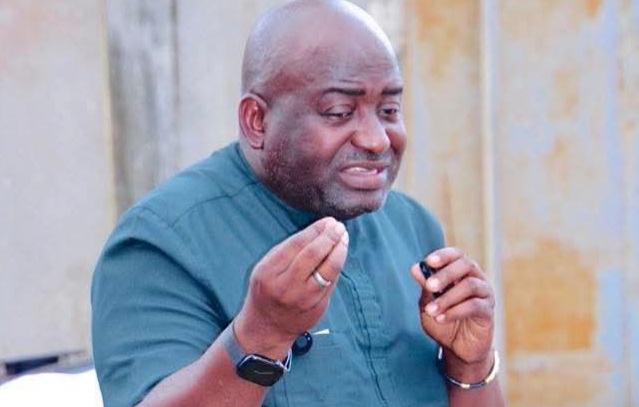
The reported court proceedings involving Nimba County District #7 Representative Musa Hassan Bility in Spain have raised serious questions about Liberia’s constitutional obligations, parliamentary immunity, diplomatic protection and a possible extradition request from Nigeria.
After examining available documents, constitutional provisions and relevant international legal instruments, one thing is clear: Being an elected Liberian lawmaker does not place anyone above foreign criminal law, but Liberia has a responsibility to ensure that its citizens receive lawful and fair treatment abroad.
MONROVIA — Bility has denied reports that he was arrested or imprisoned in Spain, confirming that he is in the country and has appeared before a court. However, he has not publicly explained the exact nature of the proceedings.
Reports have linked the matter to a petroleum transaction dating back to 2012 involving Nigerian businessman Adekunle Roberts and companies associated with Bility.
According to allegations published by Verity News, Roberts claims that more than 9,671 metric tons of Premium Motor Spirit were supplied to companies associated with Bility, including Nexis Enterprise Inc. and Srimex Oil & Gas Company, in a transaction valued at approximately US$12 million.
The complainant reportedly alleges that US$2.45 million remains unpaid and that two US$250,000 cheques issued in September 2012 were dishonoured.
These remain allegations, not established criminal findings.
In a September 30, 2026 letter to Inspector General of Police Gregory Coleman, Bility disputed the banking evidence, requested certified copies of the disputed cheque and related correspondence, and maintained that the financial obligation had already been settled.
Whether the police supplied those documents or independently verified the competing claims remains unclear.
WHAT EXACTLY IS HAPPENING IN SPAIN?
The central unanswered question is whether Bility appeared before a Spanish court in connection with a formal extradition request, a criminal complaint or another judicial proceeding.
Verity News has reported that Nigeria is seeking his extradition. However, the complete Spanish court records and any formal extradition application or judicial order have not been independently examined.
Bility’s denial of arrest does not resolve these questions.
A court appearance does not automatically mean someone has been arrested, charged or ordered extradited. The Spanish authorities must establish the legal basis of any proceedings.
DOES ARTICLE 42 PROTECT BILITY?
Article 42 of Liberia’s 1986 Constitution provides parliamentary protections for members of the Legislature.
It protects lawmakers against liability for opinions expressed and votes cast in the performance of their legislative duties. It also provides specified protection against arrest while attending, travelling to or returning from legislative sessions, subject to constitutional exceptions.
However, Article 42 is not a blanket immunity from criminal investigation or prosecution in another country.
Bility’s position as a sitting representative does not automatically prevent Spanish authorities from investigating alleged offences within their jurisdiction.
The House of Representatives may have legitimate reasons to examine whether his parliamentary privileges are implicated, but it cannot use Liberia’s Constitution to command a Spanish court to terminate lawful proceedings.
A DIPLOMATIC PASSPORT DOES NOT AUTOMATICALLY MEAN IMMUNITY
Another important question is whether Bility travelled to Spain using an ordinary, official or diplomatic Liberian passport.
There is no independently verified information establishing which document he used.
Under the 1961 Vienna Convention on Diplomatic Relations, accredited diplomatic agents enjoy specific protections, including immunity from arrest and detention under Article 29 and immunity from the receiving state’s criminal jurisdiction under Article 31.
But possession of a diplomatic passport is not the same as possessing diplomatic immunity.
A Liberian lawmaker does not automatically become a diplomat simply because he is elected or holds a diplomatic passport.
Diplomatic immunity depends on recognized diplomatic status and the applicable international legal arrangements.
The Ministry of Foreign Affairs should clarify whether Bility holds any separate diplomatic appointment or accreditation that could be relevant to the Spanish proceedings.
SPAIN-NIGERIA EXTRADITION TREATY: WHAT DOES IT MEAN?
The extradition agreement between Spain and Nigeria, signed on June 1, 2022, entered into force on April 24, 2026.
Its provisions establish conditions for extradition, including the requirement that the alleged offence generally carry a minimum one-year imprisonment penalty under the laws of both countries.
The treaty also provides grounds for refusing extradition, including certain politically motivated requests and circumstances involving violations of fundamental defence rights.
Importantly, the agreement does not establish that Nigeria has submitted a valid extradition request against Bility.
Nor does Liberia’s status as his country of citizenship automatically give Monrovia the power to block an extradition decision.
That determination rests with the competent Spanish authorities under the treaty and Spanish law.
WHAT MUST THE BOAKAI GOVERNMENT DO?
President Joseph Boakai’s government cannot dictate the outcome of Spanish judicial proceedings. However, it cannot simply ignore the situation involving a sitting Liberian lawmaker.
The Ministry of Foreign Affairs should formally contact Spanish authorities to establish Bility’s legal status and determine whether an extradition application exists.
If he is detained, Liberia can provide appropriate consular assistance, facilitate communication with his lawyers and monitor respect for his fundamental rights.
The Ministry of Justice should establish the status of the underlying Nigerian complaint and examine any available legal documentation.
The Liberia National Police should also clarify reports that Interpol contacted the institution concerning the matter.
A November 18 media report indicated that Interpol had contacted the police and that a report was being prepared for Justice Minister Bettie Lamin-Blamo.
However, the nature of that communication remains unverified.
There is also no independently established confirmation that an active Interpol Red Notice exists against Bility.
A Red Notice, in any event, is not an international arrest warrant. It is a request to locate and provisionally arrest a person, subject to the laws of the country concerned.
QUESTIONS THE GOVERNMENT MUST ANSWER
1. Has the Ministry of Foreign Affairs contacted Spanish authorities to establish the exact nature of Bility’s court proceedings?
2. Has Nigeria submitted a formal extradition request, and has a Spanish court issued any related order?
3. Has Interpol issued a Red Notice or another international police request against Bility?
4. What is the status of the Liberia National Police investigation into the 2012 petroleum transaction?
5. Which Liberian travel document did Bility use to enter Spain?
6. Does he hold any separate diplomatic appointment or accreditation recognized under international law?
7. Has the House of Representatives sought an official briefing on the legal circumstances involving its sitting member?
8. Have the original banking records and disputed cheques supporting the alleged US$2.45 million debt been independently verified?
These are legitimate questions of national interest, not political persecution or an attempt to shield anyone from accountability.
LIBERIA MUST PROTECT RIGHTS, NOT SHIELD WRONGDOING
The Bility matter is a test of Liberia’s diplomacy, institutional responsibility and commitment to the rule of law.
If there is a legitimate criminal case, he must answer through the appropriate judicial process. If the dispute is fundamentally commercial, the evidence must determine whether criminal proceedings are justified.
If extradition is being pursued, Spain must apply its treaty obligations and fundamental rights safeguards.
Liberia, meanwhile, must ensure that its citizen receives appropriate legal and consular assistance without interfering with the independence of foreign courts.
The House of Representatives must also establish whether the proceedings have any implications for its constitutional responsibilities and the representation of Nimba County District #7.
The question is not whether Musa Bility is politically influential or a sitting lawmaker. The question is whether the allegations are supported by credible evidence and whether the legal process respects the applicable laws.
Liberia owes its citizens protection under the law, not protection from the law.
The Ministry of Foreign Affairs, Ministry of Justice, Liberia National Police and House of Representatives must therefore tell the Liberian people what they know, what they have verified and what steps they have taken.
See more Liberia News Network stories in Google Search by adding LNN as one of your Preferred Sources.
★ Add LNN as a Preferred Source