
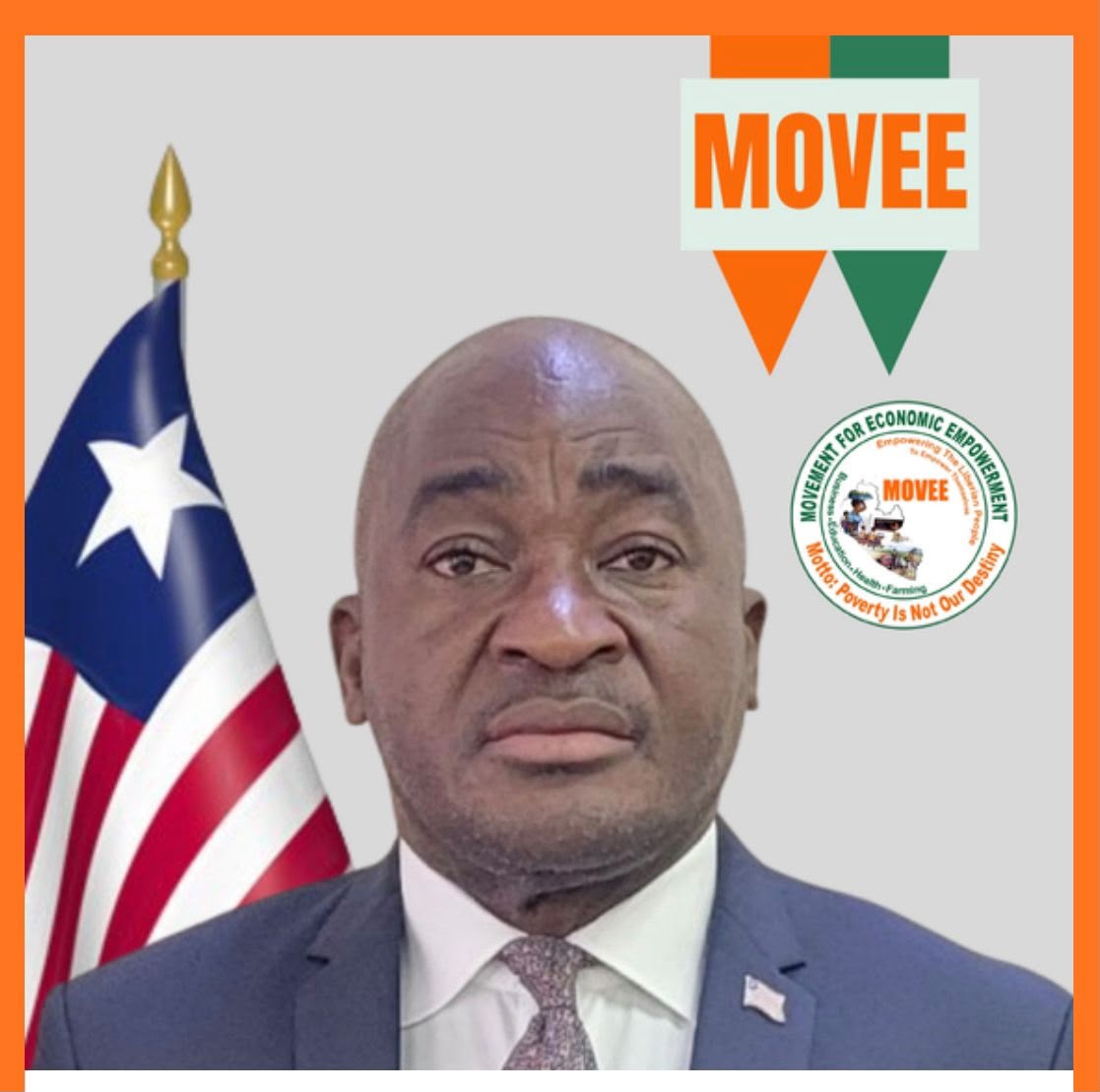
Party maintains confidence in former Foreign Minister’s innocence, calls for due process, equal application of anti-corruption laws, and stronger safeguards for humanitarian aid
\n
By: Willie N. Tokpah
\n
Monrovia-The Movement for Economic Empowerment, MOVEE, has reaffirmed its confidence in the innocence of its political leader, former Foreign Minister Dee-Maxwell Saah Kemayah Sr., following the mixed verdicts returned by a jury of Criminal Court “C” in the Saudi-donated rice case, while signaling support for a possible appeal to the Supreme Court of Liberia.
\n
In a statement issued by the party’s National Executive Committee, MOVEE said the October 9, 2026, verdicts involving 13 former officials of the Congress for Democratic Change, CDC-led government and other co-defendants do not represent the final determination of the case, arguing that the defendants retain the right to pursue legal remedies available under Liberian law.
\n
The party’s response places renewed attention on a case involving humanitarian assistance intended for disaster victims and vulnerable communities, raising broader questions about public accountability, the administration of donated relief supplies, and the need to ensure that corruption prosecutions are conducted transparently and without political interference.
\n
MOVEE said it fully supports Kemayah’s defense counsel in taking the appropriate legal steps to challenge the verdicts before the Supreme Court, should counsel consider an appeal warranted.
\n
“The Movement for Economic Empowerment hereby makes it clear that it has absolute and unshaken confidence in the innocence of its Political Leader and Standard Bearer,” the party declared in a statement.
\n
However, the party’s position represents its assessment of the proceedings and its political leader’s conduct.
\n
The legal implications of the jury’s verdicts, including the precise findings against individual defendants and any subsequent appeals, must be determined from the court record and applicable law.
\n
MOVEE disputes allegations against Kemayah
\n
At the center of MOVEE’s defense is its assertion that the evidence presented during the trial did not establish that Kemayah personally diverted, misappropriated, or otherwise improperly benefited fro Saudi-donated rice.
\n
The party cited testimony attributed to former General Services Agency Director-General Mary T. Broh, former Internal Affairs Minister Varney A. Sirleaf, and former Deputy Internal Affairs Minister for Administration Momolu S. Johnson.
\n
According to MOVEE, the testimony of these former officials supports its position that Kemayah neither personally took any of the rice nor authorized, requested, or recommended its distribution to any individual, group, or institution.
\n
The party further maintained that Kemayah did not ask for any portion of the donated rice for himself.
\n
Those assertions, however, should be assessed against the complete trial record, the specific charges against Kemayah, the jury’s individual findings, and any judicial rulings that may follow.
\n
The fact that a defendant did not personally take relief supplies would not, by itself, resolve every possible question of legal responsibility; the applicable charges and evidence remain central to any such determination.
\n
Party alleges political persecution
\n
MOVEE also used its statement to renew allegations that the former foreign minister has been subjected to political persecution and a sustained political witch hunt since 2024.
\n
The party linked what it described as a campaign against Kemayah to objections by the current government to his proposed appointment as ECOWAS ambassador to Sierra Leone.
\n
MOVEE characterized those objections and the subsequent developments involving its leader as politically motivated, alleging that the pattern has continued to the present.
\n
The statement did not provide independent evidence establishing that the prosecution in the Saudi rice case was initiated for political reasons.
\n
The allegation nevertheless adds a political dimension to a case that has drawn attention because of its connection to public officials and humanitarian relief.
\n
The government’s position on the allegation, along with the prosecution’s account of the evidence and the court’s detailed findings, would be important to establishing a fuller picture of the dispute.
\n
Beyond the verdict
\n
The accountability question
While defending its political leader, MOVEE said it supports the fight against corruption but argues that anti-corruption enforcement must not be selective, vindictive, or designed to damage the reputations of individuals.
\n
The party’s statement highlights a fundamental challenge for Liberia’s justice system, where maintaining public confidence that allegations of corruption are investigated and prosecuted on the strength of evidence, regardless of the political affiliation or public standing of those involved.
\n
For the public, the central issue extends beyond the political contest surrounding the defendants.
\n
The Saudi-donated rice was humanitarian assistance intended to support disaster victims and vulnerable people. Ensuring that such resources reach their intended beneficiaries is a matter of public trust, effective relief administration, and responsible stewardship of donated resources.
\n
The case presents an opportunity to examine not only individual criminal responsibility but also the administrative procedures governing the receipt, storage, allocation, distribution, and monitoring of humanitarian donations.
\n
A solution-based path forward
\n
A credible resolution of the controversy required more than competing political statements. It requires transparent legal processes, accessible records, clear accountability mechanisms, and practical reforms that reduce the risk of future disputes over relief supplies.
\n
First, the court record should clearly establish the charges, the evidence presented against each defendant, and the jury’s findings on each count. Where an appeal is filed, the relevant legal questions should be resolved through the established judicial process, without political pressure or premature declarations of guilt or innocence, also, government agencies responsible for humanitarian assistance should strengthen documentation and oversight. Publicly available records of donated goods, inventory receipts, warehouse movements, distribution authorizations, beneficiary lists where appropriate, and final delivery reports would make it easier to trace relief supplies from arrival to distribution and independent audits and risk-based monitoring should be incorporated into the management of large humanitarian donations.
\n
These safeguards would help identify discrepancies early, protect intended beneficiaries, and distinguish administrative failures from conduct that may warrant criminal investigation.
\n
Anti-corruption institutions should apply consistent, evidence-based standards.
Similar allegations should receive comparable investigative attention, while every accused person should have a meaningful opportunity to challenge the evidence and exercise the rights guaranteed by law and at the same time, government, political parties, civil society organizations, and development partners should avoid turning corruption cases into instruments of political mobilization.
\n
Public criticism and scrutiny are legitimate, but conclusions about criminal liability should rest on evidence and judicial determinations rather than party loyalty or political rivalry.
\n
These measures would help ensure that accountability is not merely punitive but preventive, protecting public resources, strengthening institutions, and improving the delivery of assistance to people in need.
\n
MOVEE urges calm, reaffirms solidarity
\n
As the case moves through its remaining legal stages, MOVEE called on its supporters in Liberia and the diaspora to remain calm, prayerful, resolute, and law-abiding.
\n
The party reaffirmed its support for Kemayah, describing him as a leader whose integrity and character it continues to defend.
\n
It also expressed appreciation to individuals and institutions, that it said had supported evidence-based anti-corruption efforts, justice, and the rule of law.
\n
MOVEE separately lauded the government and people of the Kingdom of Saudi Arabia for donating rice intended for disaster victims and vulnerable communities in Liberia.
See more Liberia News Network stories in Google Search by adding LNN as one of your Preferred Sources.
★ Add LNN as a Preferred Source