Published: September 4, 2026
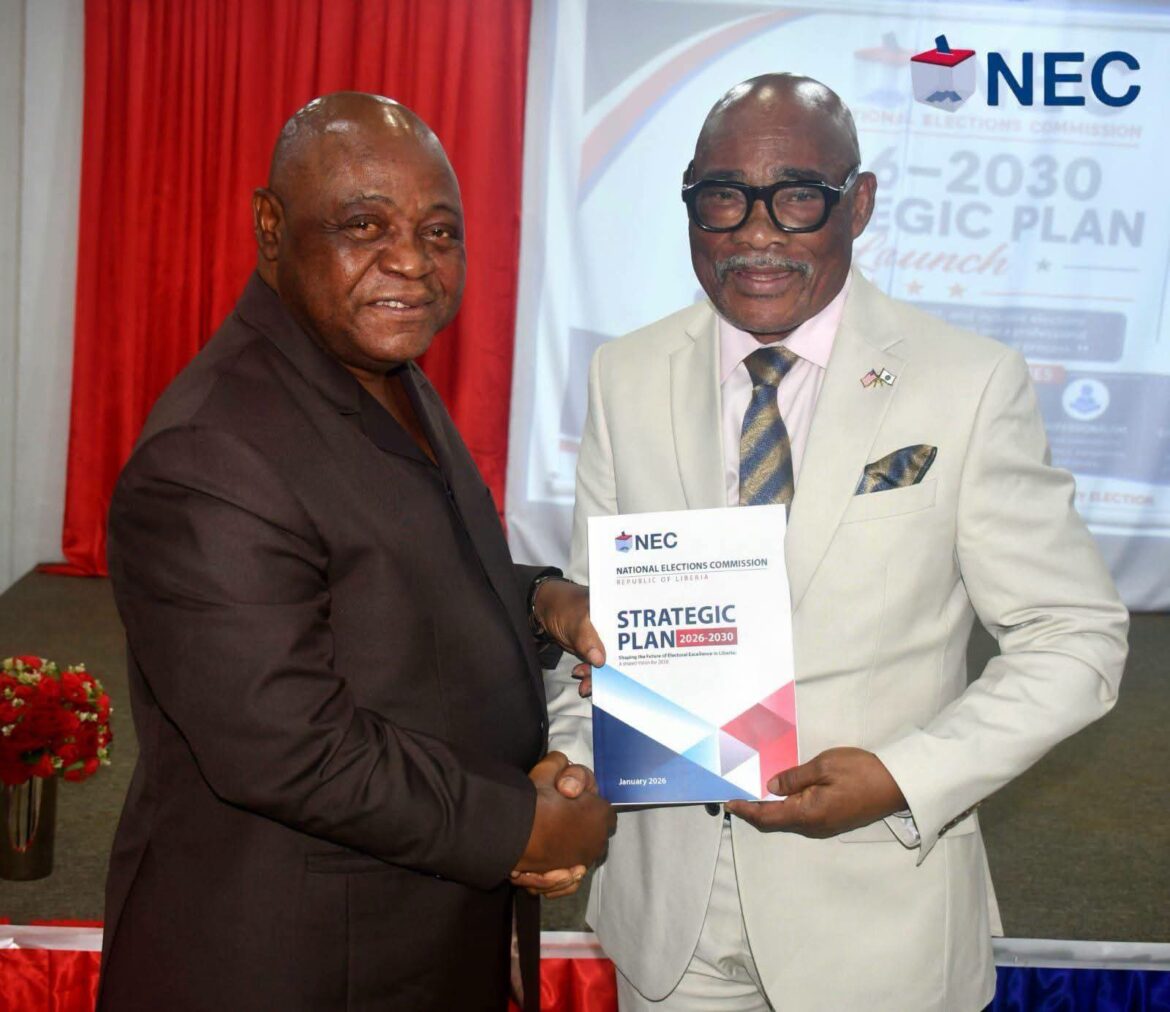
MONROVIA — The National Elections Commission needs more than US$75 million over the next five years to rebuild the systems that will run the 2029 general elections, its chairman said Tuesday, after the last cycle exposed gaps in the commission’s technology, financing and ability to respond.
The figure is the cost attached to a strategic plan for 2026 to 2030 that the commission launched Tuesday in Monrovia. Chairman Jonathan K. Weedor said the plan moves the commission from crisis response to deliberate planning and called it a “collective declaration that the future of our electoral integrity will be defined not by chance but by design.”
“This is not merely an expenditure; it is an investment in the very soul of our democracy,” Weedor said, calling the sum “a pledge to safeguard our peace, stability, and the legitimacy of our governance.”
Weedor said the last electoral cycle exposed critical gaps in technological infrastructure, financial sustainability and institutional agility. The plan is built on six pillars: legal reform, governance and finance, human capacity, technology, inclusion and operational efficiency. He said the pillars are interdependent and that “a weakness in one undermines the strength of all.”
The commission plans to upgrade voter registration and results management before 2029 and, Weedor said, to harness secure technology as elections are increasingly contested online, with the aim of making the commission the most trusted source of electoral information.
Under the inclusion pillar, the commission commits to ensuring that no citizen is left out regardless of gender, ability or status.
Weedor said the commission cannot deliver the plan alone. He called for what he termed a “United Democratic Compact” and urged the government, political parties, civil society, the media and international partners to back the reforms, saying electoral integrity is a shared national responsibility. To manage implementation, the commission will set up a steering committee and pillar leads and hold quarterly performance reviews.
Ambassador Mohamed Kenewi Konneh, the ECOWAS special representative to Liberia, praised the commission for its strategic due diligence and for learning from past cycles.
“The ability of the electoral management body to respond appropriately and within time, that stands out as a sign of competence,” Konneh said, pledging that ECOWAS will “continue to deliver and stand by the National Election Commission.”
Swedish Ambassador Karl Backéus congratulated the commission and said democracy “needs to be worked on and defended on a daily basis.” Sweden is closing its embassy in Monrovia, but Backéus said he looks forward to “continue following the work of the NEC, as you continue to develop this plan and lay the basis for another round of credible, free, fair, and impartial elections.”
See more Liberia News Network stories in Google Search by adding LNN as one of your Preferred Sources.
★ Add LNN as a Preferred Source