The Government of Liberia is preparing to launch a nationwide biometric profiling exercise targeting an estimated 140,600 undocumented migrants from Burkina Faso. The initiative raises crucial questions regarding the scale of irregular migration, border management, and the government’s overall capacity to properly document and manage migrant populations.
The Liberia Refugee Repatriation and Resettlement Commission (LRRRC) confirmed that field operations will cover Nimba, Grand Gedeh, River Gee, and Maryland counties, with officials scheduled to deploy shortly. The entire project is projected to span 90 days, with the core biometric profiling phase targeted for completion within 60 days.
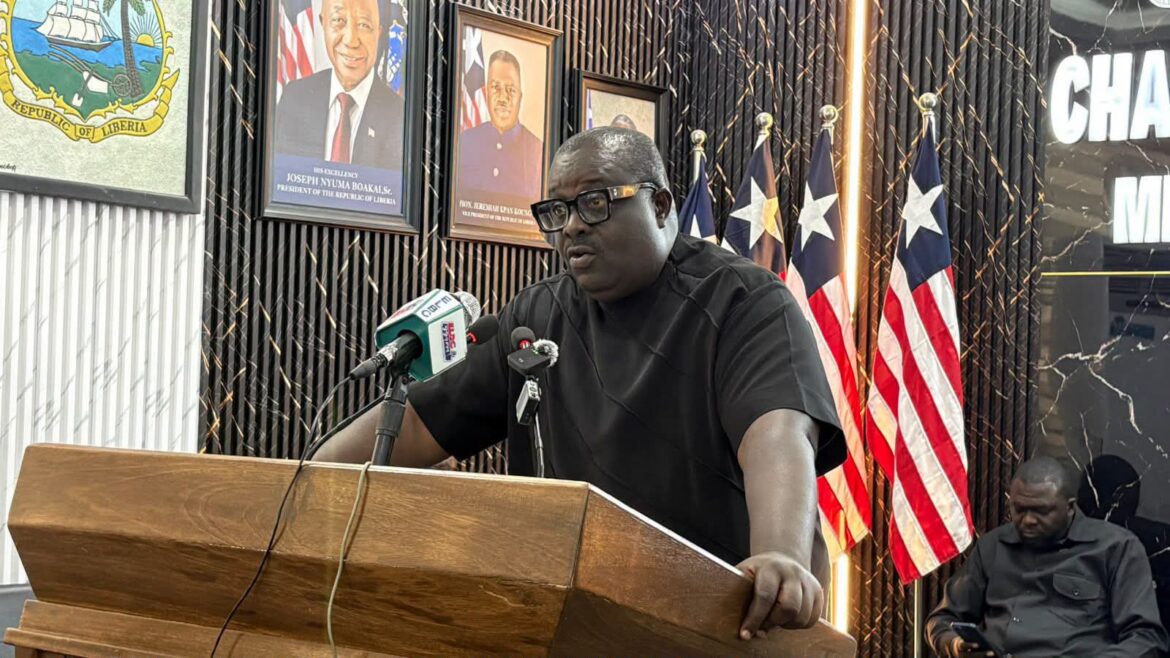
Speaking at the Ministry of Information’s regular press briefing on Thursday, September 24, 2026, LRRRC Executive Director Cllr. Jerror Cole Bangalu announced that President Joseph Nyuma Boakai has approved the exercise. President Boakai instructed the National Identification Registry (NIR) and the Liberia Immigration Service (LIS), alongside other relevant institutions, to jointly carry out the operations.
However, the planned exercise underscores a significant gap in Liberia’s migration management system, highlighting concerns over how more than 140,000 individuals have lived in the country without formal documentation. Authorities have yet to publicly outline how this population estimate was derived, the timeline of the migrants’ arrival, or the root causes that led to such widespread undocumented status.
Cllr. Bangalu emphasized that the biometric exercise aims to provide the government with accurate data essential for national security planning, evidence-based policymaking, humanitarian interventions, and diplomatic engagement. He noted that effective governance and development planning are impossible without clear knowledge of the population within the nation’s borders.
Addressing safety and human rights concerns, the LRRRC official reassured the public and foreign residents that the exercise would not be used to harass or forcibly target migrants. Reaffirming that documentation is not persecution, he explained that establishing individual identities and legal statuses will allow the government to apply appropriate legal measures fairly.
The initiative comes at a time when Liberia is navigating broader challenges associated with third-country nationals entering and remaining in the country. Bangalu stated that the nation carries a responsibility to manage these populations in a lawful, orderly, humane, and dignified manner. He added that several third-country nationals previously brought to Liberia have already been processed and safely repatriated, demonstrating the government’s commitment to structured migration oversight rather than indefinite, unregulated residency.
Alongside the profiling exercise, the LRRRC is undergoing a major structural transformation. Pursuant to Executive Order No. 159 issued by President Boakai in March 2026, the Commission is transitioning from its original 1993 statutory framework into a broader Refugee and Migration Commission. Bangalu stressed that addressing modern challenges—including economic migration, statelessness, internal displacement, and irregular movement—requires far stronger institutions and more updated systems than those designed decades ago.
Ultimately, the government’s immediate challenge lies in ensuring that the biometric profiling produces credible data while safeguarding migrants against abuse, discrimination, exploitation, and arbitrary action. The long-term success of the initiative will depend not merely on the number of individuals registered, but on Liberia’s ability to turn this data into transparent, lawful, and humane migration policies.
See more Liberia News Network stories in Google Search by adding LNN as one of your Preferred Sources.
★ Add LNN as a Preferred Source