
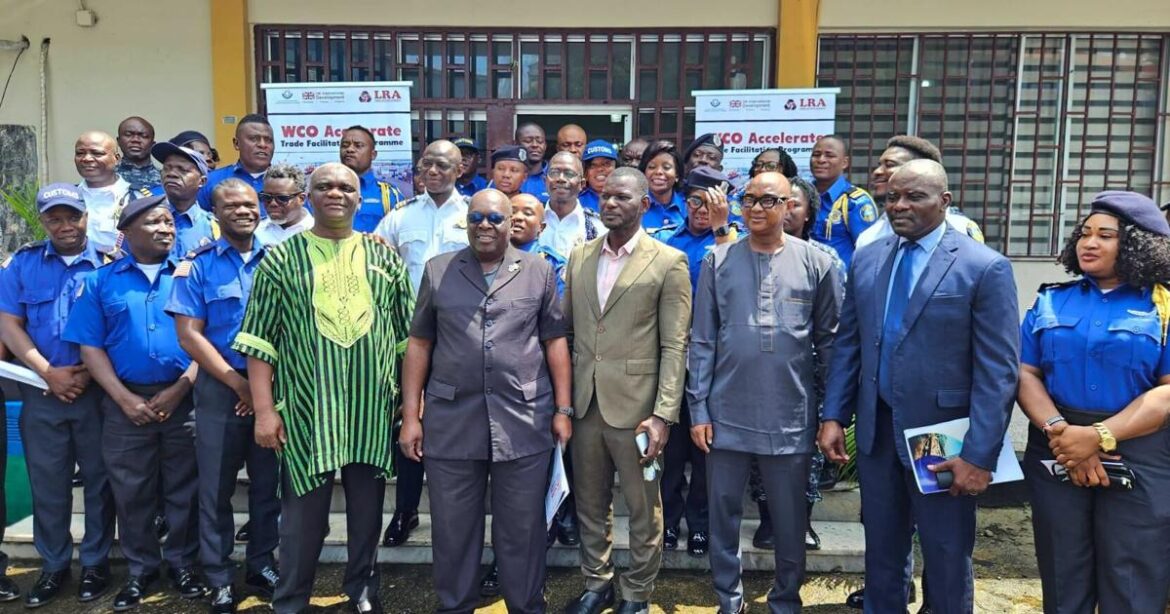
Liberia’s ambition to build a more efficient, predictable, and competitive trading environment now faces a critical test as authorities move from assessing challenges at the Freeport of Monrovia to implementing reforms identified in the country’s second National Time Release Study (TRS).
The landmark study, launched Monday, July 13, 2026, by the Liberia Revenue Authority (LRA) in partnership with the World Customs Organization (WCO) and the UK-funded Accelerate Trade Facilitation Programme, provides a detailed assessment of the movement of goods through Liberia’s main commercial gateway.
The report identifies key areas affecting cargo clearance and offers recommendations aimed at reducing delays, lowering trade costs, improving customs efficiency, and strengthening coordination among institutions involved in the import and export process.
However, international partners and private sector stakeholders say the success of the initiative will not be measured by the completion of the study, but by Liberia’s ability to translate its findings into practical reforms.
Speaking at the launch ceremony, UK Deputy Head of Mission and Development Counsellor at the British Embassy in Monrovia, Joanna Markbreiter, described the TRS as a major milestone in Liberia’s trade facilitation efforts but cautioned that the most important phase begins after the report.
“On behalf of the British Embassy, it is my pleasure and privilege to join you today for the launch of Liberia’s Time Release Study Report. My congratulations go to all partners who have been involved in this endeavour,” Markbreiter said.
She said the study provides Liberia with its most comprehensive picture yet of how goods move through the Freeport of Monrovia, while identifying areas where delays occur and offering practical solutions.
“As every single other speaker this morning has mentioned, this Time Release Study is more than a technical assessment. It provides the most detailed picture so far for how goods for trade and commerce move through the Freeport of Monrovia,” she said.
“It identifies the specific areas where delays can occur and offers practical recommendations with respect to customs procedures and border processes.”
Markbreiter noted that the study demonstrates Liberia’s commitment to evidence-based decision-making and improving transparency, efficiency, and predictability in cross-border trade.
She acknowledged the support of the UK government through His Majesty’s Revenue and Customs (HMRC), as well as the contributions of the Government of Liberia, WCO, and other public and private sector actors.
“This has been a big team effort, and we want to recognise the valuable contributions of the many public and private sector stakeholders whose engagement and cooperation have been so essential to this report,” she said.
But the UK diplomat stressed that the real challenge now lies in implementation.
“But the real work really begins now. This is the time to move from analysis to implementation, continued collaboration, and sustained momentum to ensure that these benefits are felt across Liberia’s economy and across Liberian society,” she stated.
The World Customs Organization described the TRS as one of its most important tools for measuring customs performance and identifying bottlenecks affecting international trade.
Mr. Ian Saunders, secretary general of World Customs Organization congratulated the LRA and its partners for completing the study, noting that the report provides an opportunity for all actors involved in the trade process to address inefficiencies.
“The Time Release Study, or TRS, is one of the World Customs Organization’s most important performance measurement tools. It helps governments improve their cargo clearance times by identifying bottlenecks through a comprehensive, time-tested approach,” Saunders said.
The WCO emphasized that improving trade facilitation requires cooperation among customs authorities, government agencies, businesses, and other stakeholders involved in the supply chain.
The organization warned that while completing the study represents an important achievement, lasting impact will depend on whether the recommendations are implemented.
“While the completion of the Time Release Study is a remarkable milestone, it does not mean the end of the work. Real success lies in implementing the TRS recommendations and making tangible and sustained improvements in customs and border operations,” Saunders said.
The Freeport of Monrovia remains central to Liberia’s economic activity, serving as the country’s main entry point for imported goods and a critical link to international trade.
Stakeholders believe improving efficiency at the port could reduce costs for businesses, enhance competitiveness, attract investment, and support economic growth.
Emeka Ogbaje, Chief Financial Officer and Deputy Managing Director of APM Terminals Liberia, said the TRS highlights that challenges at the port are the responsibility of the entire port ecosystem rather than a single institution.
“Before today, when I arrived in Liberia, once anything goes on in the port that is wrong, one person is singled out and it’s always APM Terminal,” Ogbaje said.
“But today, from this conversation, I’m beginning to understand that this is changing. The port is seen as an ecosystem, where our strongest position is intervened by the weakest link.”
Ogbaje said APM Terminals believes the current time required to move containers from the port to end users can be significantly reduced through improved coordination, automation, and investment.
“My estimation today is that we’re taking too long to deliver a container to the end user. The goal, with everyone sitting in here, is to ensure that we’re able to cut that by half,” he said.
He disclosed that the current container clearance period is approximately 12 days and expressed optimism that reforms could help reduce the process to three days.
“The goal is that you’re able to bring your container and take it without paying for storage,” he said.
President of the Liberia Chamber of Commerce, Natty O. Davis, welcomed the launch of the TRS but stressed that improving trade efficiency requires broader collaboration beyond customs authorities.
Davis said Liberia needs a functional ecosystem where government institutions, financial institutions, investors, and businesses work together to create opportunities and improve the ease of doing business.
“Our primary goal is that we recognize employment creation is a critical priority for this country. If we have a functional ecosystem around supply and development, with financial products that support local businesses, technical assistance, and clear rules and guidelines for multinationals operating in Liberia, we believe we will create a lot more business opportunities for Liberian businesses,” he said.
He noted that achieving the goal of reducing container clearance time from 12 days to three days would require the participation of multiple government agencies.
“We still need the other actors of the government. We still need to bring them to the table,” Davis said.
