MONROVIA – Liberia’s increasingly troubling cocaine saga has crossed the Atlantic and entered the corridors of the United States Congress, with a Washington-based justice organization asking lawmakers to investigate whether transnational narcotics networks have penetrated sensitive Liberian security institutions and whether the sprawling trafficking operations have touched American banks, taxpayer-funded security assistance or other U.S. interests. THE ANALYST reports.
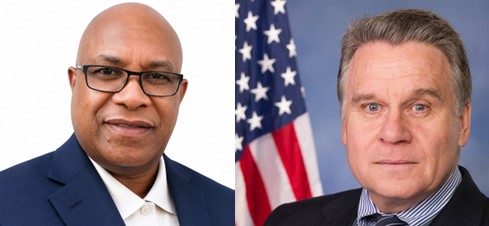
In an urgent communication dated August 24, 2026, the Panoramic Justice Group asked United States Congressman Christopher H. Smith to help convene a congressional hearing into what it calls Liberia’s “escalating transnational cocaine-trafficking crisis,” arguing that the extraordinary quantities of drugs recently seized can no longer be treated merely as isolated criminal cases involving couriers, drivers and lower-level operatives.
The organization wants investigators to reach farther up the ladder—to the financiers, organizers, beneficial owners, alleged protectors, money launderers, security facilitators and any other persons who may have provided the infrastructure necessary to move cocaine valued at hundreds of millions of United States dollars through Liberia.
And where credible evidence establishes a direct American nexus, the group is recommending consideration of financial investigations, asset tracing, money-laundering inquiries and other lawful measures, including targeted sanctions and visa restrictions where legal requirements are satisfied.
The appeal, signed by Panoramic Justice Group Executive Director Dr. D. Garkpe Gedepoh, PhD, a retired United States Marine Corps officer, places Liberia’s drug crisis within a much wider security debate: whether organized criminal groups have acquired the money, access, institutional relationships and logistical sophistication to exploit parts of the Liberian state.
At the center of the request are two enormous cocaine seizures occurring within roughly six weeks.
According to the letter, Liberian authorities intercepted approximately 237.6 kilograms of cocaine at Roberts International Airport in June 2026, with the drugs reportedly valued at more than US$19 million.
Weeks later came a far larger seizure: approximately 3,971 kilograms—nearly four metric tons—reportedly recovered in Duazon and valued at approximately US$317 million.
Together, the two seizures carry a reported value exceeding US$336 million.
For Panoramic Justice Group, those figures immediately raise a question that goes well beyond the people physically found around the drugs.
Who Owned the Cocaine?
“Nearly four metric tons of cocaine requires substantial financing, international transportation, communications, storage, security, and logistical support,” the organization told Congressman Smith.
Its argument is straightforward: a trafficking operation of that scale does not materialize spontaneously. Somebody finances it. Somebody owns the product. Somebody arranges international movement. Somebody secures storage and transportation. Somebody communicates with suppliers and receivers. Somebody moves the proceeds.
And, potentially, somebody protects the operation.
“The central question is therefore not merely who physically handled the cocaine, but who financed, organized, owned, protected, and intended to profit from these shipments,” the letter says.
That question forms the spine of the organization’s appeal to Washington.
Panoramic Justice Group fears that if investigations terminate with drivers, handlers, couriers and operational suspects, Liberia could arrest participants without dismantling the machinery that makes international narcotics trafficking possible.
Its proposed principle is blunt: “Follow the drugs. Follow the money. Follow the businesses. Follow the communications. Follow the security connections. Follow the chain of command.”
Security Apparatus Under Scrutiny
More disturbing than the volume of cocaine, according to the organization, are allegations surrounding persons occupying sensitive positions in Liberia’s security structure.
The group’s congressional enclosure cites public reports involving personnel associated with the Liberia National Police, National Security Agency, Liberia Drug Enforcement Agency, Roberts International Airport, criminal investigation and intelligence, INTERPOL and highway patrol.
Among names listed in the document are Wadell W. Kwarbo, also reported as Kwabo, identified as head of the Liberia National Police Highway Patrol; senior police officer Anthony T. Blaye; former Commissioner of Police for Criminal Investigation, Intelligence and INTERPOL Johnny Bolar Dean; former NSA Deputy Director for Administration Patrick Doe; former RIA Deputy Director for Operations Mark Egon Kuiah; former RIA Security Director Mohammed O. Gbowrah; former LDEA Deputy Commander at RIA Moses Jallah; security officer Patrick Komasu; and NSA personnel Jammel V. Jallah, Christian L. Nyantee and Albenigo Janior.
The Panoramic Justice Group carefully warns that allegations, administrative dismissals, suspensions, arrests or investigations against individuals do not establish criminal guilt.
Each accused person, it says, remains entitled to due process. But the combined pattern, the organization argues, raises an institutional question Liberia cannot afford to ignore:
Have international narcotics organizations penetrated elements of the country’s security apparatus? And if they have, how far does that penetration extend?
That issue, the group says, requires scrutiny beyond the conduct of individual officers. Investigators must determine whether there were supervisory failures, institutional weaknesses, compromised chains of command or structures that criminal organizations learned to exploit.
Police Vehicles, Intelligence, Airport Access
The questions become particularly grave because some of the allegations involve positions with access to police mobility, intelligence, airport security, criminal investigation and other facilities that should constitute the state’s frontline defense against narcotics trafficking.
The enclosure refers to allegations that police vehicles may have been used to facilitate or escort cocaine movements.
It also points to personnel actions affecting officers and officials operating in intelligence, airport, law-enforcement and narcotics-control positions.
No such allegation, Panoramic Justice Group emphasizes, should be accepted without proof. But neither should rank, title or institutional prestige insulate anybody from investigation.
“No official should be presumed culpable because of position, but no official should be insulated from legitimate scrutiny because of rank,” the organization says.
Royesville Opens Maritime Front
The congressional request also turns attention toward Liberia’s Atlantic coastline.
Panoramic Justice Group cites the reported Royesville investigation, in which prosecutors have alleged that foreign suspects established what appeared to be a fishing operation along the Po River as a cover for cocaine trafficking.
According to accounts referenced in the submission, cocaine allegedly arriving from the Atlantic was transferred into canoes or smaller craft, taken ashore and transported inland.
If established by evidence, the organization says, such an operation would suggest a level of planning requiring vessels, property, ground transportation, communication, financing and security.
The organization therefore wants any serious inquiry to examine whether Liberia’s coastline, fishing operations, ports and maritime corridors have become vulnerable to organized trafficking.
Questions Over IB Atlantic IV
The submission also raises the episode involving the IB Atlantic IV, described as a Comoros-flagged vessel operating off Grand Cape Mount.
The Panoramic Justice Group says Liberian authorities reportedly sought to investigate the vessel before it departed Liberian waters, while the government later announced that Ivorian authorities had detained it.
The submission further references government disclosure that a Liberian fishing vessel had gone to sea to meet the IB Atlantic IV. But the organization makes an important distinction. It acknowledges there is presently no publicly established evidence proving cocaine was aboard the vessel.
The episode is therefore not presented as proof of trafficking but as another reason, in the group’s view, to scrutinize the vulnerability of Liberia’s maritime environment.
Old Porkpah Warning Resurfaces
The latest drug crisis has also revived earlier allegations made by former Liberia Drug Enforcement Agency Deputy Director General for Administration Gwee K. Porkpah.
Before the major 2026 seizures, Porkpah publicly alleged that senior government officials were involved in Liberia’s illicit drug trade.
Porkpah and other senior officials of the LDEA were subsequently dismissed, officially for administrative reasons.
Panoramic Justice Group does not tell Congress that Porkpah’s accusations were true.
Instead, it is asking another question: Were they ever independently and credibly investigated?
The proposed inquiry would seek to establish whether investigators reviewed financial records, interviewed relevant persons, examined supporting evidence and reached formal conclusions on the allegations.
“Dismissal of an official making allegations does not itself resolve whether the allegations were substantiated or unfounded,” the congressional enclosure states.
Washington’s Billions Create Oversight Interest
The Panoramic Justice Group argues that Washington has more than a passing diplomatic interest in the controversy.
For decades, the United States has invested heavily in Liberia’s governance, democratic institutions, security services, border management, rule of law, health system and economic development.
The organization cites public U.S. foreign-assistance records and congressional reporting in support of its assertion that American taxpayer investment in Liberia runs into billions of dollars.
That relationship, it says, gives Congress a legitimate oversight responsibility to determine whether institutions supported by American taxpayers have been vulnerable to exploitation by transnational criminal organizations.
The proposed hearing would consequently examine whether U.S.-funded equipment, training, programs or institutional assistance may have indirectly benefited agencies in which compromised personnel were operating.
Follow the Dollar
Perhaps the most consequential international dimension concerns the financial system.
The organization wants investigators to determine whether narcotics proceeds or associated transactions moved through American banks or correspondent banking systems.
It also wants scrutiny of U.S.-dollar transactions, financial accounts, businesses, companies, property holdings, communications systems, wire transfers and persons potentially linked to the trafficking structure.
Financial investigation and asset tracing, the group argues, should not be secondary to the narcotics investigation. They should sit at its center.
Investigators should identify beneficial owners, companies, vessels, real estate, international wire transfers, cash-intensive enterprises, nominee ownership arrangements and other possible laundering mechanisms.
The idea is to reconstruct not simply the physical movement of cocaine, but the financial architecture behind it.
Sanctions and Visa Restrictions
It is within that context that Panoramic Justice Group raises one of the politically sensitive recommendations in its submission.
Where credible evidence establishes a U.S. nexus and applicable legal thresholds are satisfied, the organization says American authorities should consider asset tracing, money-laundering investigations, prosecutions where jurisdiction permits, targeted sanctions and visa restrictions.
The group does not ask that sanctions be imposed automatically, nor does it identify any individual who should presently be sanctioned.
Its recommendation is expressly conditional upon evidence and applicable law.
That qualification is crucial as Liberia’s drug controversy increasingly collides with politics and public accusation.
Three-Pronged Response Proposed
Panoramic Justice Group is proposing three major responses.
First, it wants an independent international investigation with the capacity to trace the drugs, financial flows, businesses, communications, beneficial ownership, security relationships and chain of command wherever credible evidence leads.
Such cooperation, the group suggests, could involve the U.S. Drug Enforcement Administration, Federal Bureau of Investigation, Department of Justice, Department of Homeland Security, Department of the Treasury, Department of State, INTERPOL and regional partners.
Second, it is recommending that Liberia consider establishing an Independent National Citizens Commission on Narcotics Trafficking and State-Security Penetration.
The proposed body would include politically diverse and respected representatives from civil society, the legal profession, religious institutions, academia, professional organizations, women’s groups, youth groups and other credible sectors.
The commission would not substitute for prosecutors or courts. Its proposed functions would center on public accountability, receipt of information, identification of institutional weaknesses and monitoring reforms.
Third, the organization wants Liberia’s international partners to support a comprehensive security-sector integrity review.
Such a review would examine recruitment and vetting, financial disclosure, internal-affairs systems, command responsibility, intelligence sharing, anti-corruption controls, whistleblower protection, airport and maritime security, independent oversight and the rotation of personnel occupying high-risk positions.
Congressional Witnesses Proposed
The group has asked Congressman Smith to support an appropriate House committee or subcommittee hearing at which senior representatives of relevant U.S. agencies could testify.
Its suggested witnesses include officials from the Department of State, DEA, Department of Justice, FBI, Department of Homeland Security and Department of the Treasury.
Regional experts and credible representatives of Liberian civil society should also participate, it says.
The objective would be to determine whether Liberia’s trafficking crisis poses wider implications for U.S. financial systems, security cooperation, foreign assistance and national interests without turning a congressional hearing into a forum for declaring individuals guilty.
‘Allegations Are Not Guilt’
Despite the uncompromising tone of its request, Panoramic Justice Group repeatedly cautions against prejudgment.
“We are not asking Congress to presume that allegations are true or that any individual is guilty,” Gedepoh wrote.
The group says extraordinary narcotics seizures involving hundreds of millions of dollars should instead receive credible, independent scrutiny that extends beyond couriers and operational-level actors.
That formulation seeks to place the initiative on institutional rather than partisan ground: determine the truth, establish responsibility through evidence and protect innocent people from unsupported accusations.
A Bigger Test for Liberia
The congressional appeal arrives at one of the most sensitive moments in Liberia’s growing confrontation with international narcotics trafficking.
The country has been shaken by the scale of recent seizures, arrests and allegations involving persons connected to sensitive state institutions.
At the same time, the government faces an equally difficult responsibility: proving that its campaign is driven by admissible evidence rather than political pressure and that nobody is targeted—or protected—because of party, office, wealth or influence.
The Panoramic Justice Group’s intervention now threatens to move that debate beyond Liberia’s borders.
If Congressman Smith or an appropriate congressional committee acts on the request, Liberian narcotics cases that have until now unfolded through police investigations, government announcements and local courts could acquire a second arena in Washington.
That could expose questions reaching beyond individual defendants to banking relationships, foreign assistance, security-sector integrity, maritime networks and the architecture of the narcotics trade itself.
For Panoramic Justice Group, that broader examination is precisely the point.
Its message to Washington is that nearly four metric tons of cocaine cannot reasonably be understood by looking only at the people standing nearest the shipment when police arrive.
The drugs must be traced backward.
So must the money.
So must the businesses, communications, security connections and decisions that allegedly allowed the operation to function.
And wherever credible evidence finally leads, the organization argues, investigators must be prepared to follow.
See more Liberia News Network stories in Google Search by adding LNN as one of your Preferred Sources.
★ Add LNN as a Preferred Source