
By Smart News Liberia
MONROVIA – While Liberia remains free of Ebola Virus Disease (EVD), the country’s top public health authority has issued a sobering warning that critical weaknesses in emergency preparedness, border surveillance, logistics, and health infrastructure could undermine a rapid response if the deadly virus crosses into the country.
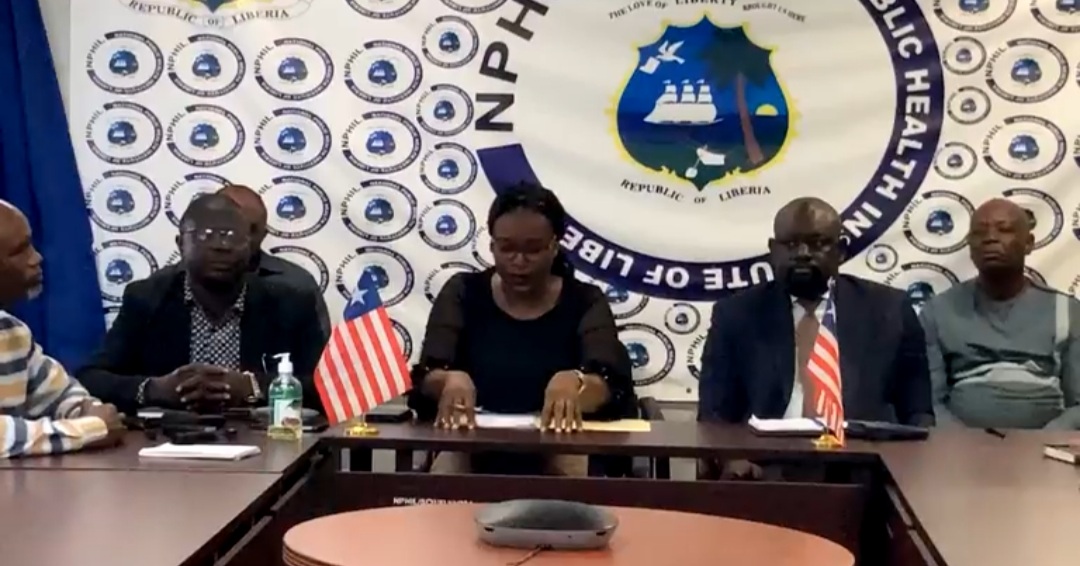
Speaking Monday, July 13, 2026, at the National Public Health Institute of Liberia (NPHIL) headquarters in Congo Town, Interim Director General Dr. Sia Wata Camanor unveiled the findings of a month-long nationwide Ebola preparedness assessment, revealing that although Liberia has preserved many of the systems built after the devastating 2014-2016 Ebola epidemic, serious operational deficiencies remain.
The assessment, conducted across all 15 counties, examined surveillance systems, emergency operations centers, laboratories, isolation facilities, and designated Points of Entry (PoEs), including nine land borders, four seaports, and two airports.
“Our surveillance systems remain functional,” Dr. Camanor said. “We have trained surveillance officers at all levels who remain vigilant and are actively conducting case searches and reporting.”
She disclosed that Liberia currently has 98 District Surveillance Officers, 17 County Surveillance Officers, and 22 Zonal Surveillance Officers, all trained in field epidemiology, Integrated Disease Surveillance and Response, and rapid outbreak investigation.
However, she cautioned that maintaining trained personnel alone is not enough.
“The need to be more equipped and always ready to fight cannot be overemphasized,” Dr. Camanor stressed, noting that surveillance teams continue to struggle with inadequate transportation, insufficient logistics, and a lack of rain gear needed to reach remote communities during outbreak investigations.
The warning comes as neighboring countries continue responding to a regional Ebola outbreak, heightening concerns that increased cross-border movement could expose Liberia to renewed risk.
Although Liberia has established 16 Public Health Emergency Operations Centers (PHEOCs), including one national center and one in each county, the assessment found many of them operating with limited equipment and inadequate infrastructure.
According to Dr. Camanor, county emergency centers continue coordinating preparedness activities but lack basic operational necessities including computers, televisions, adequate seating, reliable communication systems, backup electricity, and other essential coordination tools.
“Additional investments are needed to improve communication systems, computers, backup power, and operational resources,” she said.
She acknowledged support from the U.S. Centers for Disease Control and Prevention (CDC), which has provided furniture, computers, and printers for county emergency centers, while the World Bank has committed funding for solar power systems and Starlink internet connectivity nationwide.
Given Ebola’s ability to spread through international travel, NPHIL paid particular attention to Liberia’s borders.
Since May 17, 2026, following regional Ebola alerts issued by the World Health Organization (WHO) and Africa CDC, Liberia has screened 987 asymptomatic travelers, the majority returning from the Hajj pilgrimage in Saudi Arabia.
Dr. Camanor reported that 966 travelers, representing 98 percent, have successfully completed the mandatory 21-day monitoring period, while 21 individuals remain under active observation, with none exhibiting Ebola symptoms.
She praised the close collaboration among Port Health, Immigration, Customs, the Liberia National Police, the National Port Authority, Liberia Maritime Authority, County Health Teams, and joint security personnel.
However, she warned that Liberia’s border defenses remain vulnerable.
The assessment identified inadequate screening facilities, the absence of proper holding centers for suspected Ebola patients, limited ambulance services, shortages of communication equipment, insufficient infection prevention supplies, and significant staffing shortages.
Many port health personnel, she revealed, continue serving as unpaid volunteers.
Dr. Camanor said NPHIL is working to place these volunteers on the Government of Liberia payroll while discussions continue with the World Bank regarding financial incentives.
Liberia’s laboratory network remains technically capable of diagnosing Ebola, but maintaining that readiness will require sustained investment.
According to Dr. Camanor, laboratories continue to face challenges involving equipment maintenance, reagent availability, and uninterrupted laboratory supplies.
She welcomed WHO’s recent donation of Ebola specimen collection kits, testing materials, and laboratory reagents, describing the support as essential for maintaining diagnostic capacity.
Based on the nationwide assessment, NPHIL and the Ministry of Health have identified several urgent priorities aimed at strengthening Liberia’s Ebola defenses. These include reinforcing disease surveillance nationwide, upgrading border infrastructure, addressing staffing shortages, improving emergency operations centers, expanding simulation exercises and refresher training for health workers, and enhancing laboratory and isolation facility readiness.
Dr. Camanor thanked the Government of Liberia, County Health Teams, security institutions, and international partners, including the World Bank, the World Health Organization (WHO), and the U.S. Centers for Disease Control and Prevention (U.S. CDC), for their continued investment in the country’s health security.
Despite highlighting the country’s preparedness shortcomings, Dr. Camanor reassured the public that Liberia has not recorded any Ebola cases.
“I want to assure you that there is currently no Ebola outbreak in Liberia,” she declared. “This assessment was conducted as part of our commitment to preparedness and not because we have detected Ebola in the country.”
She urged Liberians not to become complacent, emphasizing that early preparedness remains the country’s strongest defense against another Ebola crisis.
“We encourage every Liberian to continue practicing good hygiene, report unusual illnesses immediately, cooperate with health workers, and rely only on information from credible government sources,” Dr. Camanor said.
Her remarks serve as both reassurance and a warning. While Liberia’s hard-earned Ebola response systems remain largely intact more than a decade after one of the world’s deadliest outbreaks, the country’s ability to withstand another epidemic will depend on how quickly longstanding logistical, infrastructure, and staffing deficiencies are addressed before the virus arrives, not after.
