
By Lincoln G. Peters
Monrovia, July 17, 2026: Eight years after Liberia enacted the Land Rights Act of 2018, government officials, lawmakers, civil society organizations, and development partners have warned that the initiative could fall short of expectations unless implementation is significantly accelerated.
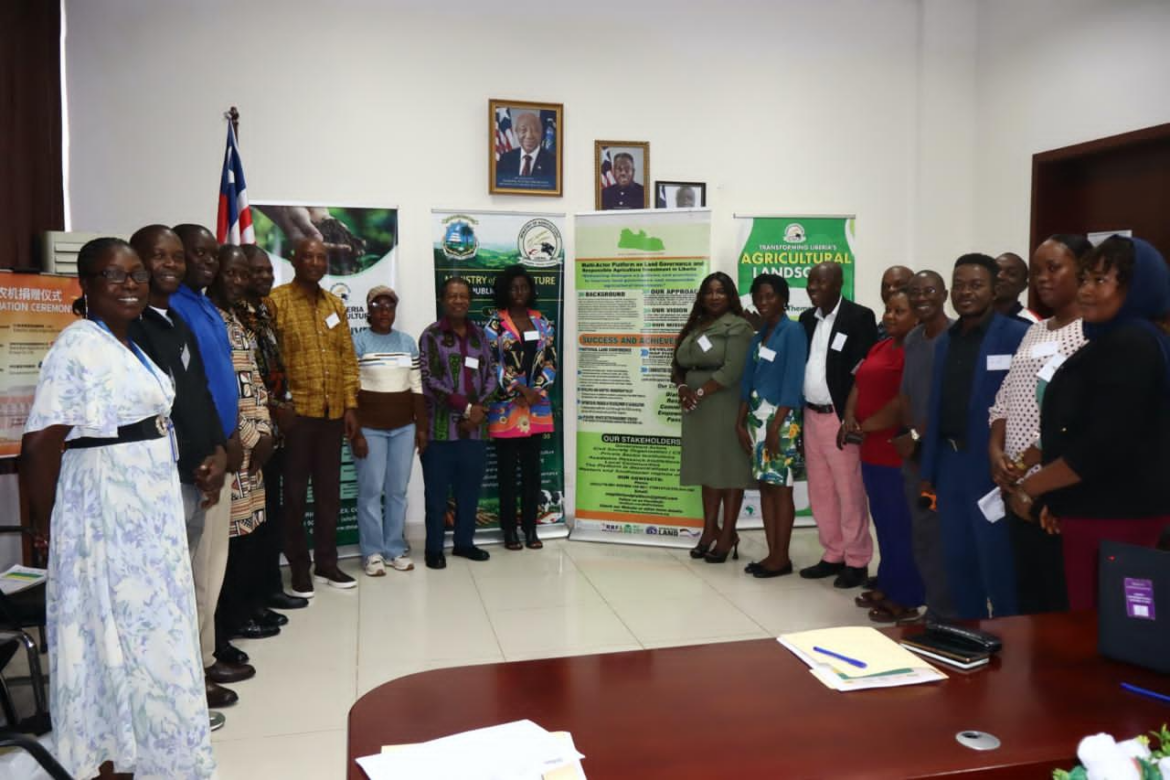
The warning was issued Wednesday during a national advocacy dialogue organized by the MAP Liberia Land Platform and the Sustainable Development Institute (SDI) at the Ministry of Agriculture. Participants called for greater political commitment, increased funding, and stronger institutional coordination to advance land reform.
The event brought together representatives from the Legislature, government ministries, development partners, customary communities, and advocacy groups to assess progress under the Land Rights Act and address ongoing challenges delaying formal recognition of customary land ownership.
A policy brief, “Defending Land, Protecting Rights: Safeguarding Liberia’s Land Rights Act (2018),” was also launched, outlining progress and persistent implementation gaps since the law’s enactment.
The brief called for increased government financing, stronger institutional capacity, enhanced community engagement, and sustained political support to ensure the Land Rights Act achieves its goals.
Participants agreed that the success of the Land Rights Act will depend on effective implementation to ensure protections for rural communities.
Rights and Rice Foundation Executive Director James Yarsiah said the legislation resulted from nearly two decades of consultations involving communities, traditional leaders, civil society organizations, and successive governments.
Yarsiah said the law provides legal recognition for customary landowners, who make up more than 60 percent of Liberia’s population. Seventy customary communities have completed the legal process for land deeds, and an additional 150 are currently undergoing formalization.
He said securing customary land rights is important for protecting livelihoods and encouraging investment, but implementation faces obstacles, including limited resources, inadequate public awareness, and constraints in institutional capacity.
Josephine Karnu, representing Senator Simeon Taylor, Chairman of the Senate Committee on Lands, Mines, Energy, Natural Resources and Environment, reaffirmed the Legislature’s commitment to supporting the law’s implementation.
She described the law as a landmark for equitable land governance but said legal reforms alone cannot resolve Liberia’s land disputes. She called for stronger collaboration among government institutions, civil society, traditional authorities, local communities, and international partners.
She said unresolved land conflicts threaten peace, discourage investment, and undermine development. She urged institutions to intensify public education and strengthen dispute resolution mechanisms.
Kollie Dogba, Director of Statistics at the Ministry of Agriculture, said secure land tenure is a critical pillar of Liberia’s agricultural transformation.
He said farmers are more likely to invest and improve their farms when land rights are legally protected.
