
By Socrates Smythe Saywon | Smart News Liberia
Liberia’s health sector is once again under national concern as health authorities race to strengthen the country’s defenses against a possible resurgence of Ebola amid growing regional outbreaks. While the government insists there is currently no confirmed or suspected Ebola case in Liberia, mounting concerns over preparedness, funding transparency, logistics weaknesses, and emergency procurement procedures are fueling renewed public anxiety in a country still haunted by the painful memories of the 2014 Ebola catastrophe.
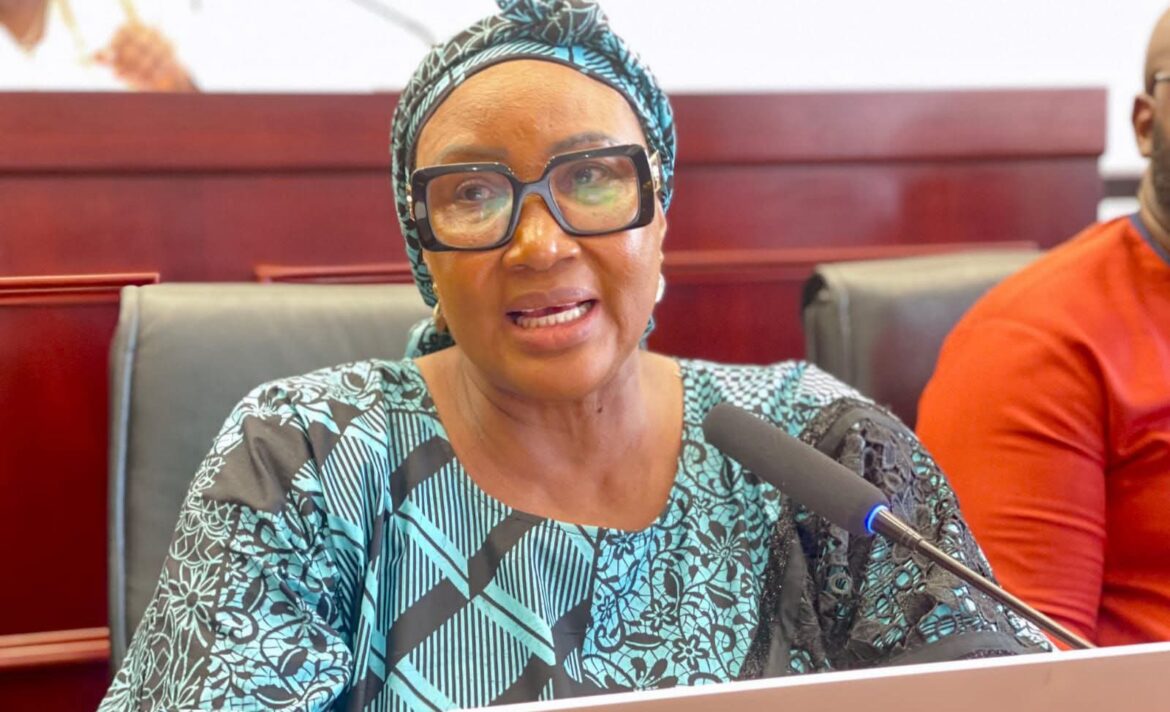
Appearing before the Liberian Senate on Tuesday, May 26, Health Minister Louise Mapleh Kpoto disclosed that the government has allocated US$4.2 million specifically for Ebola preparedness activities. However, Dr. Kpoto quickly clarified that the amount does not represent a full outbreak response budget, warning lawmakers that an actual Ebola outbreak would require a much larger and entirely separate financial framework.
According to Dr. Kpoto, the current funding is intended strictly for preventive and preparedness measures designed to strengthen Liberia’s readiness before any confirmed case emerges. She stressed that once Liberia records an actual outbreak, operational demands would dramatically increase, including emergency treatment centers, isolation facilities, medical supplies, contact tracing, public awareness campaigns, border monitoring, and hazard compensation for frontline health workers.
Her disclosure comes at a time when Ebola concerns are intensifying across parts of Africa, particularly in the Democratic Republic of Congo and neighboring Central African countries. Liberia’s proximity to regional movement corridors and its porous borders continue to raise fears among public health experts who believe even a single imported case could place enormous pressure on the country’s fragile healthcare infrastructure.
Against this backdrop, the Plenary of the House of Representatives moved swiftly by constituting a special committee to work directly with the Ministry of Health and the National Public Health Institute of Liberia (NPHIL) to evaluate the nation’s overall preparedness capacity. The committee, chaired by Julie F. Wiah, includes members from the Committees on Health, Ways, Means and Finance, Gender, alongside designated lawmakers and resource persons including Musa Bility, Bernard Blue Benson, and Dixon Seboe.
The House’s intervention reflects growing concern within government circles that Liberia cannot afford complacency. Lawmakers mandated the committee to urgently report its findings and recommendations to Plenary, signaling increasing legislative pressure for immediate oversight and stronger institutional coordination.
The formation of the committee also exposes a deeper national concern: whether Liberia’s public health institutions are genuinely prepared for another deadly epidemic nearly twelve years after Ebola devastated the country, killed thousands, crippled the healthcare system, and shattered public confidence in state institutions.
During the legislative hearing, lawmakers reportedly raised serious questions regarding procurement procedures associated with Ebola preparedness spending. Plenary emphasized that emergency health-related procurements connected to Ebola preparedness should be exempted from the normal procedures of the Public Procurement and Concessions Commission due to the urgent nature of the threat.
While some lawmakers argued that emergency exemptions could accelerate life-saving interventions, others fear that bypassing procurement regulations may open the door to corruption, inflated contracts, and misuse of public resources under the guise of emergency response. Liberia’s history of public sector accountability controversies continues to shape public skepticism whenever emergency funding is discussed.
The issue is particularly sensitive because past health emergencies exposed systemic weaknesses in procurement oversight, donor accountability, and the distribution of critical medical supplies. Many Liberians continue to question whether lessons from previous crises have truly been institutionalized.
Seeking to calm public fears, Dr. Kpoto assured lawmakers that Liberia presently has no Ebola case. However, she acknowledged the importance of maintaining heightened vigilance, especially as neighboring countries battle infectious disease outbreaks capable of spreading through regional travel networks.
Also appearing before lawmakers was Sia Wata Camanor, Acting Interim Director General of NPHIL, who presented an extensive overview of Liberia’s disease surveillance architecture. According to Dr. Camanor, Liberia currently operates an integrated disease surveillance system jointly managed by NPHIL and the Ministry of Health.
She explained that the system includes indicator-based surveillance, event-based surveillance, community-based surveillance, and rumor and media reporting mechanisms designed to rapidly identify suspicious disease patterns before they escalate into national outbreaks.
Dr. Camanor disclosed that Liberia currently has 989 health facilities spread across 98 health districts nationwide, with each district supported by trained surveillance officers responsible for detecting and reporting unusual disease events. She further revealed that Liberia maintains a network of field epidemiologists, community health assistants, and surveillance personnel tasked with early outbreak detection and emergency response coordination.
According to her, the country also maintains rapid alert investigation systems and laboratory surveillance mechanisms linked directly to field operations. Liberia is additionally monitoring regional epidemiological developments through the World Health Organization, particularly concerning Ebola transmission trends across affected countries.
Yet despite these assurances, Dr. Camanor acknowledged significant weaknesses within Liberia’s preparedness framework. She informed lawmakers that a national Ebola preparedness assessment conducted under WHO guidelines found Liberia to be approximately 69 percent prepared overall. More troubling, however, was the revelation that logistics management remains critically weak at only 49 percent readiness.
That disclosure has triggered serious concerns among observers who argue that logistics failures during epidemics can quickly become deadly. Weak transportation systems, inadequate medical supply chains, poor storage capacity, and limited emergency deployment infrastructure could severely undermine response efforts if Ebola enters Liberia.
Dr. Camanor further revealed that Liberia is simultaneously battling three active national outbreaks including monkeypox, Lassa fever, and measles. Public health experts warn that managing multiple outbreaks at once could overstretch already limited resources and expose dangerous gaps in healthcare delivery.
Meanwhile, health authorities say surveillance measures have been intensified at airports, seaports, and land borders. Liberia currently monitors 49 official border crossing points, including eight designated under International Health Regulations. Health officers and other personnel stationed at ports of entry are reportedly conducting daily screenings, traveler assessments, and health declaration monitoring.
Dr. Camanor disclosed that Liberia still relies largely on a paper-based health declaration system but is now exploring the introduction of a digital platform similar to systems used during the COVID-19 pandemic. Once operational, the digital system would allow travelers to submit health information before boarding flights, potentially improving early detection and response efficiency.
As of Tuesday morning, she said authorities were monitoring 16 travelers arriving from affected regions, including nine Ugandan nationals and three Liberians undergoing routine screening protocols.
Still, beneath the government’s assurances lies a larger national question: Is Liberia truly prepared for another Ebola emergency, or is the country once again reacting to danger rather than proactively building a resilient healthcare system?
For many Liberians, the debate is no longer just about statistics, surveillance systems, or preparedness percentages. It is about trust, accountability, institutional competence, and whether the painful lessons of the past have genuinely transformed the nation’s health sector.
The coming days may therefore prove critical as the House special committee begins working alongside the Ministry of Health and NPHIL to assess preparedness realities beyond official presentations. Its findings could determine whether Liberia’s current Ebola preparedness plan represents genuine readiness or another warning sign of vulnerabilities that remain unresolved within the country’s public health system.
