Published: September 7, 2026
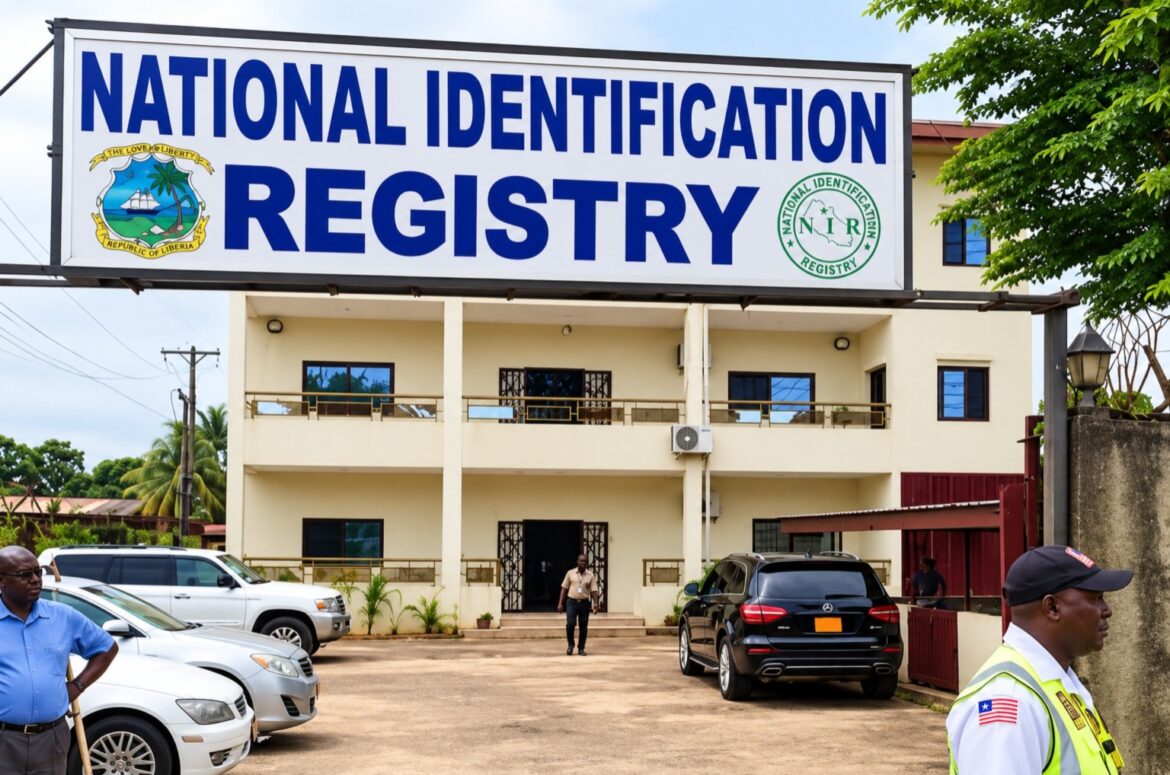
MONROVIA — Liberia’s proposed US$54.7 million overhaul of its national identification system remains on hold despite the signing of a concession agreement with OeSD International GmbH, with the National Identification Registry saying implementation cannot begin until the Legislature ratifies the deal and other legal requirements are satisfied.
NIR Executive Director Andrew Peters made the clarification during a Sept. 4 press briefing, outlining the status of the concession, its proposed nationwide rollout and safeguards the agency says will protect Liberians’ biometric and personal identity data.
“The Concession Agreement between the Government of Liberia and OeSD International has been signed. However, its implementation remains subject to the required legislative rectification and other applicable legal requirements,” Peters said.
He stressed that NIR would respect the authority of the National Legislature and would not proceed ahead of the required legal process.
“The public should understand clearly that official implementation activities under the Concession Agreement will proceed only when all required legal and implementation conditions have been satisfied,” he said.
Until then, Peters said, the Registry’s activities will focus on institutional readiness, stakeholder engagement, public awareness and preparations for the next phase of Liberia’s national identification program.
At the center of the proposed arrangement is a Build, Operate and Transfer, or BOT, concession designed to modernize and expand Liberia’s national identification, civil registration and vital statistics infrastructure.
The proposed investment is estimated at approximately US$54.7 million, which NIR says the concessionaire is expected to front for nationwide enrollment and related infrastructure.
Under the proposal, Liberia would move beyond primarily issuing physical identification cards toward a broader digital identity infrastructure capable of supporting identity verification, authentication and authorized government and private-sector services.
The program would include biometric national identity enrollment and deduplication, physical and digital identity credentials, secure identity management, digital and e-government services, civil registration and vital statistics, data integration and interoperability, county-level and mobile enrollment, cybersecurity and personal-data protection.
Peters said the investment would also cover biometric and identity management systems, digital applications, data migration, servers and network infrastructure, identity verification, training, knowledge transfer and mobile enrollment.
NIR says the financing structure is intended to reduce the government’s immediate financial burden while supporting nationwide enrollment and infrastructure development. It would also provide assistance toward the cost of identity cards for economically disadvantaged sectors of the population as part of the government’s civic responsibility.
A major component of the modernization plan is expanding identification services beyond Monrovia, particularly to rural and underserved communities.
Under the proposed framework, county-level and mobile enrollment services would be expanded to reach communities where poor roads, limited electricity and inadequate internet connectivity make accessing government services difficult.
Peters said taking enrollment services closer to communities could address some of those longstanding barriers.
Beyond national ID cards, the proposed system could support authorized identity verification for banking and financial services, telecommunications and SIM registration, government payroll and public services, transportation and licensing, social protection programs and other services requiring reliable identification.
The modernization plan also proposes integrating national identification with Liberia’s civil registration and vital statistics system.
Peters said an effective modern identity system requires reliable records of major life events, including births and deaths. The proposed system would create a more integrated digital framework connecting those records with national identification.
The long-term goal, NIR says, is to strengthen identity management throughout a person’s life — beginning with birth registration, continuing through national identification and incorporating other significant life events.
The Registry believes that integration could strengthen national planning, improve public service delivery and provide the government with more reliable data for development.
The concession, however, also raises questions about control and protection of sensitive biometric and personal information as Liberia moves toward a more integrated digital identity system.
Peters stressed that Liberians’ identity data would remain a national asset under the authority and control of the Republic of Liberia through the appropriate government institutions.
He said the concession would not transfer ownership of citizens’ identity information to the foreign technology company.
“OeSD International is proposed to serve as the Government’s technology and implementation partner under the terms of the agreement,” Peters said.
NIR, he added, would remain responsible for administering the national identity system and exercising its statutory responsibilities over identity registration, data governance and national identity infrastructure.
“Modernizing the national identity system must go hand in hand with protecting the people whose information the system contains,” Peters said.
He said cybersecurity, controlled access, authentication, auditability, secure storage, system resilience and personal-data protection would be central to the proposed modernization.
Peters also stressed that the concession would not remove the government’s responsibility for national identity governance. The government would retain responsibility for national policy, statutory oversight and identity governance, while NIR would continue administering the system and OeSD would serve as the technology and concession partner.
According to Peters, the BOT model is also intended to prevent long-term dependence on an external company by incorporating training, technology transfer and knowledge-sharing for Liberian institutions and personnel.
The Registry says official information on enrollment locations, registration schedules, requirements for obtaining national identification cards and other services will be released once the legal and implementation requirements are completed.
Peters cautioned citizens against dealing with unauthorized agents or intermediaries and warned against paying anyone claiming to have special access to NIR or the ability to obtain a national ID outside the official process.
Meanwhile, Peters announced preparations for the 2026 observance of National Identification Day, scheduled for Wednesday, Sept. 16, under the global theme, “My Identity. My Shadow. Never Apart.”
The day is observed annually as a working holiday to promote awareness of national identification and strengthen a sense of belonging among Liberians.
Peters said President Joseph Nyuma Boakai has been invited to serve as guest of honor and keynote speaker for this year’s observance.
As the Registry prepares for the event, Peters said NIR remains committed to developing a modern, secure, inclusive, accessible and sustainable national identity system, while acknowledging that public confidence will depend on transparency, accountability, effective safeguards and clear communication.
See more Liberia News Network stories in Google Search by adding LNN as one of your Preferred Sources.
★ Add LNN as a Preferred Source