
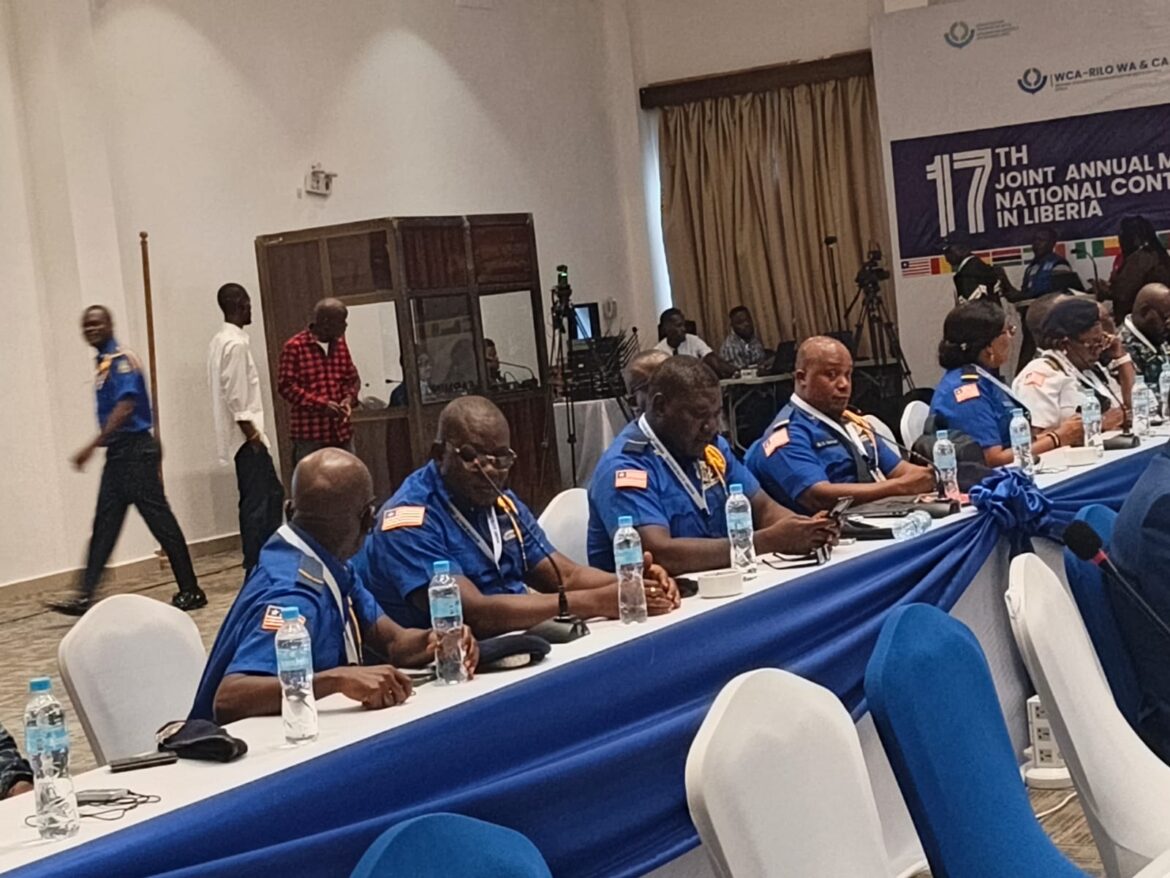
MARGIBI COUNTY, November 3, 2026: The Liberia Revenue Authority (LRA) is calling for stronger intelligence-led Customs enforcement to combat smuggling, protect national revenue and strengthen border security amid growing threats from sophisticated transnational criminal networks.
LRA Commissioner of Customs Saa Saamoi said the increasing complexity of international trade, expanding cargo movements and evolving criminal activities require Customs administrations to strengthen intelligence gathering, information sharing and enforcement coordination.
Speaking Monday at the opening of the 17th Annual Joint Meeting of National Correspondents of the World Customs Organization (WCO) Regional Intelligence Liaison Offices (RILO) in Margibi County, Saamoi emphasized that intelligence-driven enforcement is critical to protecting government revenue while facilitating legitimate trade.
“Customs administrations are under increasing pressure to mobilize domestic revenue, combat smuggling, strengthen compliance and protect the integrity of national revenue systems,” he said.
According to Saamoi, growing international trade and increased cargo movements through seaports, airports and land borders are placing additional pressure on Customs administrations to improve efficiency and security.
He noted that emerging technologies, including artificial intelligence, e-commerce, advanced data analytics and automated targeting systems, are transforming Customs operations, often faster than institutions can adapt.
Saamoi stressed the need for stronger regional cooperation and intelligence-sharing mechanisms to address challenges involving Customs valuation, tariff classification, regulatory compliance and cross-border fraud.
Also speaking, RILO West Africa Director General Amandu Tejan Sesay warned that criminal networks continue to exploit porous borders and weaknesses in coordination among regional enforcement agencies.
He said intelligence collected in one country could help authorities in another identify smuggling routes, uncover concealment methods and link separate seizures to organized criminal networks.
“Our seizures, whether of narcotic drugs, falsified medicines or protected species, therefore, represent far more than statistical results,” Sesay stated.
He urged National Contact Points to move beyond simply forwarding reports and instead ensure that intelligence is properly analyzed, verified and shared with relevant enforcement institutions for timely action.
Sesay said the meeting would review recommendations from the previous gathering in Bamako, assess implementation challenges and strengthen the use of the Customs Enforcement Network (CEN) and CENcomm information-sharing platforms.
Meanwhile, Liberia Drug Enforcement Agency (LDEA) Deputy Director General Prince B. Mulbah warned that West and Central Africa face growing threats from transnational crimes, including kush and tramadol trafficking, illicit financial flows, arms smuggling, counterfeit pharmaceuticals and environmental crimes.
“The criminals are networked. Therefore, we, the law enforcement family, must also be networked,” Mulbah emphasized.
Representing Liberia’s joint security institutions, Mulbah called for improved coordination among law enforcement agencies and a shift from merely recording seizures to identifying and prosecuting criminal financiers, organizers and trafficking networks.
He identified porous borders, inadequate forensic facilities, delayed intelligence sharing and corruption as major obstacles to effective regional enforcement.
Mulbah reaffirmed the commitment of Liberia’s security institutions to strengthening intelligence cooperation and coordinated operations against cross-border criminal activities.
See more Liberia News Network stories in Google Search by adding LNN as one of your Preferred Sources.
★ Add LNN as a Preferred Source